 Clirik






Rechercher
When many colleagues hear that “air classifying mill machine” (air classifying mill machine), they habitually call it directly “airflow classifying mill”. In fact, this is somewhat of a wishful thinking. The core of this device is to combine the two steps of mechanical impact crushing and dynamic airflow classification “kneading”. The transportation, cooling and separation of materials in the equipment belly are all handled by airflow. It is neither an independent classifier that requires an external crusher, nor is it the same as an “air jet mill” that relies purely on high-pressure airflow to make particles “hard-on-hard” kill each other.
As soon as the material enters the crushing area, the impact blade on the rotor hits the impact surfaces of the fixed gear ring (or liner), and the material is crushed. Immediately afterwards, the airflow acts as a porter, carrying the shredded material directly into the grading area. At this point, the centrifugal force generated by the high-speed rotating grading wheels and the dragging force pulled outward by the airflow begin “tug of war”. This directly determines the fate of the particles: powder that meets the fineness standard passes through the grading wheel along the airflow and becomes the final finished product; while coarse particles that are too big will be ruthlessly thrown back, fall into the crushing zone and then be beaten.
So, if you want to control the final thickness of the powder, don't think that just turning up the crushing speed is stupid. The amount of air supplied by the grading area and how fast the grading rotation is are also key factors in determining the final fineness.
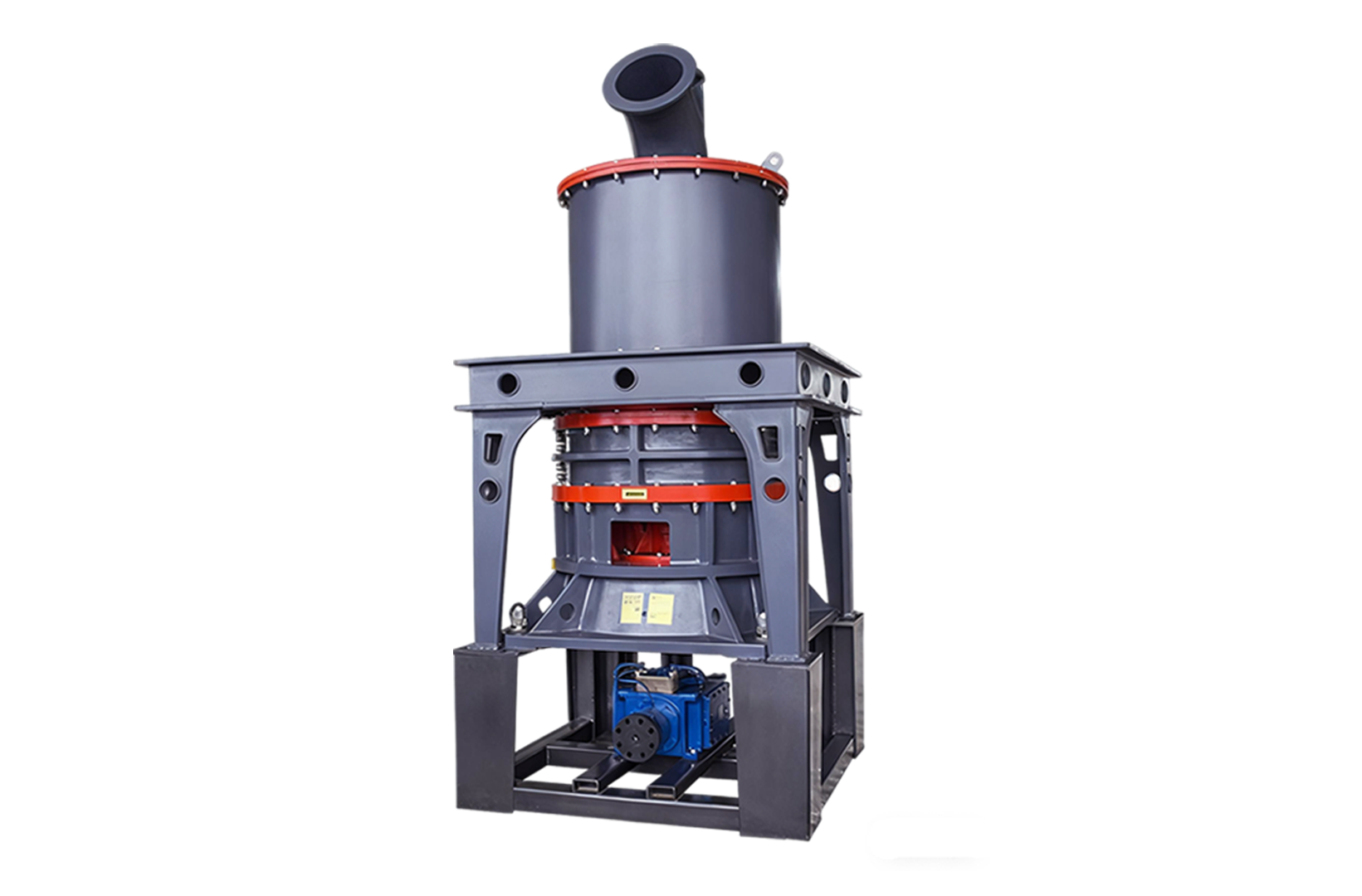
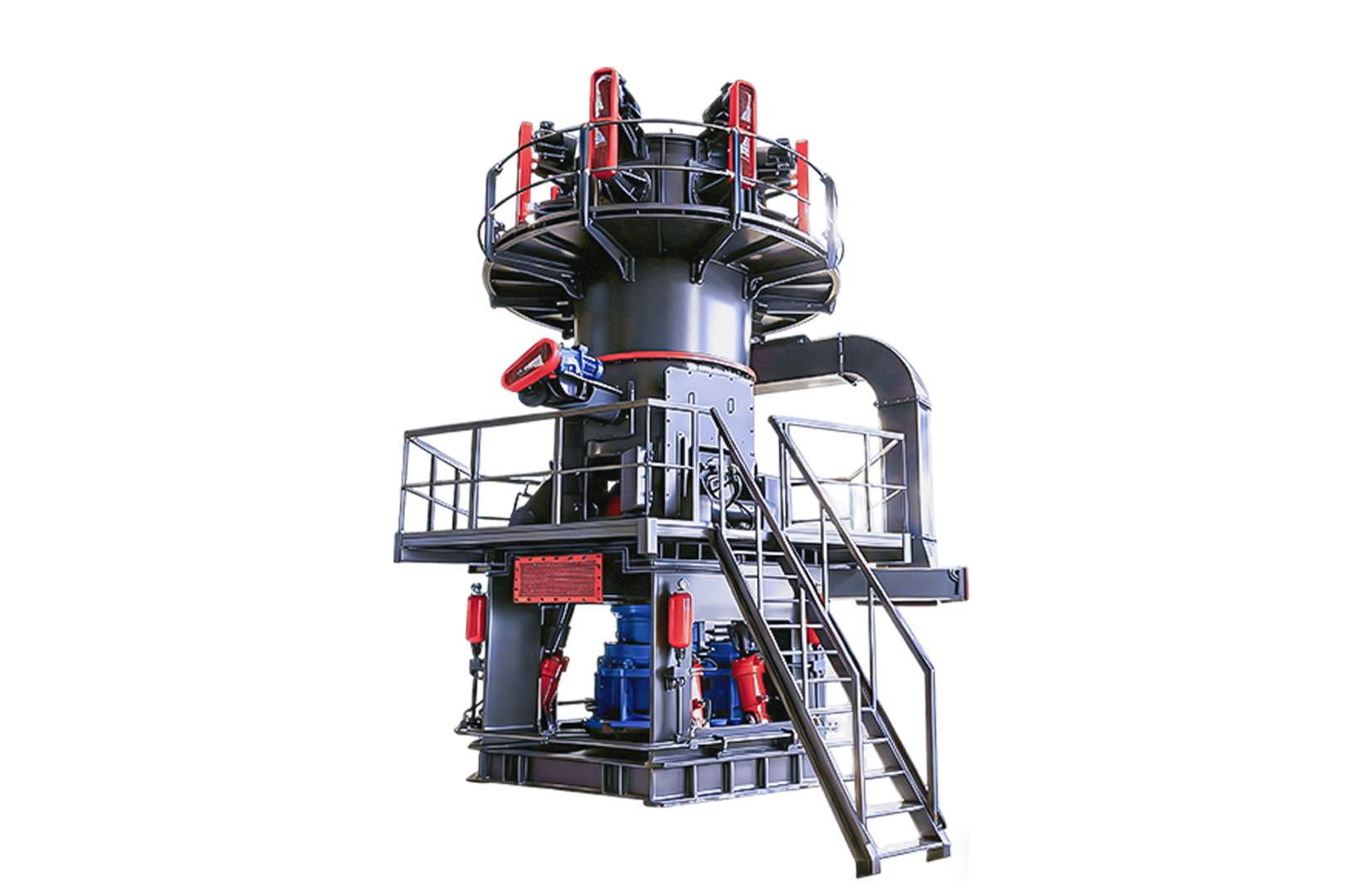
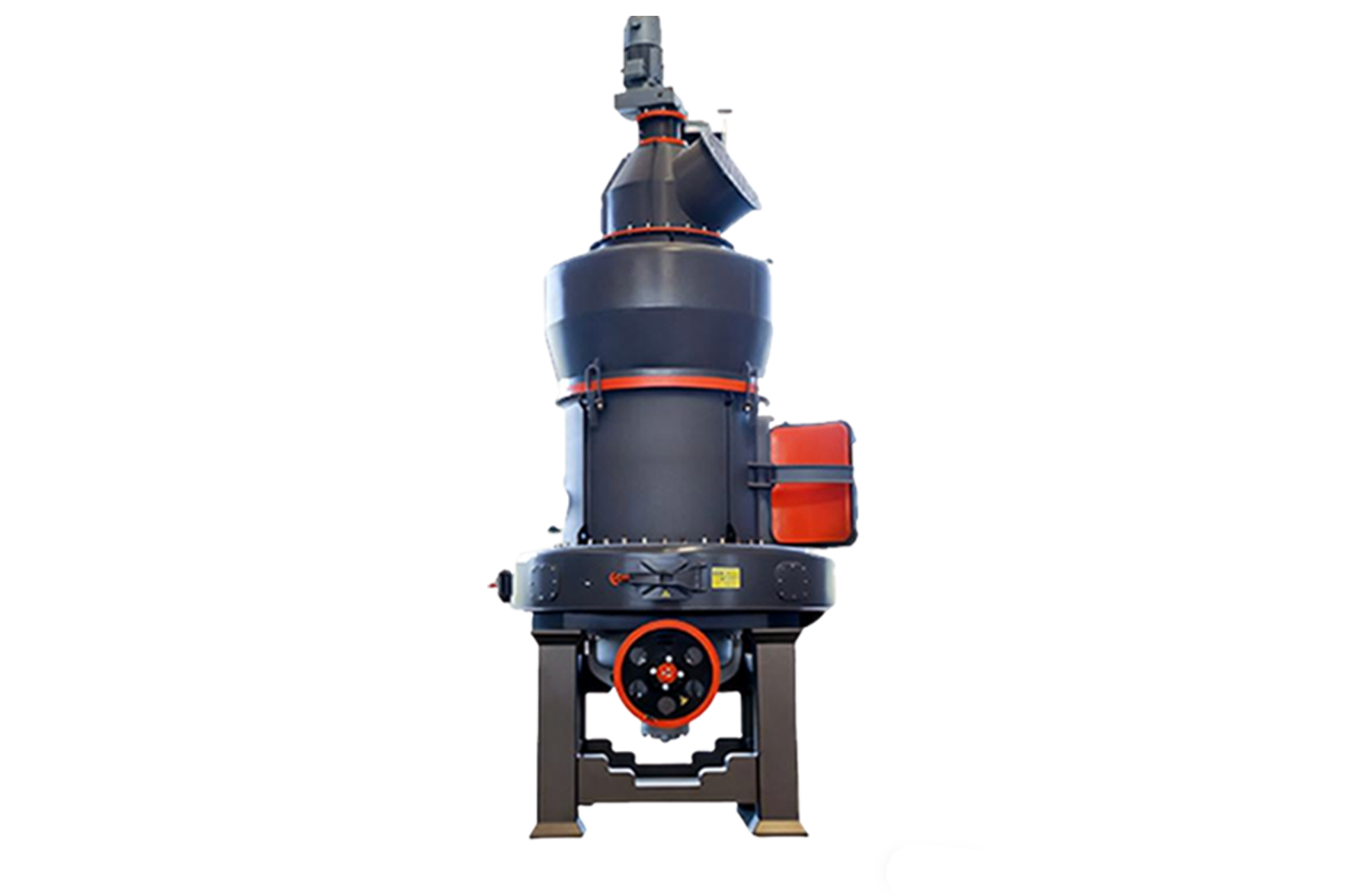
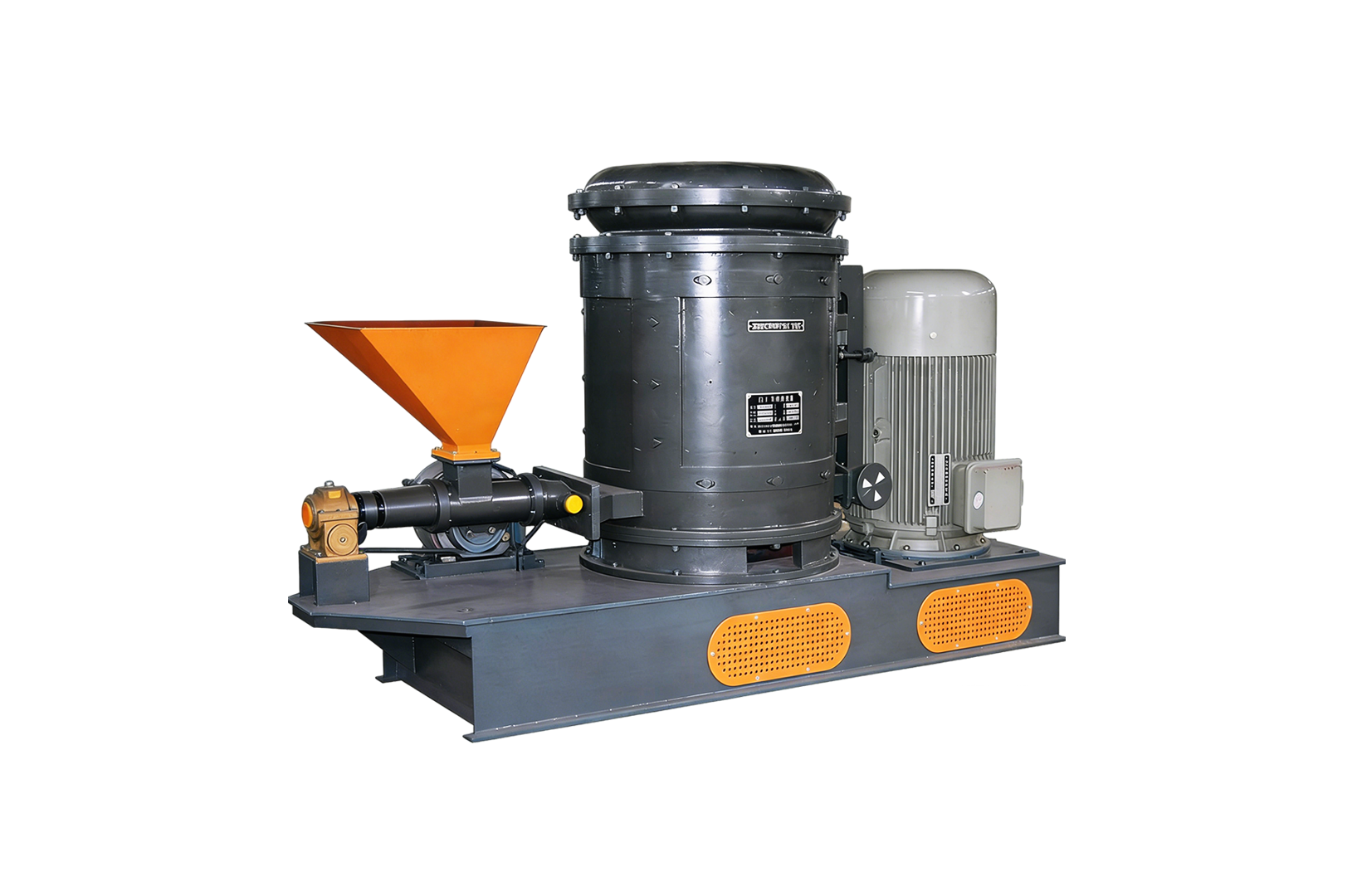
A standard “main unit”, when fully charged, includes a feed port, a crushing rotor, an impact blade, a fixed gear ring, a grading wheel, a guide piece, an air inlet, a powder outlet, a coarse powder return channel, a motor and an inspection door. But if you want this machine to actually run around the workshop, just having a main unit is a big decoration. The periphery must be equipped with a feeder, an induced draft fan, connecting pipes, a cyclone collector or a bag dust collector, as well as a locking air valve (disconnecting the fan), a metal detector, an electronic control cabinet and a dust removal device.
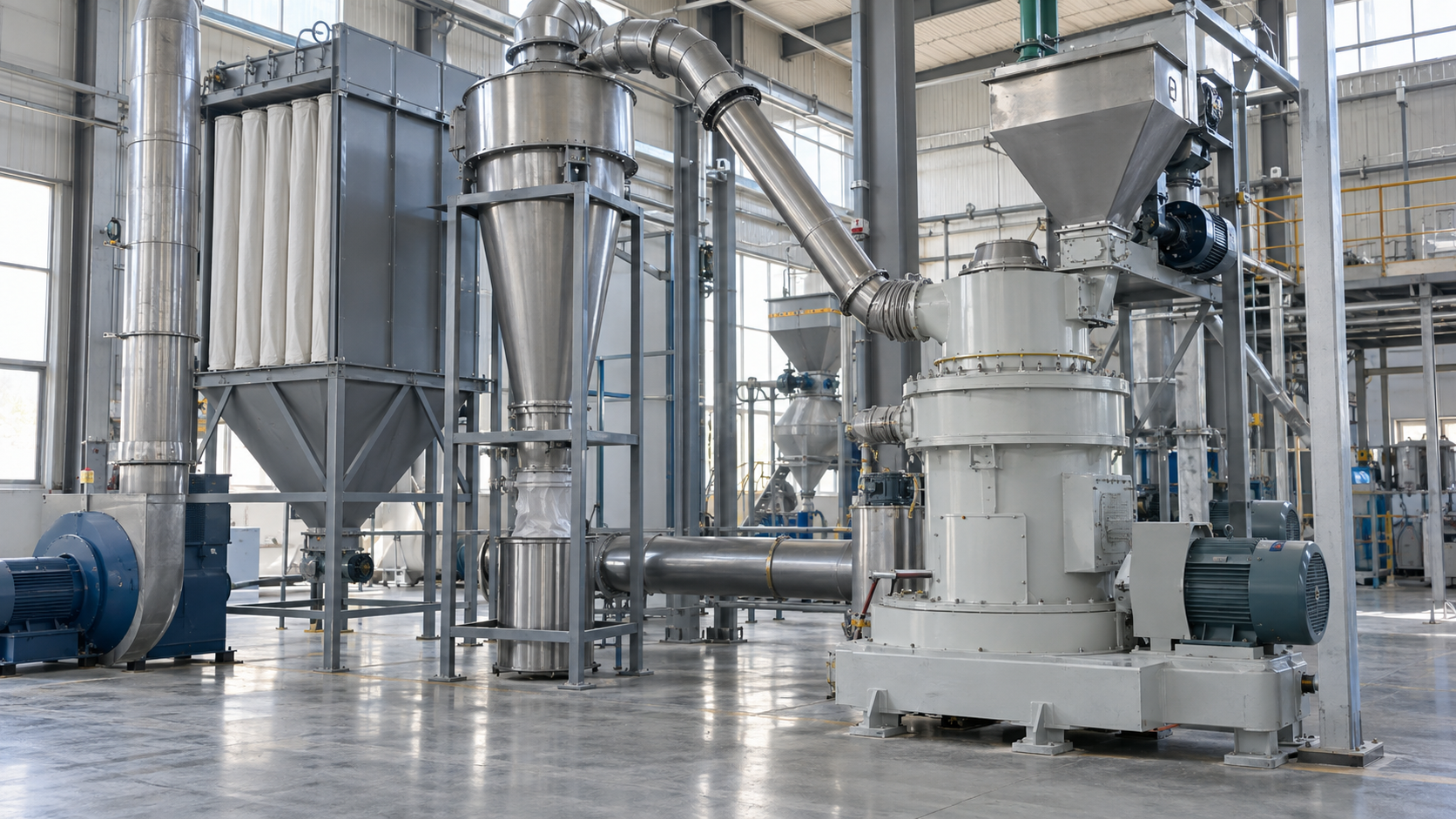
It's so important to understand this. Sometimes you sign a contract to buy equipment that says “crushing and grading mill”, which often refers only to the most core main unit. When it comes to practical implementation, all peripheral supporting facilities such as feeding, pumping air, and dust collection must be included. Just by looking at the name of the host, you can't guess what lineup the manufacturer has for the entire system.
A separate airflow classifier is, to put it simply, a “sieve”. It only picks, not smashes, and must be connected to external equipment such as a ball mill, Raymond mill or hammer mill in front to do the work; while the air classification mill picks up the “smashing” and “screening” work on one shoulder and integrates them directly into one machine.
Let's talk about air jet grinding, which relies purely on high-speed air flow to carry materials to be crushed “hard-on-hard”; air staged grinding actually relies on mechanical knife blocks to crush them. These two are fundamentally two-way in terms of the principle of crushing, where it is most prone to wear and tear, and how to calculate electricity costs.
Therefore, don't just assume that the name contains “grinding” or “grading” and guess its internal structure, how fine the powder can be produced, what the production capacity is, or what materials are suitable for grinding.
How fast the grading wheel rotates, how much air volume the system provides, how fast the crushing rotor rotates, whether the feeding is fast or slow, the density of the material itself, and even how coarse the raw materials sent in were originally, all of these will be closely linked to the final grading effect, equipment heat generation, system circulation load, and the coarse and fine distribution of the finished product.
Generally speaking, the finer the powder is to be beaten, the more material will be repeatedly beaten (that is, the cycle load), or the amount of powder processed in one hour will fall off. But how it changes depends on the temperament of the materials, the internal design of the equipment, and the on-site process conditions. This thing definitely doesn't fit into a dead formula.
Talking about production capacity and details without discussing the prerequisites is purely out of touch with reality. These data must be firmly tied together with the specific model, what material to feed, how large the feed is, how fine it wants to be, how much moisture it has, how large a fan it is equipped with, and what standards to use to measure it. If there is not even a unified standard for caliber and instrument measurement, then just listen to the words “mesh count”, “micrometer”, and “ultra-micron powder”, and you absolutely cannot directly equalize them.
Air classification grinding is indeed effective in dry fine grinding processes such as minerals, chemical powders, powder coatings, food, medicine, and cosmetics, but the degree of strain on the machine varies greatly depending on the material. When choosing a type, what is the composition of the material, whether it is hard or not, whether it can be ground by a machine, whether it contains water or not, whether it is sticky or not, whether it is afraid of heat or not, and will it be fine at all? What are the requirements for feeding and discharging? Is it permissible for even a small amount of large particles to leak through the net? What is the production capacity? Is it continuous rotation or intermittent work? All of this needs to be put on the table for comprehensive calculation.
If you encounter delicate materials that melt when hot, stick to the pan easily, wear out the blades extremely, catch fire easily, or are extremely afraid of contamination, the equipment must be equipped with additional features: cooling system, anti-wear coating, easy-to-clean design, special materials, and explosion-proof safety system, none of them can be left behind. These hard-core physical conditions cannot be automatically covered by just one device name.
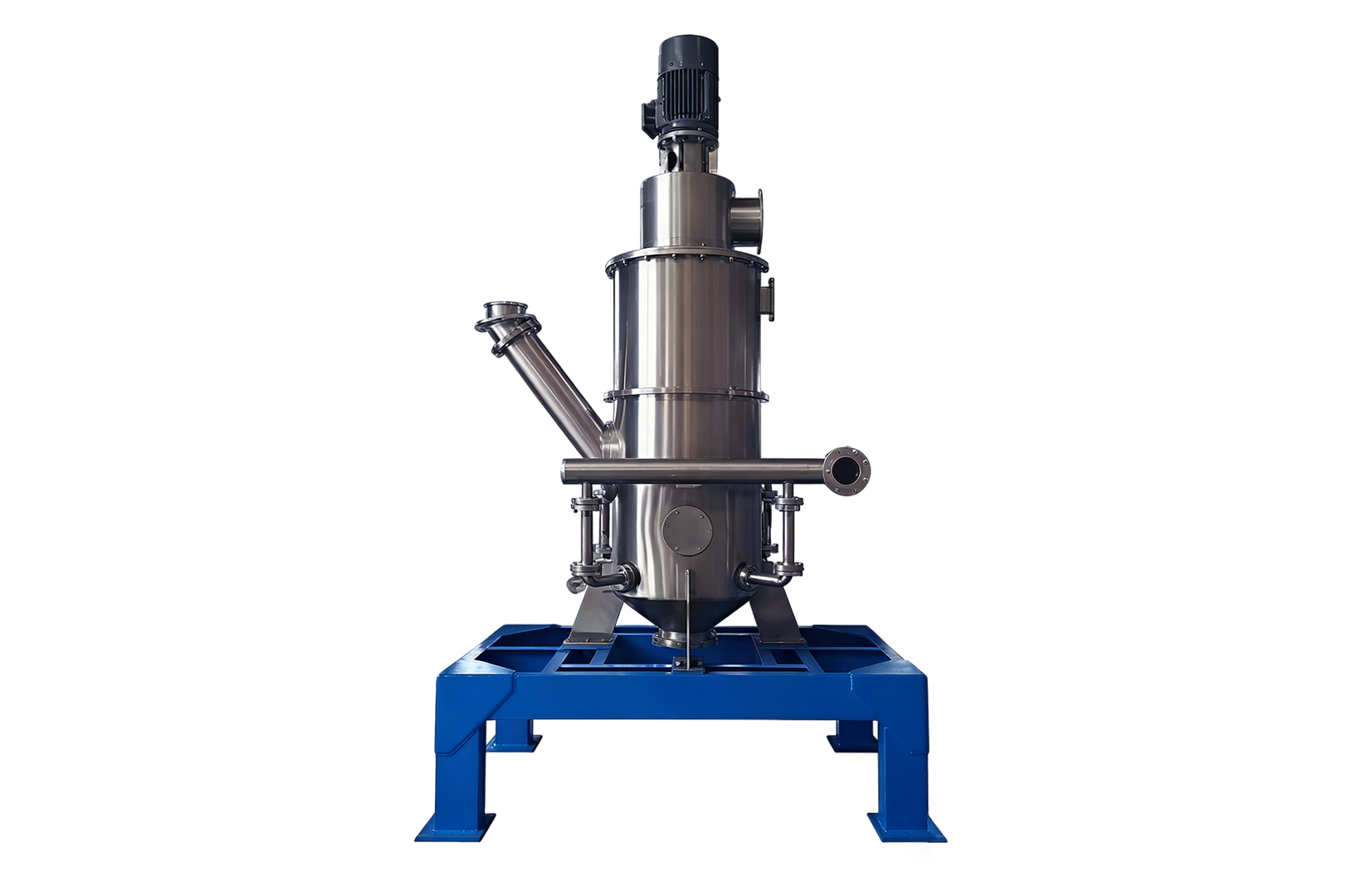
The full name of the currently confirmed product is “CLCM Vortex Air Classifying Mill” (CLCM Eddy Current Air Classifying Mill). It is commonly called air classifying mill in the industry and belongs to the air flow classifying mill in the broad category. But the problem is that based on the information I have so far, I can't see the specific internal structure, model parameters, output capacity, powder fineness, and application limits of this machine. Therefore, we must never take those general common sense in the industry and directly copy them into a rigid cover as a guarantee for the performance of this specific model.
When it comes time to evaluate the decision, you must take hard indicators such as material characteristics, target fineness, processing volume requirements and safety configuration and go one-on-one with this specific model “compete”. Don't think that just throwing out an English name will replace the extremely complex process conditions on site.