 Clirik






Buscar
An air classifier mill and an air classifying mill are the exact same piece of equipment. Manufacturers use these terms interchangeably to describe an impact grinder equipped with an internal dynamic sorting wheel. The real financial danger for procurement managers is not choosing between these two identical terms, but confusing an integrated mill with a standalone “air classifier” (a machine that only sorts powder and cannot grind anything). I have audited powder processing plants that blew six-figure budgets on the wrong equipment because they misunderstood the nomenclature. You are going to bypass the marketing jargon and learn exactly how to specify the right mechanical parameters for your next milling machine.
Engineers waste countless hours debating terminology instead of calculating rotor tip speeds. “Air Classifier Mill” (often abbreviated as ACM) became an industry-standard term heavily popularized by early inventors like Hosokawa Micron. Competing manufacturers adopted the generic term “Air Classifying Mill” to describe the identical technology and avoid trademark disputes.
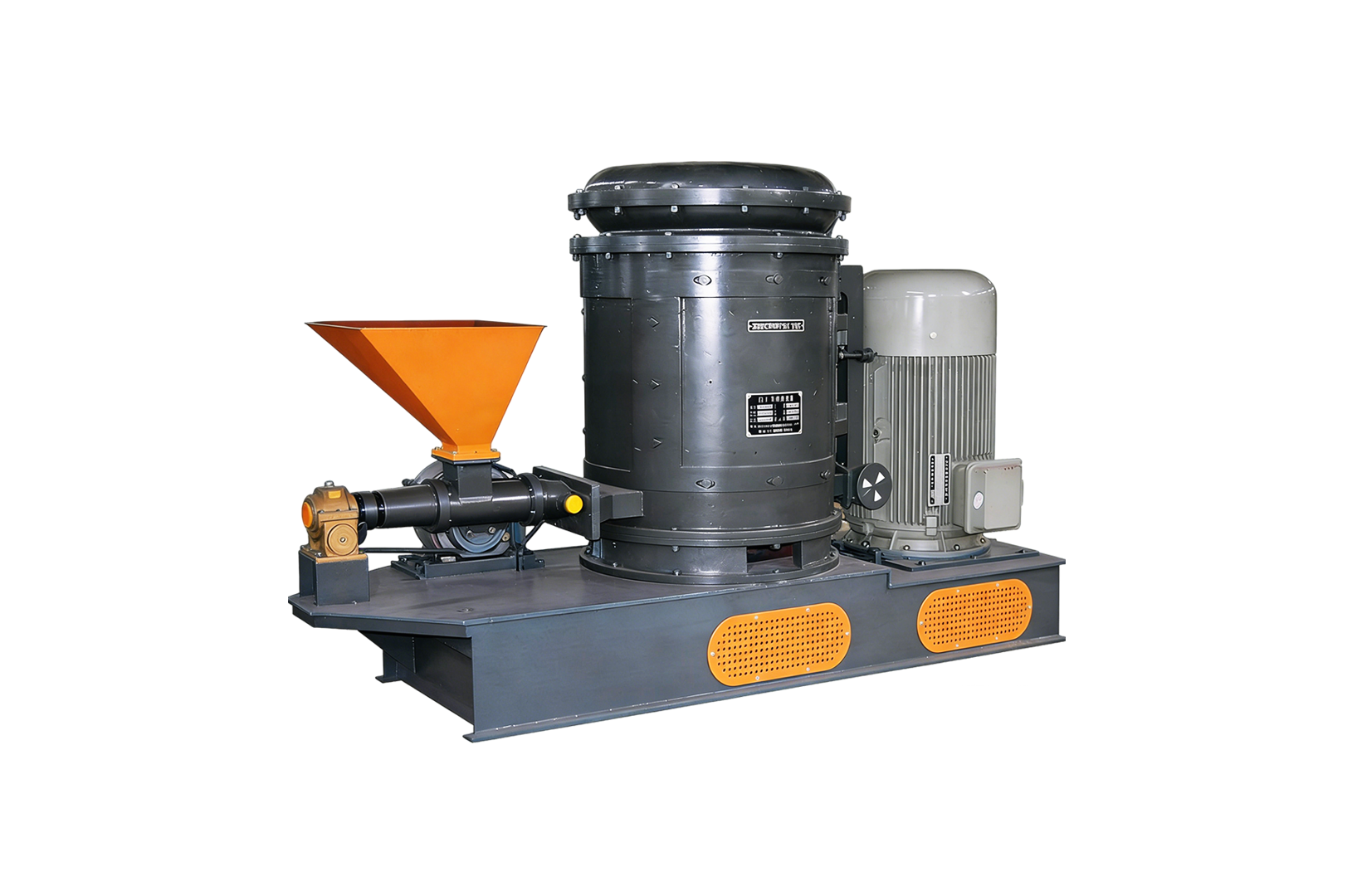
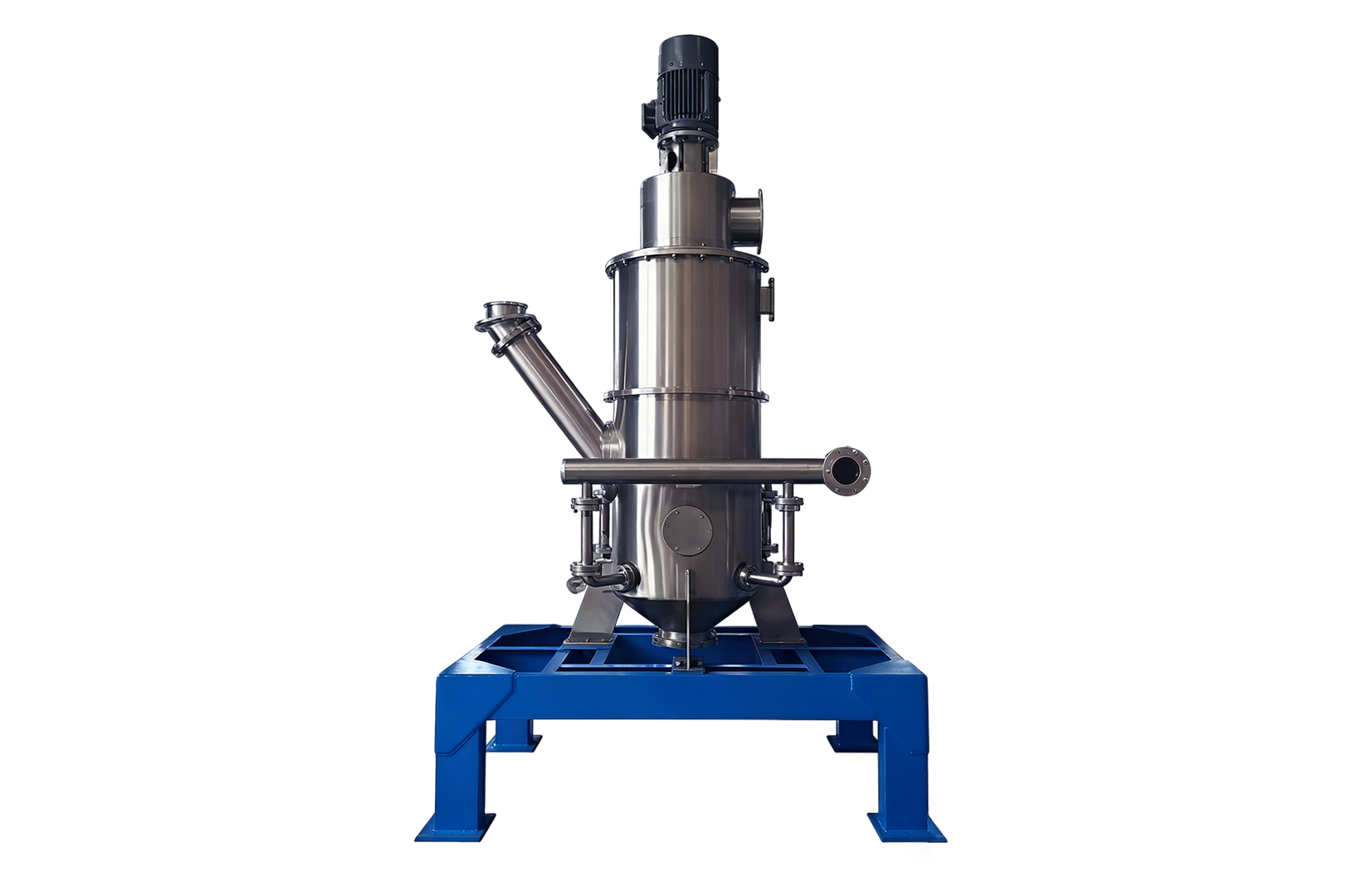
The structural mechanics remain identical regardless of the nameplate. Both machines feed raw material into a grinding zone, smash it with high-speed rotor pins, and use an internal draft fan to pull the particles upward through a spinning classifier wheel.
The catastrophic mistake happens when buyers omit the word “mill.” Purchasing a standalone air classifier simply gives you a separator. If you feed 2mm sugar granules into a standalone classifier, you get 2mm sugar granules out the other end. You must explicitly specify an air classifying mill machine when you need to actively reduce the physical size of the raw material.
| Equipment Term | Primary Function | Internal Components | Aplicación prevista |
|---|---|---|---|
| Molino clasificador por aire | Grind + Sort | Impact rotor + classifier wheel | Fine powder production, size reduction + classification |
| Air Classifying Mill | Grind + Sort | Impact rotor + classifier wheel | Industrial milling, mineral processing, chemicals, pigments |
| Standalone Air Classifier | Sort Only | Classifier wheel only | Particle size separation, reclassification of pre-ground material |
Do not request quotes from manufacturers without defining your internal process first. I use the A.C.M. (Application, Cut-Point, Momentum) Framework to help plant managers evaluate air classifier mills before signing purchase orders.
Impact grinding generates massive kinetic energy, which converts directly into heat. Air classifier mills easily exceed 80°C (176°F) inside the grinding chamber. If your application involves heat-sensitive materials like powder coatings, resins, or sugar, the material will melt, fusing solid to the spinning classifier wheel. You must equip the mill with a chilled air intake system and a water-jacketed grinding chamber to keep the internal operating temperature below the material’s glass transition point.
You dictate the final particle size by adjusting the speed of the classifier wheel independently from the grinding rotor. Increasing the wheel’s RPM rejects larger particles back down to the grinding zone, creating a finer final product. You must specify your required D90 or D97 cut-point (e.g., 97% of particles under 20 microns) to the manufacturer. If you need ultra-fine powder below 5 microns, a standard air classifying mill will fail; you must upgrade to a jet mill.
The mill requires massive airflow to function. The material moves through the machine entirely via pneumatic transport. You must size your downstream induced draft (ID) fan and cyclone separator perfectly to match the mill’s momentum. A weak ID fan leaves ground material choking the milling chamber, resulting in a severe drop in tons-per-hour (TPH) throughput.
Evaluating the geometry of the internal classifier wheel separates outdated equipment from modern high-efficiency mills. In early 2026, our engineering firm conducted a specific energy consumption (SEC) audit on two identical 100 HP air classifier mills grinding calcium carbonate to D97 = 15 microns.
Mill A used a traditional straight-vane classifier wheel. Mill B utilized a modern, CFD-optimized (Computational Fluid Dynamics) slanted-vane classifier wheel.
The slanted-vane design in Mill B reduced aerodynamic drag and prevented coarse particle bounce-back. This structural change increased the total throughput by 14% and reduced the specific energy consumption from 32 kW/t down to 27.5 kW/t. When you request quotes for new machines, demand CFD-optimized slanted-vane rotors to drastically cut your annual electricity costs.
Operating high-speed air classifier mills requires strict adherence to maintenance protocols. Plant managers routinely overlook two specific mechanical vulnerabilities that lead to catastrophic equipment failure.
The main bearing supporting the high-speed grinding rotor sits directly below a chamber filled with abrasive dust. Manufacturers install a purge air seal (a steady stream of clean, compressed air) to prevent microscopic dust from infiltrating the bearing housing. Operators often let the plant’s compressed air pressure drop. Without positive purge air pressure, fine powder instantly breaches the seal, grinding the bearing into metal shavings within 400 hours of operation. You must install a dedicated pressure switch that automatically shuts down the mill if purge air pressure drops below 1.5 bar.
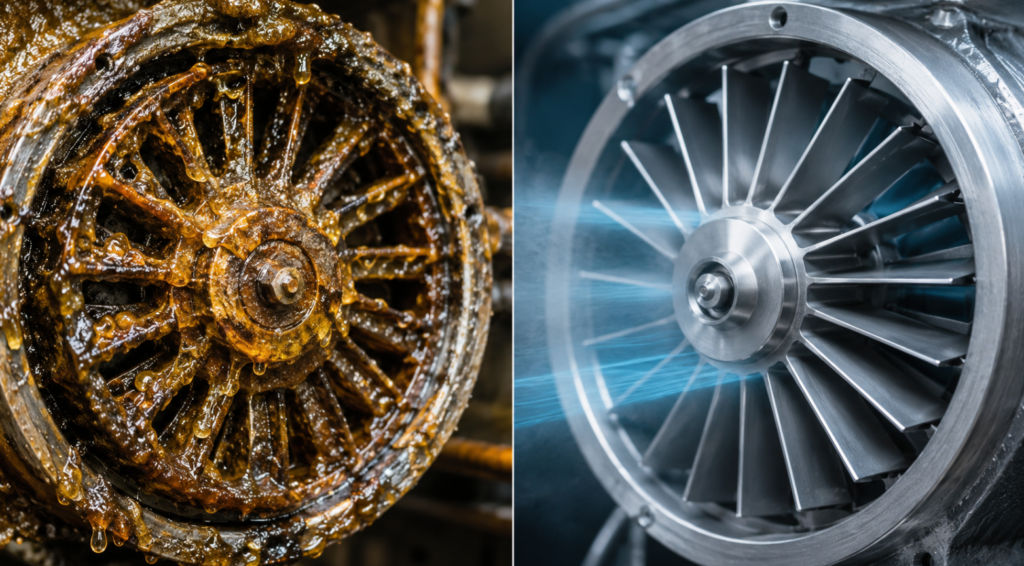
Grinding moisture-absorbing (hygroscopic) materials without dehumidifying your intake air will blind the classifier wheel. Materials like distinct salts or botanical extracts absorb ambient humidity from the intake air, turning into a sticky paste. This paste fills the narrow gaps between the classifier wheel blades. Once the wheel blinds, airflow stops, and the mill completely chokes. You must install a heavy-duty desiccant air dryer on the main air intake when processing hygroscopic powders.
What is the difference between an air classifier mill and an air classifying mill?
There is no physical or mechanical difference. “Air classifier mill” and “air classifying mill” are synonymous terms used by different manufacturers to describe an impact grinding mill featuring an internal dynamic classifying wheel for controlling particle size.
What is an air classifier mill used for?
Processors use these mills to grind and sort dry materials in a single continuous step. They dominate the chemical, food, and pharmaceutical industries for grinding sugar, powder coatings, spices, talc, and carbon black down to 10-150 micron ranges.
How does an air classifying mill machine work?
Raw material enters the chamber and hits a high-speed impact rotor, shattering into smaller pieces. An internal draft fan pulls the particles upward toward a spinning classifier wheel. Fine particles pass through the gaps in the wheel to the exit, while the spinning wheel knocks coarse particles back down into the grinding zone for further reduction.
Can an air classifier mill produce sub-micron particles?
No. Most standard air classifier mills bottom out around a D97 of 10 microns. The physical limits of mechanical impact grinding prevent sub-micron efficiency. You must use a fluid bed opposed jet mill to reliably produce particles in the 1 to 5-micron range.
What happens if I run an air classifier mill without a cyclone?
You will blow your finished product entirely into your dust collection filters. The cyclone separator acts as the primary receiver, dropping 95% of your finished powder into a rotary valve for packaging. The machine cannot function as a standalone unit; it requires a complete pneumatic system.
How do you control the particle size in these mills?
You change the particle size by adjusting the RPM of the classifier wheel via a variable frequency drive (VFD). A faster wheel RPM creates a stronger centrifugal force, rejecting larger particles and resulting in a much finer final product. Adjusting the primary draft fan airflow also fine-tunes the cut point.