 Shanghai Clirik Machinery Co.,Ltd

Search

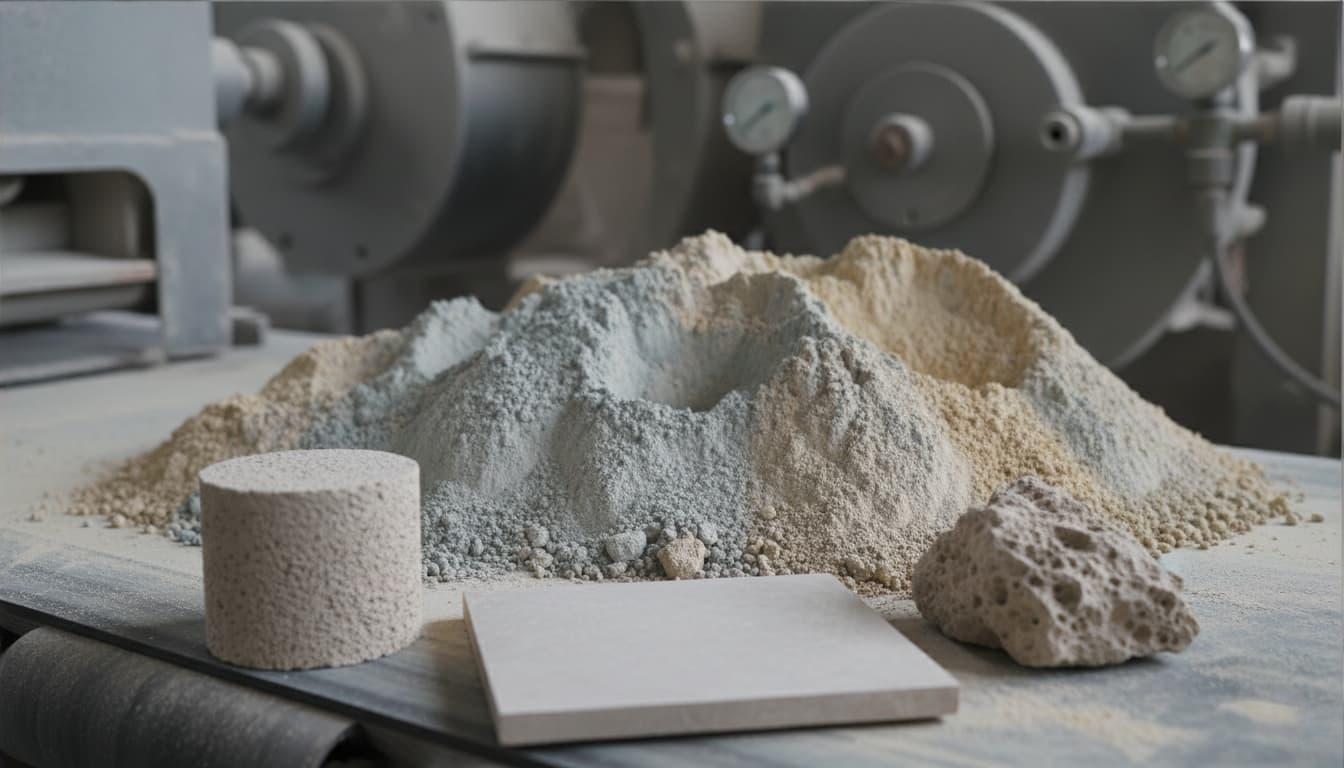
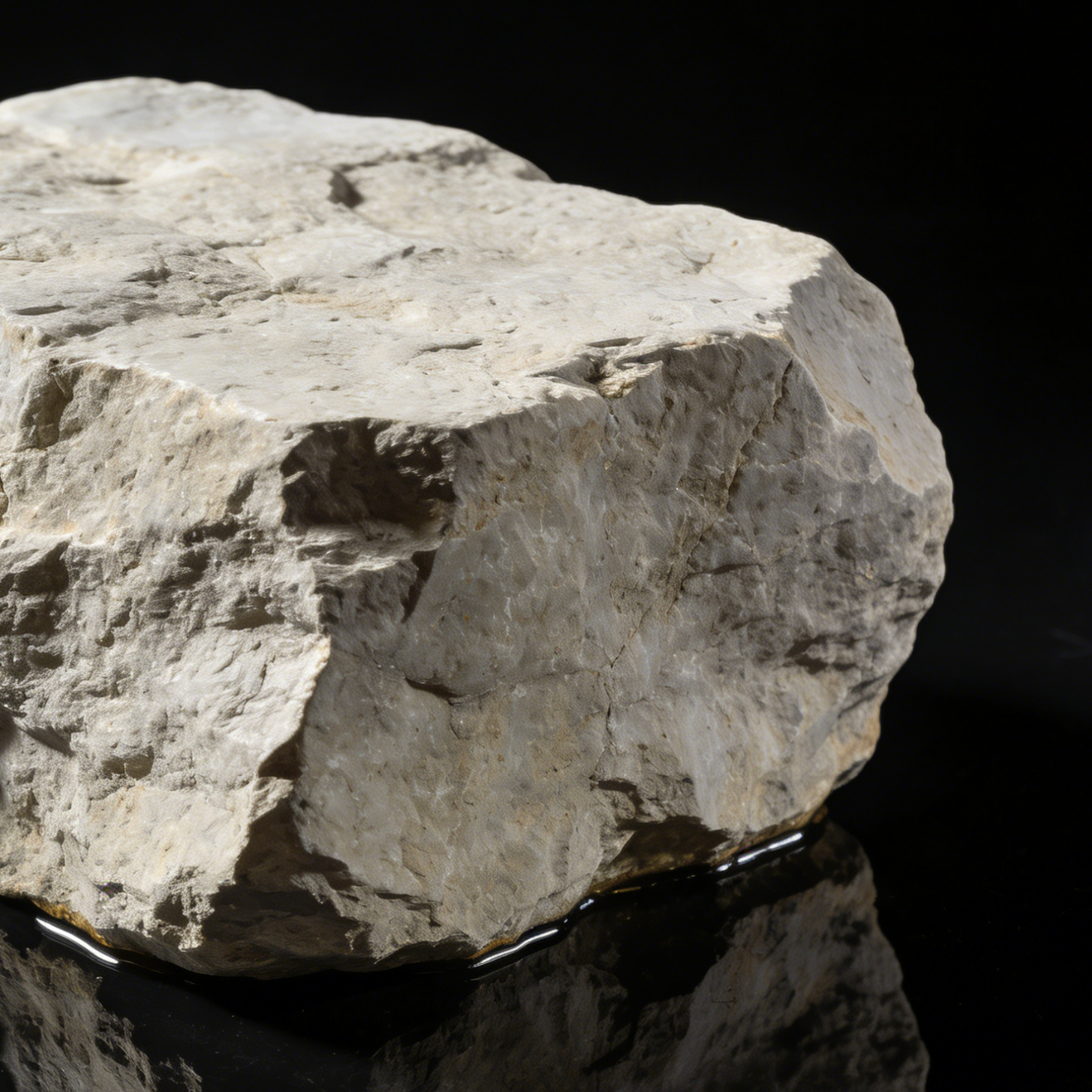
Non-metallic minerals encompass all minerals and rocks—excluding metallic and fuel minerals—that possess economic value, serving as indispensable foundational raw materials for modern industry. Our equipment is ideally suited for processing typical materials such as limestone, calcite, dolomite, marble, barite, bentonite, gypsum, and kaolin. These minerals are widely distributed throughout nature. Among them, carbonates—such as calcite and limestone—are primarily composed of calcium carbonate (CaCO₃); characterized by low Mohs hardness (levels 2–3) and stable chemical properties, they serve as the primary raw materials for the production of heavy calcium carbonate (heavy calcium). Sulfates—such as barite (barium sulfate) and gypsum—are distinguished by their high density or their utility in construction material molds. Silicates—such as kaolin and bentonite—feature a layered structure, high whiteness, and unique chemical reactivity; widely utilized in the paper, coatings, and environmental protection sectors, they play a pivotal role across fields such as construction materials, papermaking, paints, plastics, rubber, and cables, effectively serving as the “MSG” of modern industry.
Non-metallic minerals encompass all minerals and rocks—excluding metallic and fuel minerals—that possess economic value, serving as indispensable foundational raw materials for modern industry. Our equipment is ideally suited for processing typical materials such as limestone, calcite, dolomite, marble, barite, bentonite, gypsum, and kaolin. These minerals are widely distributed throughout nature. Among them, carbonates—such as calcite and limestone—are primarily composed of calcium carbonate (CaCO₃); characterized by low Mohs hardness (levels 2–3) and stable chemical properties, they serve as the primary raw materials for the production of heavy calcium carbonate (heavy calcium). Sulfates—such as barite (barium sulfate) and gypsum—are distinguished by their high density or their utility in construction material molds. Silicates—such as kaolin and bentonite—feature a layered structure, high whiteness, and unique chemical reactivity; widely utilized in the paper, coatings, and environmental protection sectors, they play a pivotal role across fields such as construction materials, papermaking, paints, plastics, rubber, and cables, effectively serving as the “MSG” of modern industry.

+8613512155195
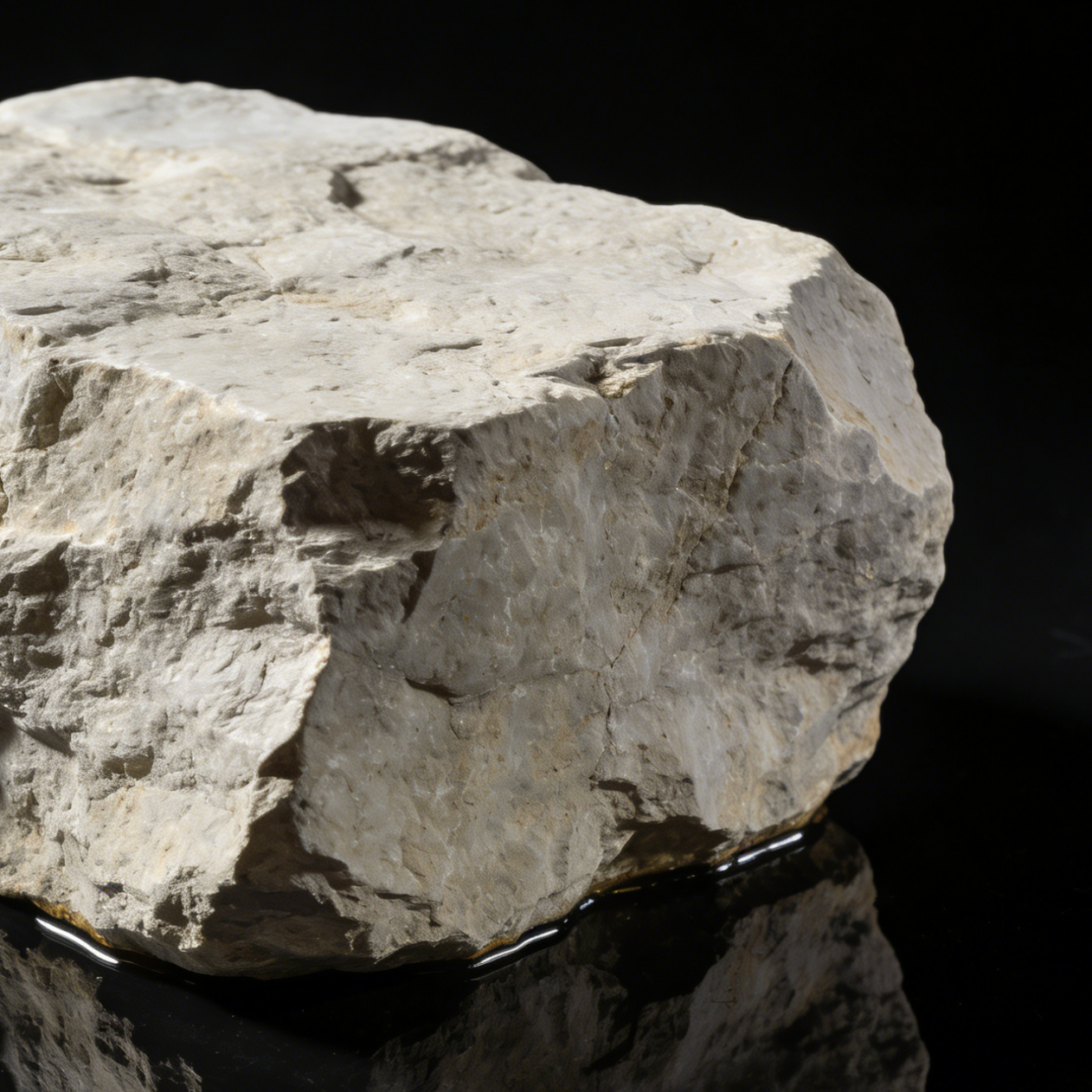
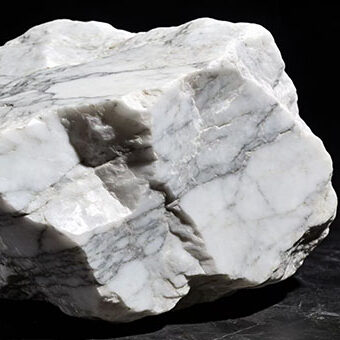
Limestone
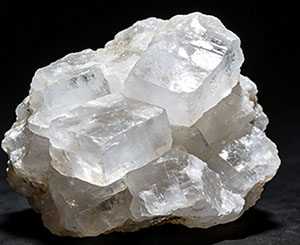
Calcite
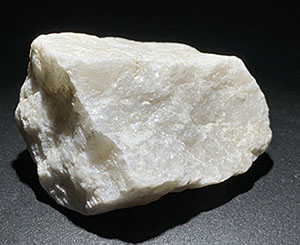
Dolomite
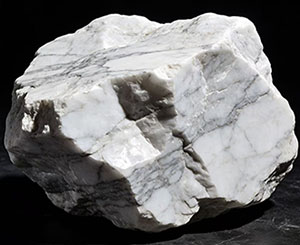
Marble
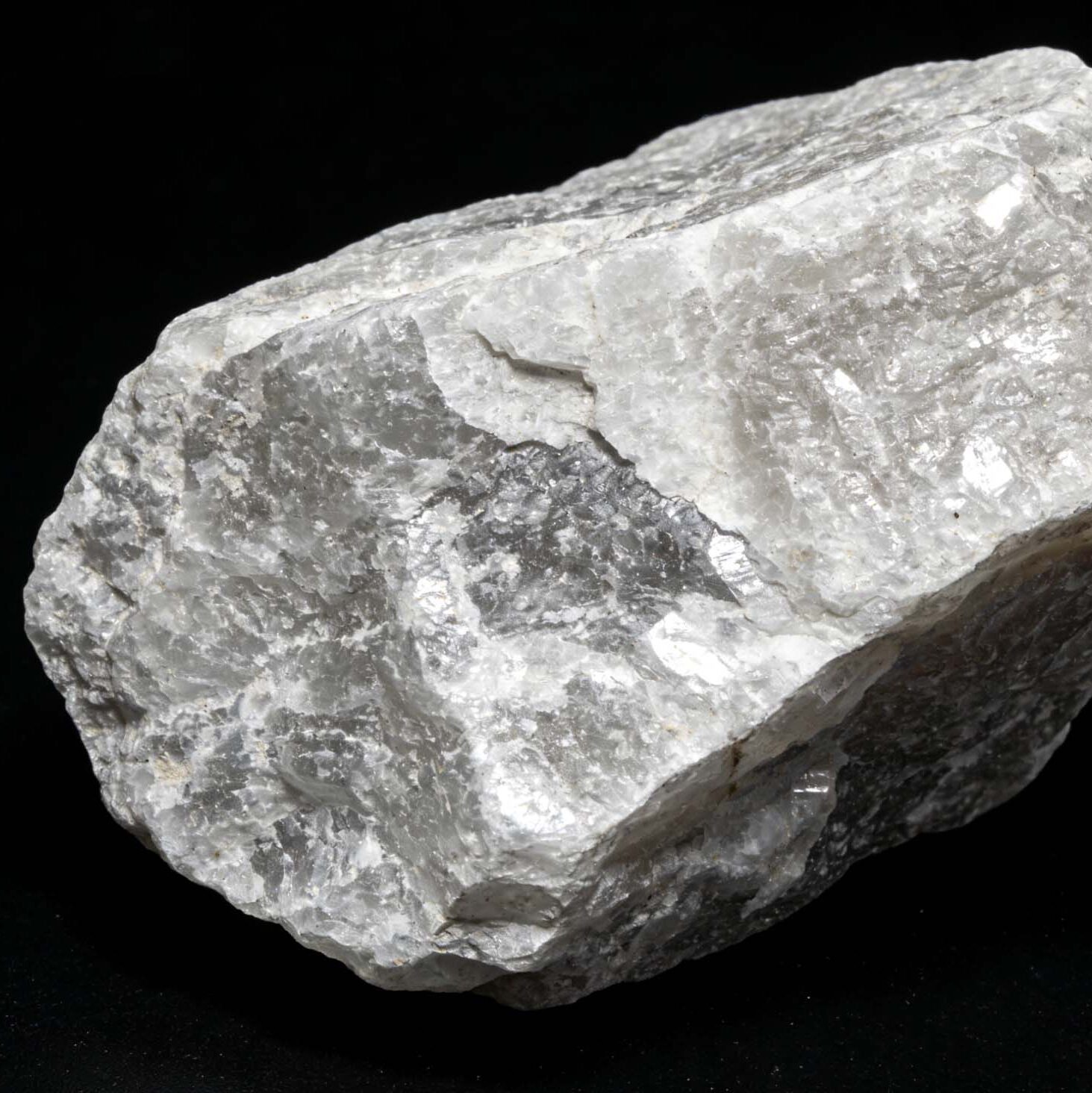
Barite
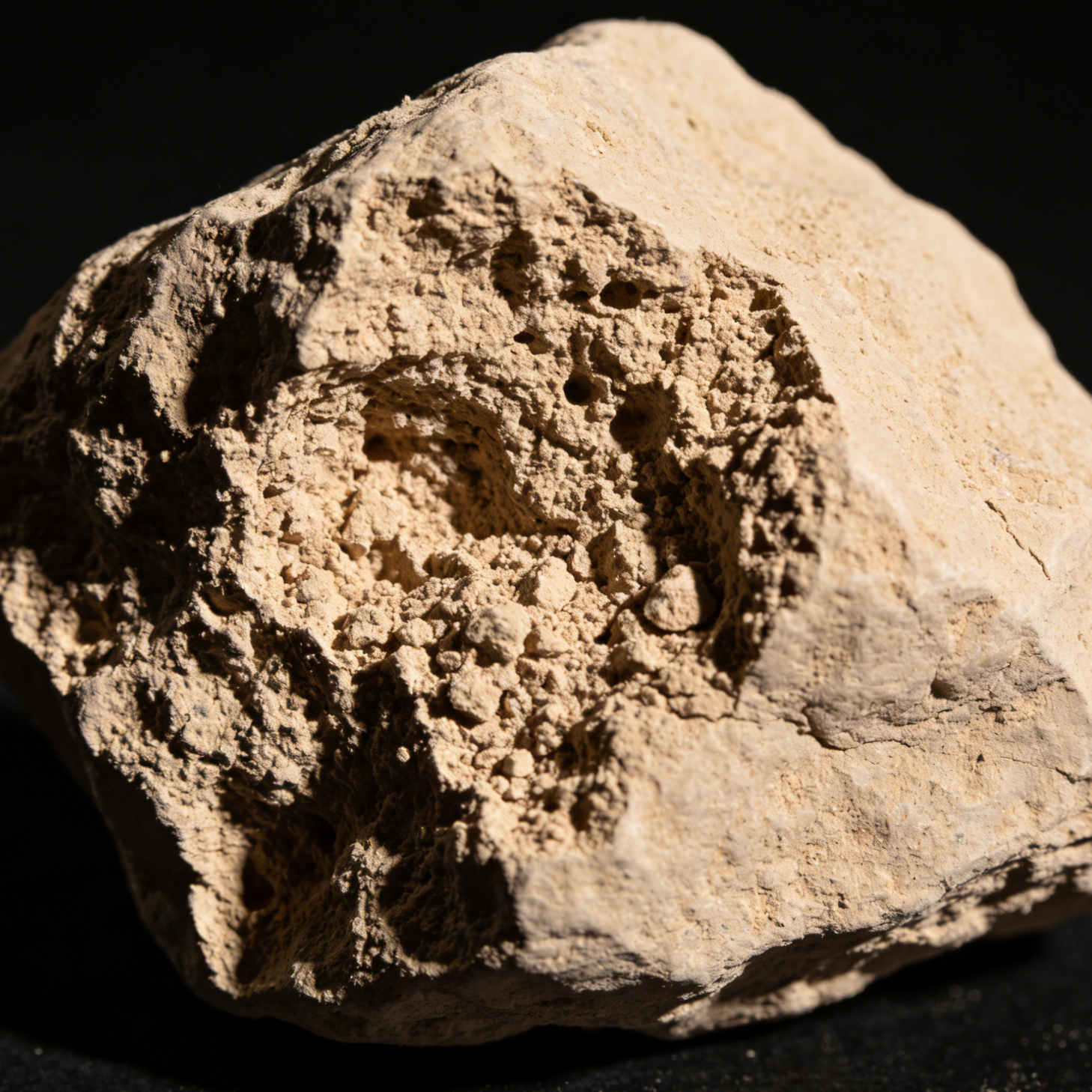
Bentonite
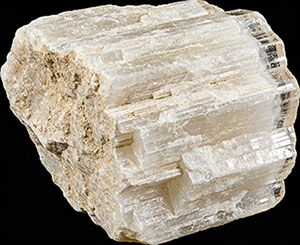
Gypsum
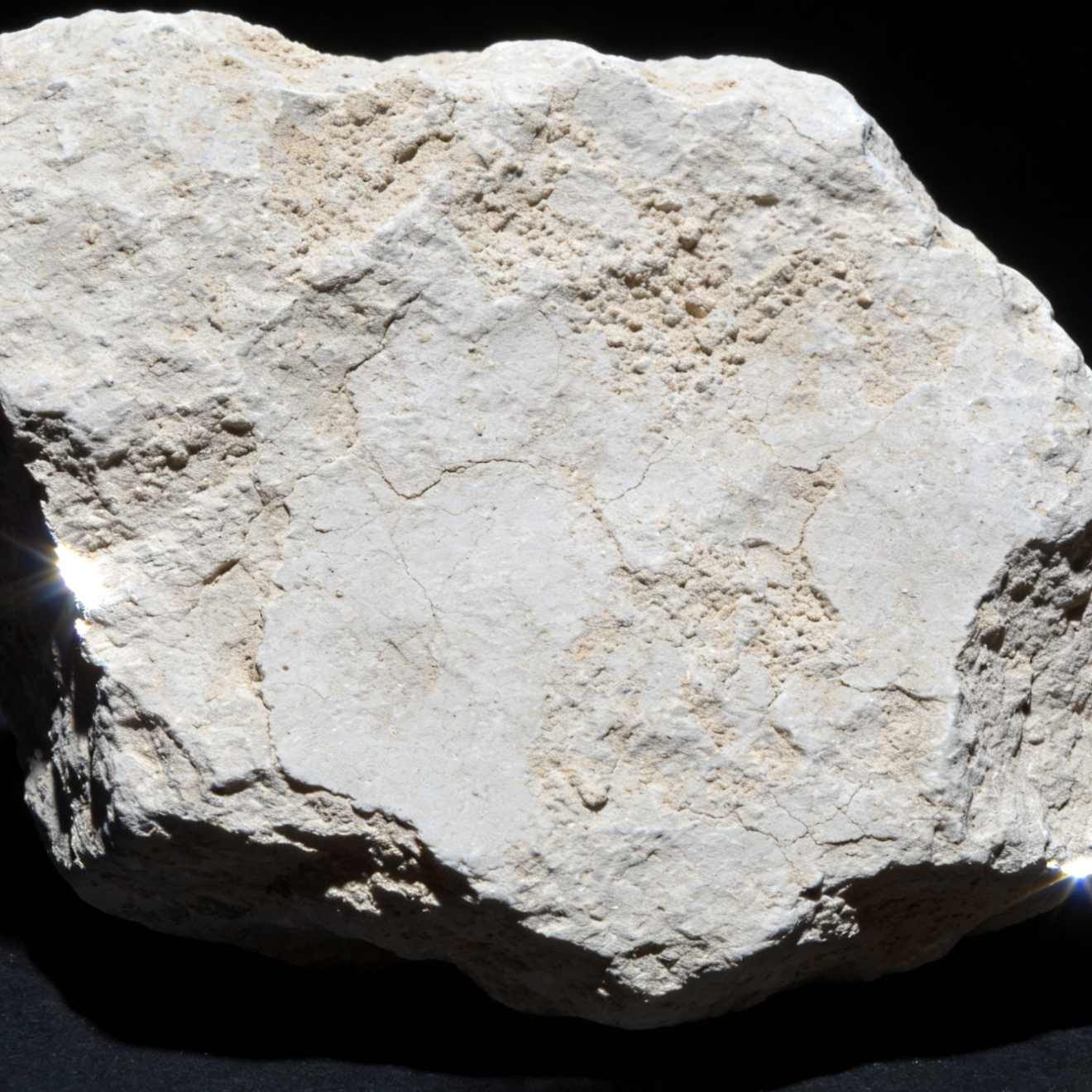
Kaolin
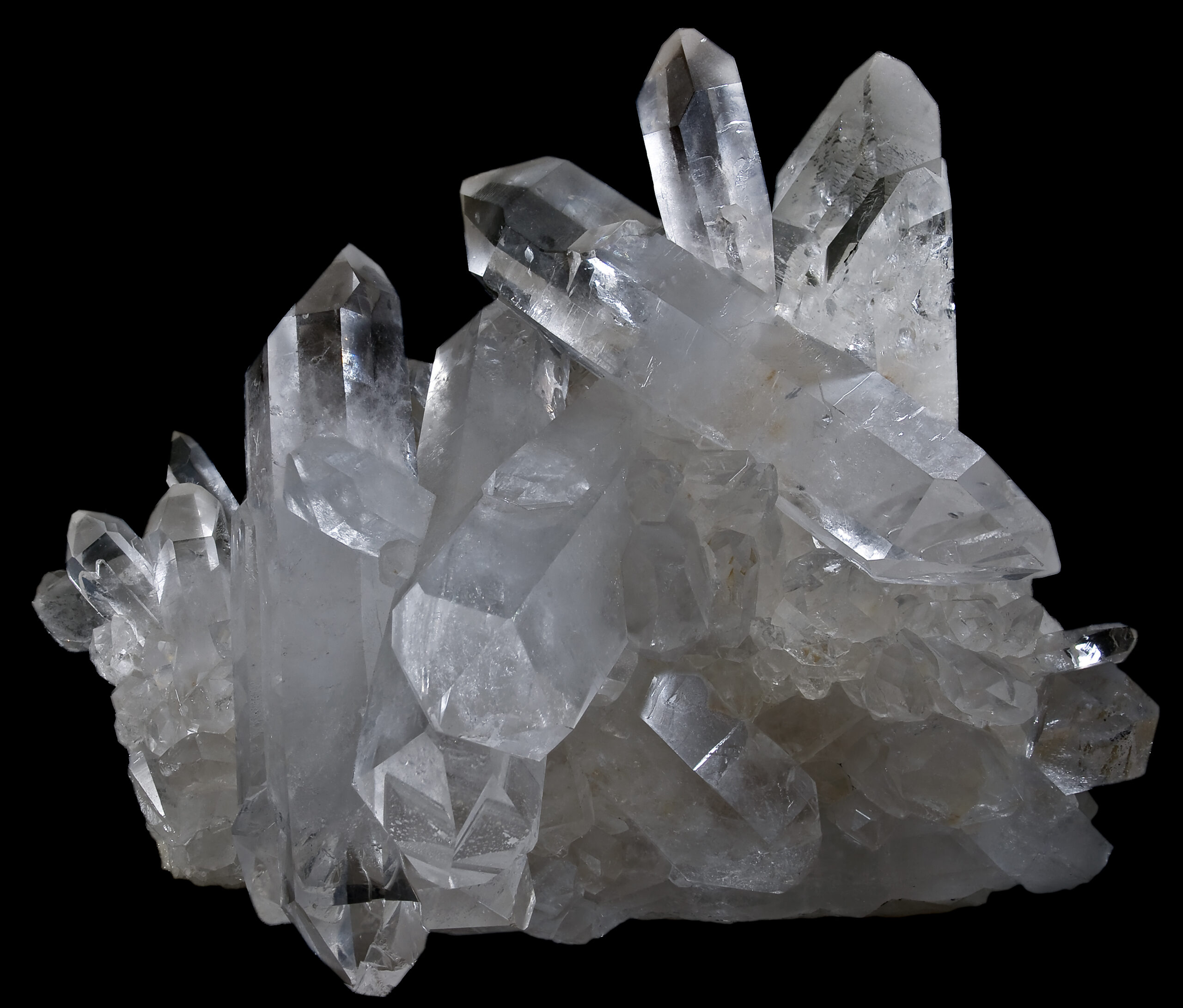
Quartz
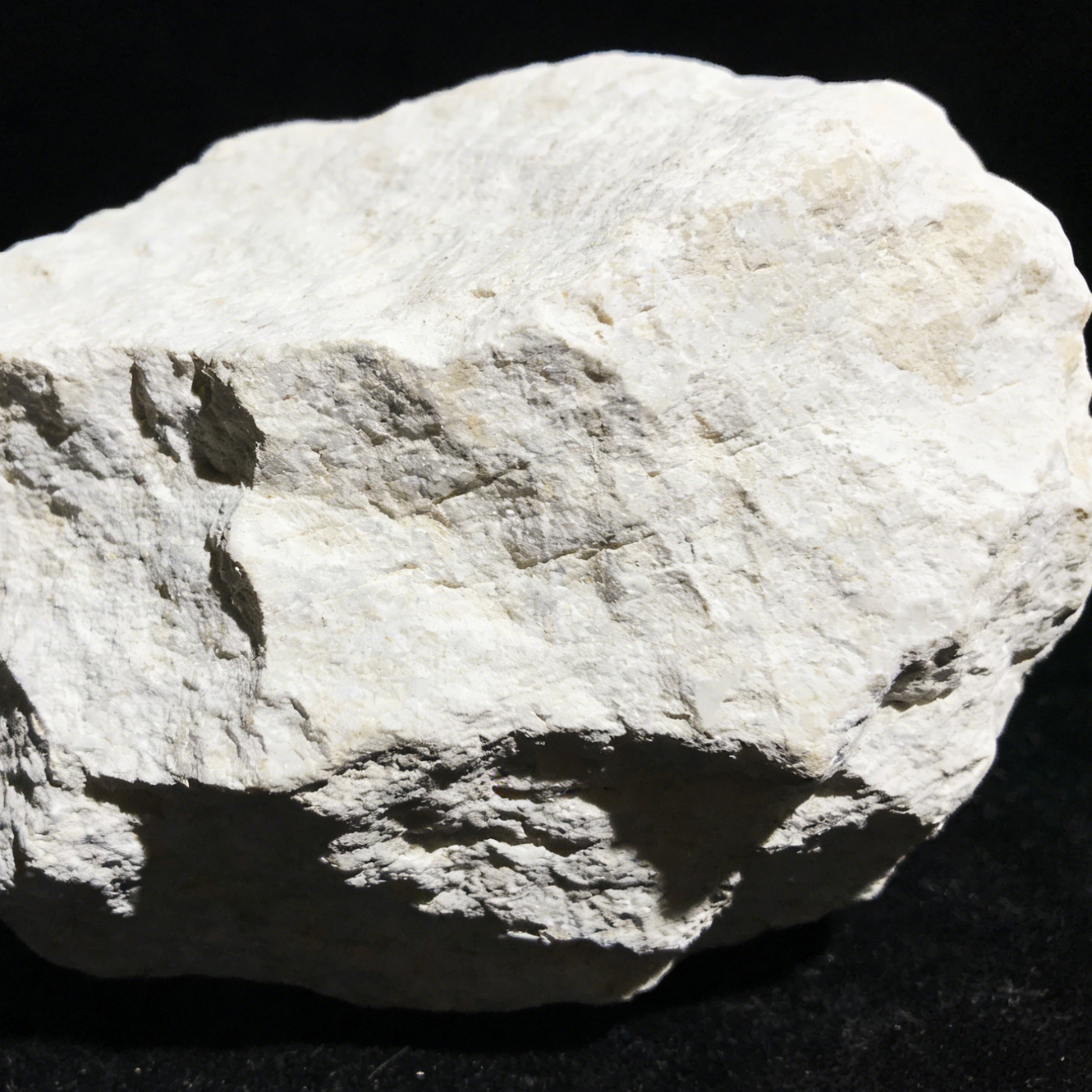
Chalk
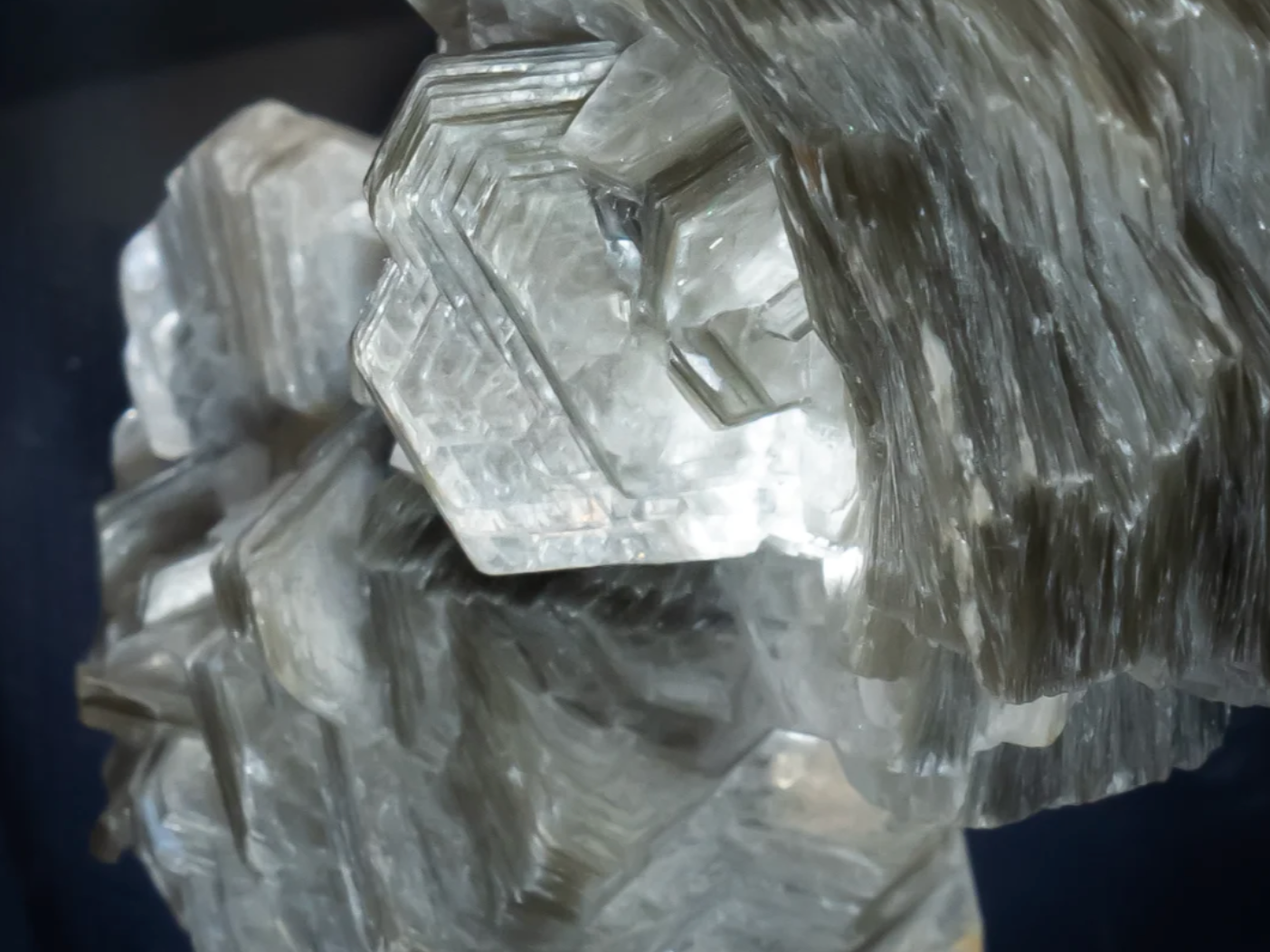
Mica
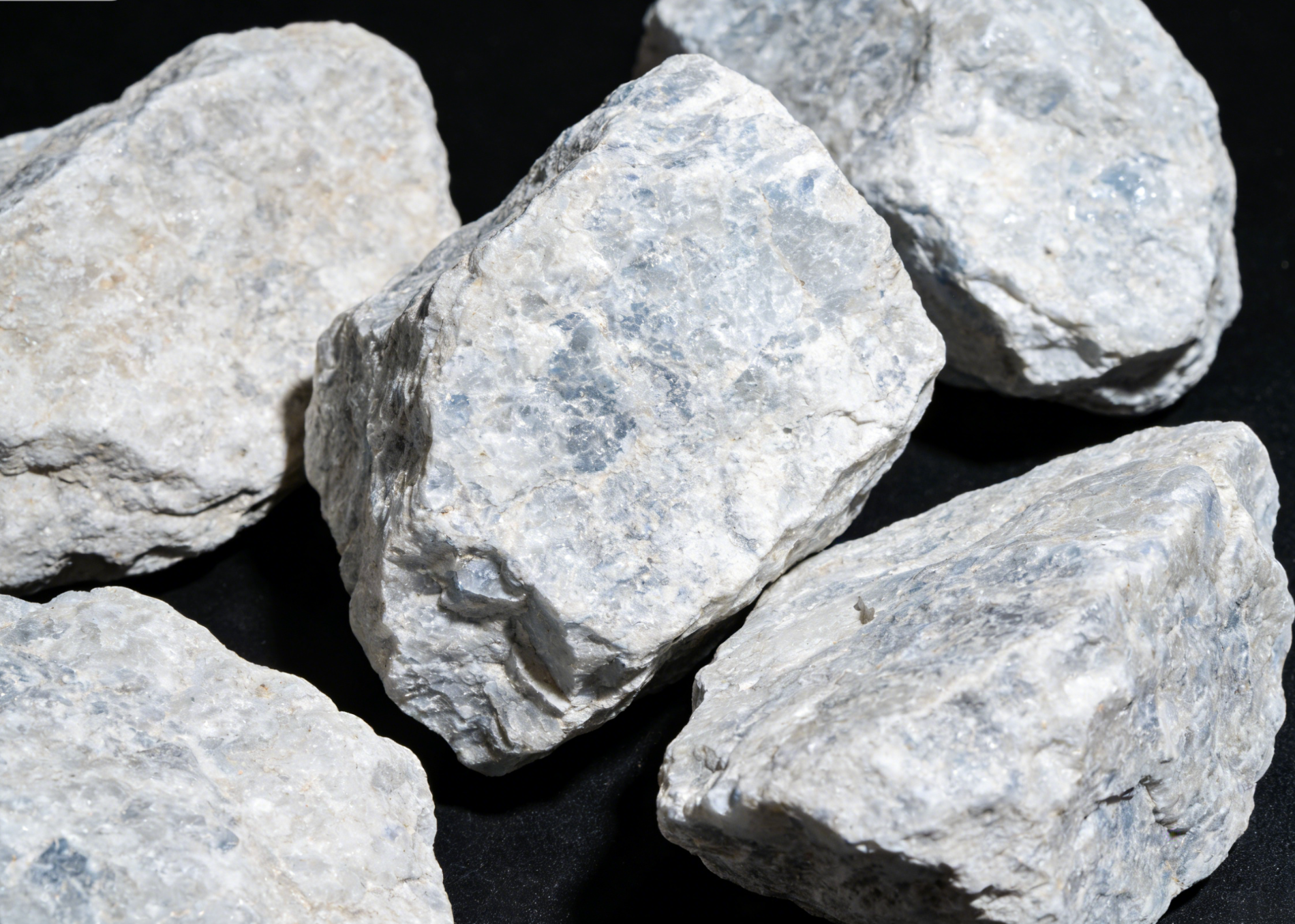
Phosphate Rock
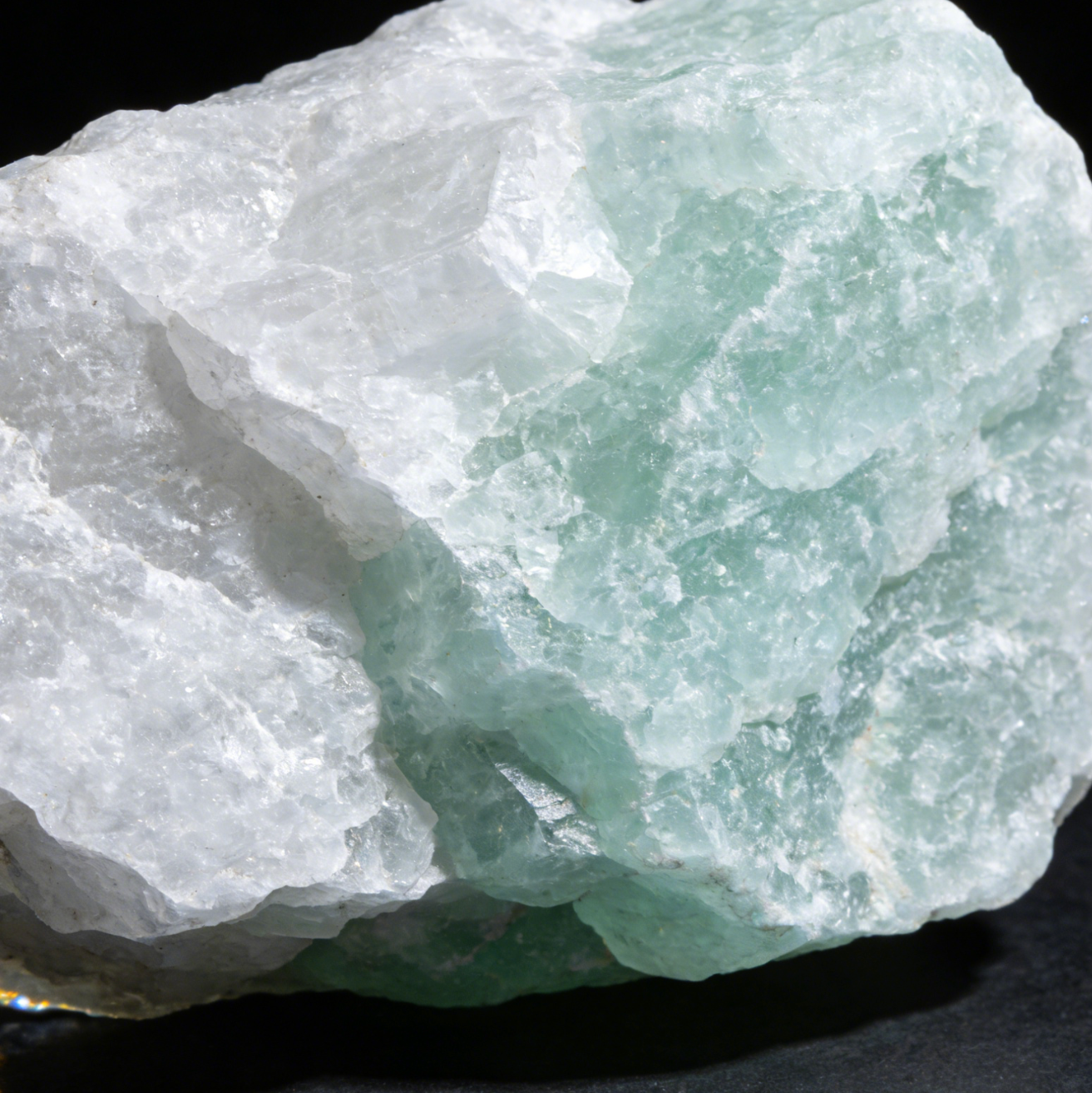
Fluorite
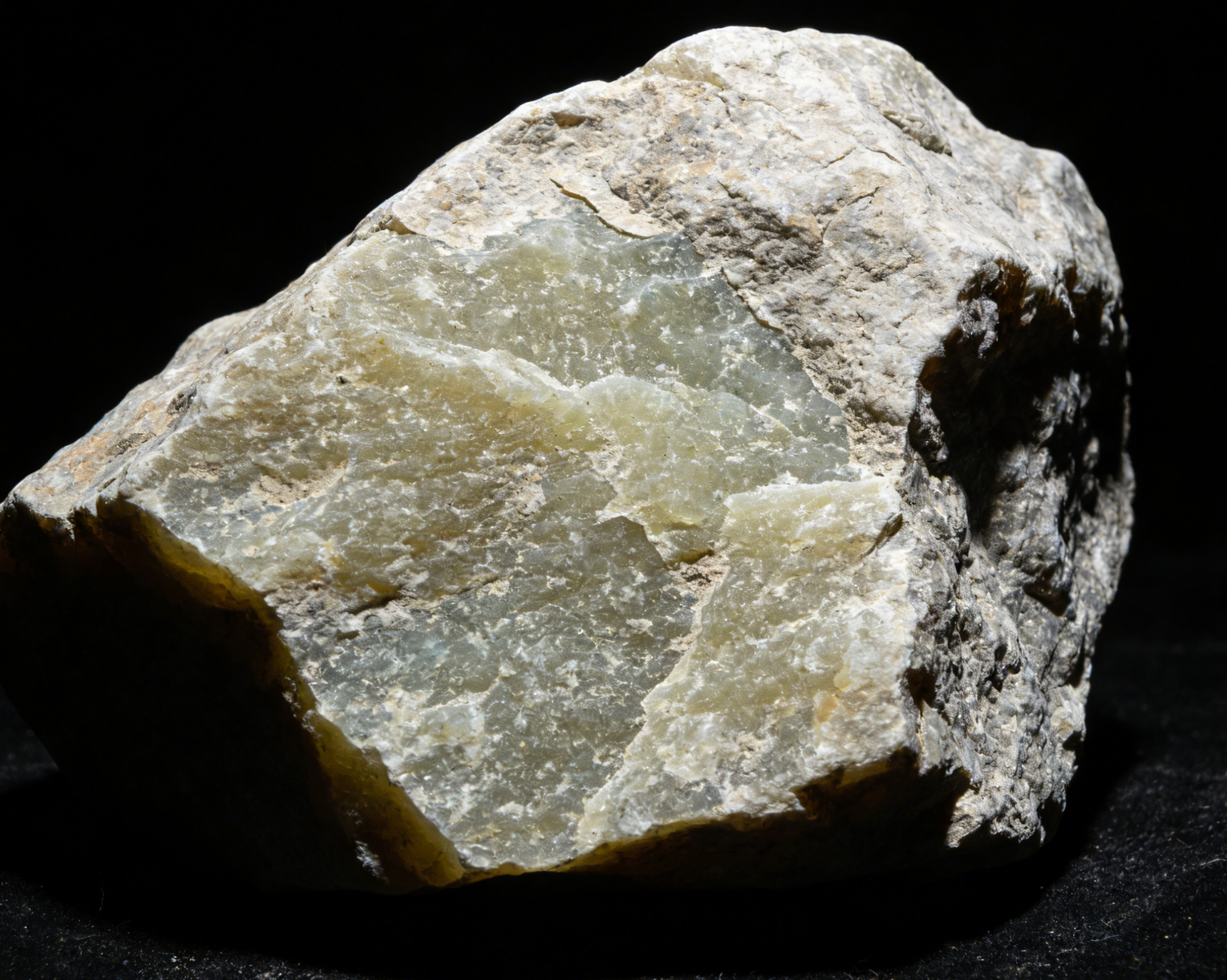
Pyrophyllite
Talc
Addressing the processing requirements for non-metallic minerals—specifically high purity, high whiteness, and fine particle size—we provide a comprehensive, full-lifecycle process flow ranging from coarse crushing to ultrafine pulverization. The entire production line encompasses six core stages: crushing, conveying, grinding, classifying, dust collection, surface modification (optional), and packaging.
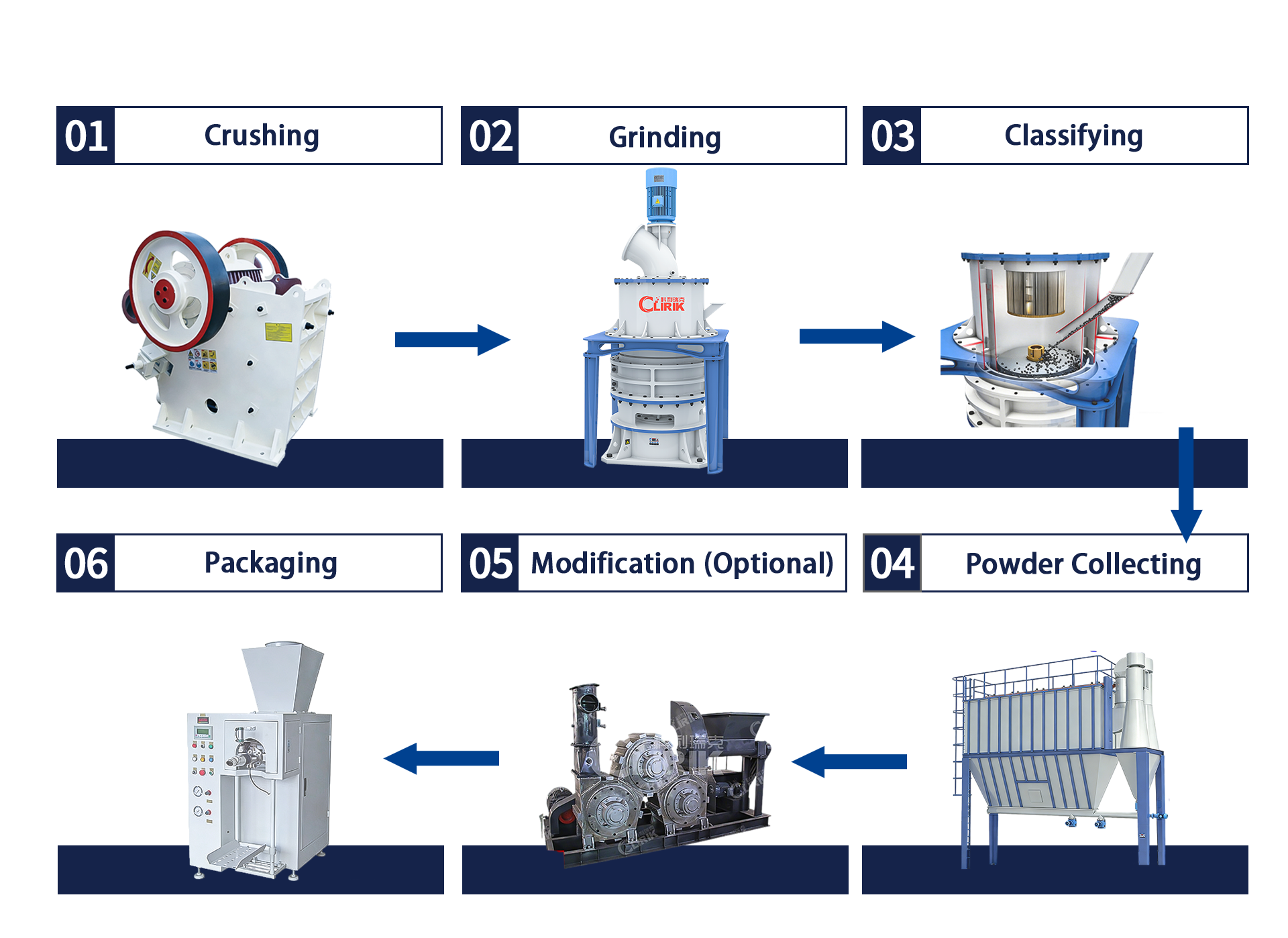
Stage 1:Crushing
Large-sized non-metallic mineral raw materials (such as marble and limestone) first undergo coarse crushing in a jaw crusher to reduce their particle size to within the 15 mm to 50 mm range, thereby meeting the feed requirements of subsequent grinding equipment.
Stage 2:Grinding and Classifying
After crushing, the smaller material fragments are conveyed by an elevator into the raw material bin, then fed uniformly and quantitatively by a vibrating feeder into the grinding chamber of the mill, and subsequently subjected to classification by a classifier.
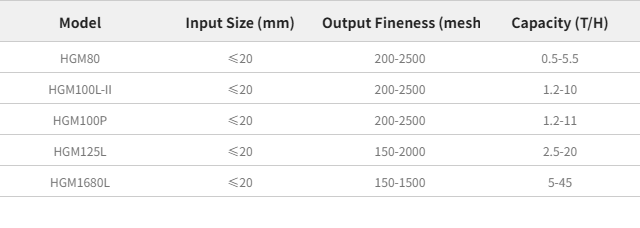
● Ultrafine Powder Processing: To address the demand for high-end fine powders ranging from 200 to 2500 mesh (and finer), we primarily recommend the HGM Series Ultrafine Mill. This model achieves highly efficient grinding through a design featuring multi-layer grinding rings and suspended rollers; when paired with its built-in, high-precision, variable-frequency impeller classifier, it can precisely classify ultrafine powders reaching 2500 mesh (D97≤5μm). Following grinding, the material is carried by an airflow into the classification zone; any coarse particles that fail to meet the required specifications are separated and returned to the main unit for further grinding, thereby establishing a closed-circuit loop that ensures both fineness stability and enhanced raw material utilization.
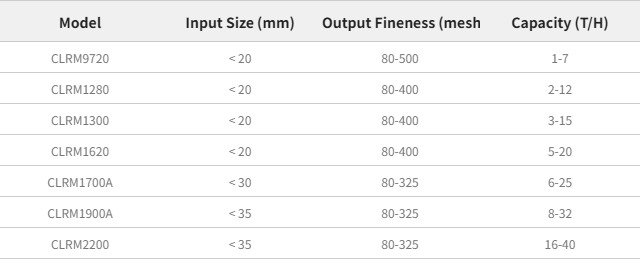
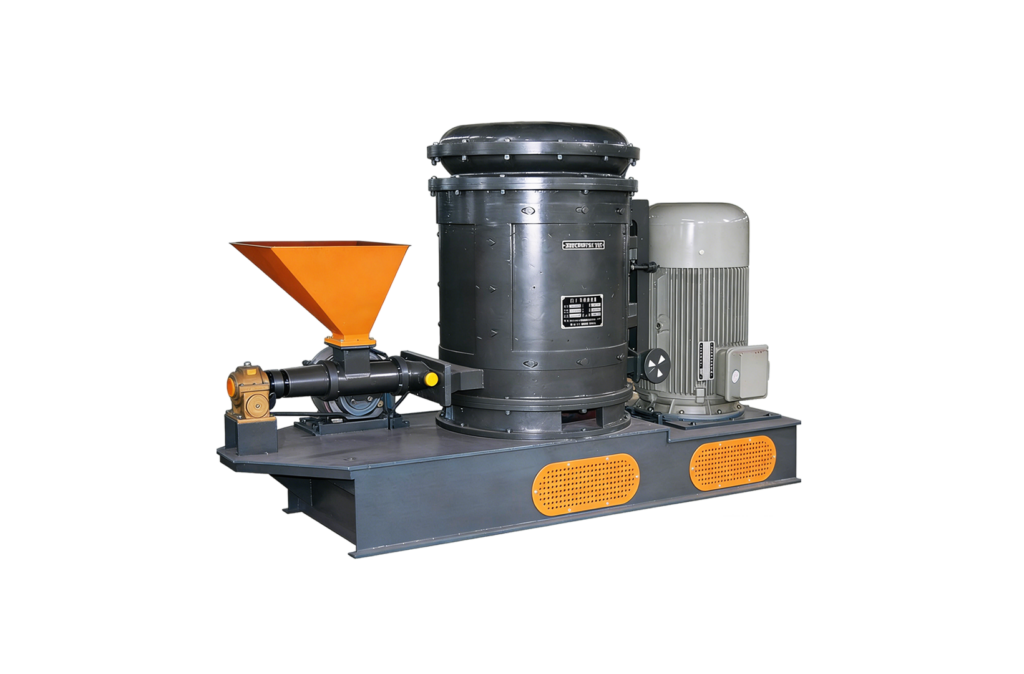
● Standard Fine Powder Processing: For the production of common fillers ranging from 80 to 325 mesh, we recommend the CLRM Raymond Mill. This model stands as a classic choice, distinguished by its uniform particle size distribution and a sieving pass rate of up to 99%. Its integrated classification system features a variable-frequency, impeller-type classifier, allowing for the flexible adjustment of cut points—such as 325 mesh, 600 mesh, and others—to meet specific requirements. Coarse particles are automatically returned to the grinding chamber for secondary processing, ensuring that the finished product is free of oversized particles and satisfies the fundamental requirements for particle size uniformity typically demanded of common fillers.
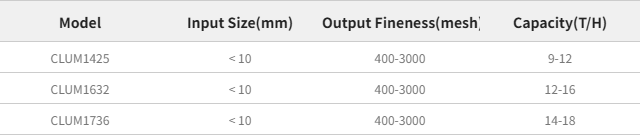
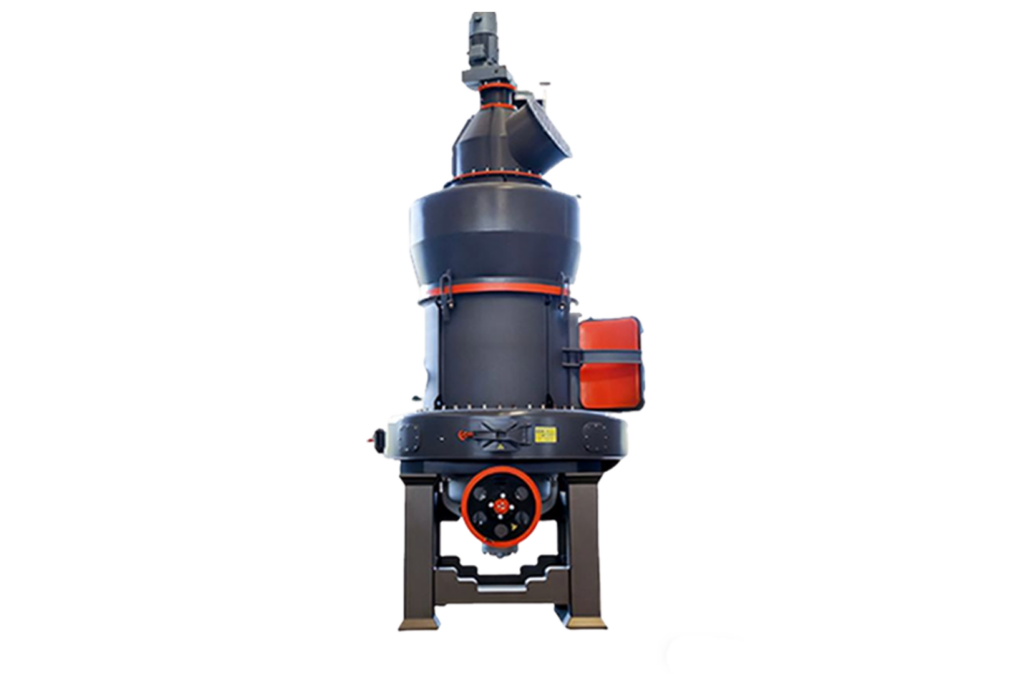
● High-End Ultrafine Powder Processing: For high-end applications demanding exceptional standards regarding powder particle shape and whiteness, we highly recommend the CLUM Series Ultrafine Vertical Mill. This model employs a material-bed grinding principle, producing spherical powder particles characterized by excellent flowability and high bulk density. Its unique grinding structure effectively prevents metal contamination from abrasion, thereby maximizing the preservation of the raw material’s original whiteness. Equipped with a multi-head classifier featuring a variable-frequency rotor, the mill enables precise classification at ultra-fine grades—such as 1250 mesh, 2500 mesh, and 3000 mesh. Coarse particles are automatically returned to the grinding table for re-milling, ensuring a narrow and stable particle size distribution in the final product, which significantly elevates the quality and performance of downstream applications.
Stage 3:Powder Collecting
Fine powder meeting the specified fineness requirements is carried by the airflow into a pulse dust collector (baghouse) for gas-solid separation. The entire system operates under negative pressure and is equipped with a long-bag, low-pressure pulse dust collector; consequently, dust emission concentrations remain far below national standards, and collection efficiency reaches as high as 99.9%. The collected finished powder is discharged through the outlet and conveyed to the finished product silo via a screw conveyor or a pneumatic conveying system.
Stage 4:Modification (Optional)
To address the requirements of high-end applications (such as the reinforcement of plastics and rubber), the optional CLG series powder surface modification machine is available. By subjecting the powder to high-speed mixing at a specific temperature while injecting modifying agents—such as stearic acid or titanates—the machine activates the powder’s surface. This process enhances its dispersibility, hydrophobicity, and compatibility with organic matrices, thereby significantly improving the performance of downstream products.
Stage 5:Packaging
The final product is packaged in accordance with client requirements. Typically, automatic packaging machines are utilized for small-bag packaging (25 kg per bag), or ton bags are employed for bulk packaging. For bulk transport requirements, direct shipment via powder tanker trucks is also available; the entire process is equipped with a dust removal system to ensure environmental cleanliness.
Addressing the processing requirements for non-metallic minerals—specifically high purity, high whiteness, and fineparticle size—we provide a comprehensive, full-lifecycle process flow ranging from coarse crushing to ultrafine pulverization. The entire production line encompasses six core stages: crushing, conveying, grinding, classifying, dust collection, surface modification (optional), and packaging.
Stage 1:Crushing
Large-sized non-metallic mineral raw materials (such as marble and limestone) first undergo coarse crushing in a jaw crusher to reduce their particle size to within the 15 mm to 50 mm range, thereby meeting the feed requirements of subsequent grinding equipment.
Stage 2:Grinding
After crushing, the smaller material fragments are conveyed by an elevator into the raw material bin, then fed uniformly and quantitatively by a vibrating feeder into the grinding chamber of the mill, and subsequently subjected to classification by a classifier.
● Ultrafine Powder Processing: To address the demand for high-end fine powders ranging from 200 to 2500 mesh (and finer), we primarily recommend the HGM Series Ultrafine Mill. This model achieves highly efficient grinding through a design featuring multi-layer grinding rings and suspended rollers; when paired with its built-in, high-precision, variable-frequency impeller classifier, it can precisely classify ultrafine powders reaching 2500 mesh (D97≤5μm). Following grinding, the material is carried by an airflow into the classification zone; any coarse particles that fail to meet the required specifications are separated and returned to the main unit for further grinding, thereby establishing a closed-circuit loop that ensures both fineness stability and enhanced raw material utilization.
● Standard Fine Powder Processing: For the production of common fillers ranging from 80 to 325 mesh, we recommend the CLRM Raymond Mill. This model stands as a classic choice, distinguished by its uniform particle size distribution and a sieving pass rate of up to 99%. Its integrated classification system features a variable-frequency, impeller-type classifier, allowing for the flexible adjustment of cut points—such as 325 mesh, 600 mesh, and others—to meet specific requirements. Coarse particles are automatically returned to the grinding chamber for secondary processing, ensuring that the finished product is free of oversized particles and satisfies the fundamental requirements for particle size uniformity typically demanded of common fillers.
● High-End Ultrafine Powder Processing: For high-end applications demanding exceptional standards regarding powder particle shape and whiteness, we highly recommend the CLUM Series Ultrafine Vertical Mill. This model employs a material-bed grinding principle, producing spherical powder particles characterized by excellent flowability and high bulk density. Its unique grinding structure effectively prevents metal contamination from abrasion, thereby maximizing the preservation of the raw material’s original whiteness. Equipped with a multi-head classifier featuring a variable-frequency rotor, the mill enables precise classification at ultra-fine grades—such as 1250 mesh, 2500 mesh, and 3000 mesh. Coarse particles are automatically returned to the grinding table for re-milling, ensuring a narrow and stable particle size distribution in the final product, which significantly elevates the quality and performance of downstream applications.
Stage 3:Powder Collecting
Fine powder meeting the specified fineness requirements is carried by the airflow into a pulse dust collector (baghouse) for gas-solid separation. The entire system operates under negative pressure and is equipped with a long-bag, low-pressure pulse dust collector; consequently, dust emission concentrations remain far below national standards, and collection efficiency reaches as high as 99.9%. The collected finished powder is discharged through the outlet and conveyed to the finished product silo via a screw conveyor or a pneumatic conveying system.
Stage 4:Modification (Optional)
To address the requirements of high-end applications (such as the reinforcement of plastics and rubber), the optional CLG series powder surface modification machine is available. By subjecting the powder to high-speed mixing at a specific temperature while injecting modifying agents—such as stearic acid or titanates—the machine activates the powder’s surface. This process enhances its dispersibility, hydrophobicity, and compatibility with organic matrices, thereby significantly improving the performance of downstream products.
Stage 5:Packaging
The final product is packaged in accordance with client requirements. Typically, automatic packaging machines are utilized for small-bag packaging (25 kg per bag), or ton bags are employed for bulk packaging. For bulk transport requirements, direct shipment via powder tanker trucks is also available; the entire process is equipped with a dust removal system to ensure environmental cleanliness.
CLIRIK’s grinding machines are suitable for minerals with Mohs hardness below 7, such as limestone, calcite, dolomite, barite, gypsum, kaolin, and so on.
We recommend the HGM Series or CLUM Series, both of which can stably produce powders up to 2500 mesh (D97 less than 5 microns).
The CLRM Raymond Mill is the ideal choice for standard industrial fillers due to its high efficiency and stability.
Yes, the CLUM Vertical Mill uses bed grinding to preserve the flaky or needle-like shapes of minerals like talc and mica.
The standard flow includes: Crushing, Grinding, Classifying, Collecting, Modification (Optional), and Packaging.
Our mills use high-precision frequency conversion classifiers to accurately cut particle sizes and return coarse particles for re-grinding.
Yes, it ensures a dust-free environment with 99.9% collection efficiency, meeting strict environmental standards.
Raw materials should generally be pre-crushed to between 15mm and 50mm before entering the grinding chamber.
We suggest adding the CLG Modification Machine to coat the powder surface, improving its compatibility with organic polymers.
By using frequency-controlled motors and an optimized negative pressure airflow design to reduce energy use per ton.
It offers higher capacity, better particle sphericity, and a more stable, narrow particle size distribution.
It is a continuous system, ensuring more uniform coating and higher efficiency than traditional batch mixers.
CLIRIK’s grinding machines are suitable for minerals with Mohs hardness below 7, such as limestone, calcite, dolomite, barite, gypsum, kaolin, and so on.
We recommend the HGM Series or CLUM Series, both of which can stably produce powders up to 2500 mesh (D97 less than 5 microns).
The CLRM Raymond Mill is the ideal choice for standard industrial fillers due to its high efficiency and stability.
Yes, the CLUM Vertical Mill uses bed grinding to preserve the flaky or needle-like shapes of minerals like talc and mica.
The standard flow includes: Crushing, Grinding, Classifying, Collecting, Modification (Optional), and Packaging.
Our mills use high-precision frequency conversion classifiers to accurately cut particle sizes and return coarse particles for re-grinding.
Yes, it ensures a dust-free environment with 99.9% collection efficiency, meeting strict environmental standards.
Raw materials should generally be pre-crushed to between 15mm and 50mm before entering the grinding chamber.
We suggest adding the CLG Modification Machine to coat the powder surface, improving its compatibility with organic polymers.
By using frequency-controlled motors and an optimized negative pressure airflow design to reduce energy use per ton.
It offers higher capacity, better particle sphericity, and a more stable, narrow particle size distribution.
It is a continuous system, ensuring more uniform coating and higher efficiency than traditional batch mixers.
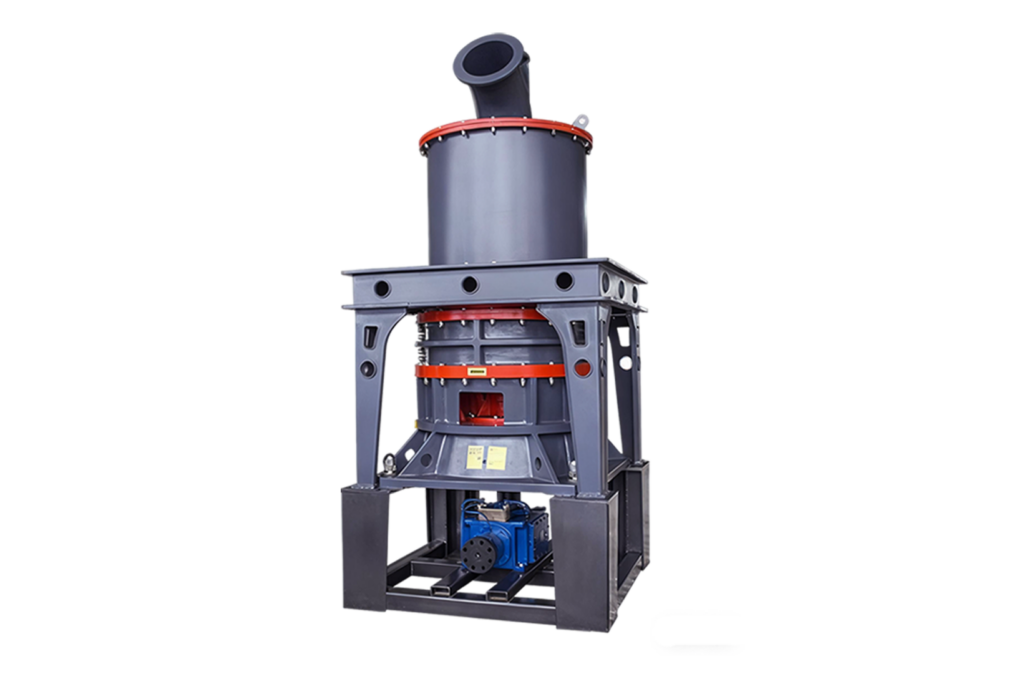
HGM Series Ultrafine Grinding Mill
Closed-Loop Grinding System: Crushed materials undergo high-pressure grinding between rollers and rings. Advanced airflow classification ensures only qualified fine powder is collected, while coarse particles are automatically reground.
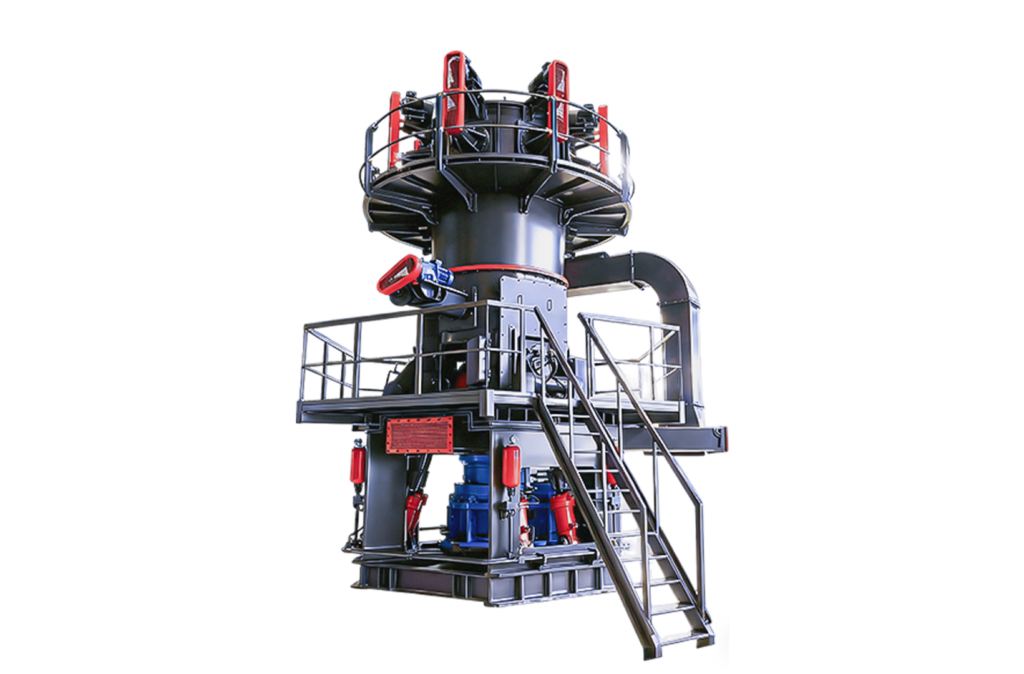
CLUM Series Ultrafine Vertical Grinding Mill
High-Efficiency Circular Grinding: Materials are crushed via hydraulic rollers and centrifugal flow. Integrated airflow classifying and automatic slag discharge ensure consistent fineness and high purity in a continuous, automated closed-loop process.
CLRM Series Raymond Mill
High-Pressure Roller Grinding: Unique shovel-feeding combined with high-pressure spring technology significantly boosts grinding force. Integrated with efficient airflow circulation and cyclone collection for precise, closed-loop pulverization.
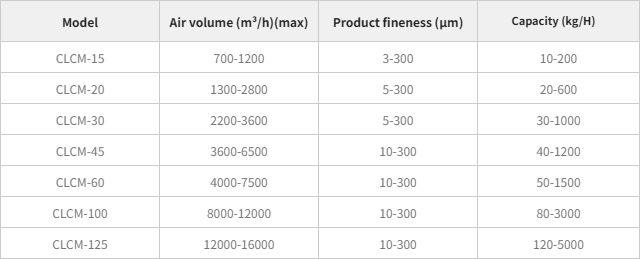
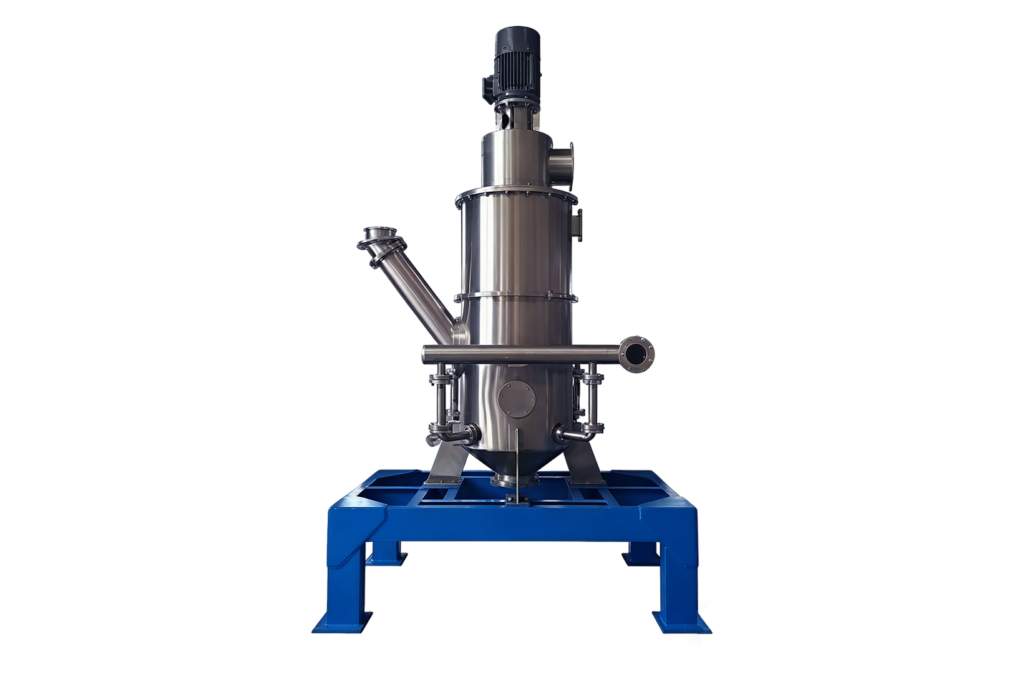
CLCM Series Airflow Vortext Mill
The CLCM Vortex Mill offers energy-efficient, high-purity grinding (5-300μm) using high-speed shearing to ensure superior particle shape and dispersibility for heat-sensitive materials, chemicals, and recycling.
CLJM Series Jet Mill
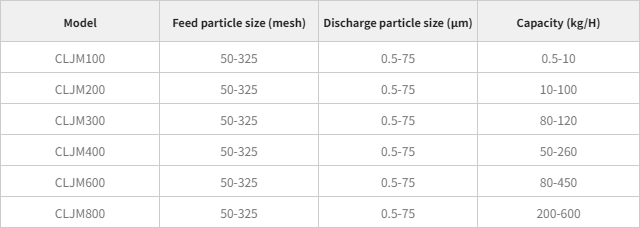
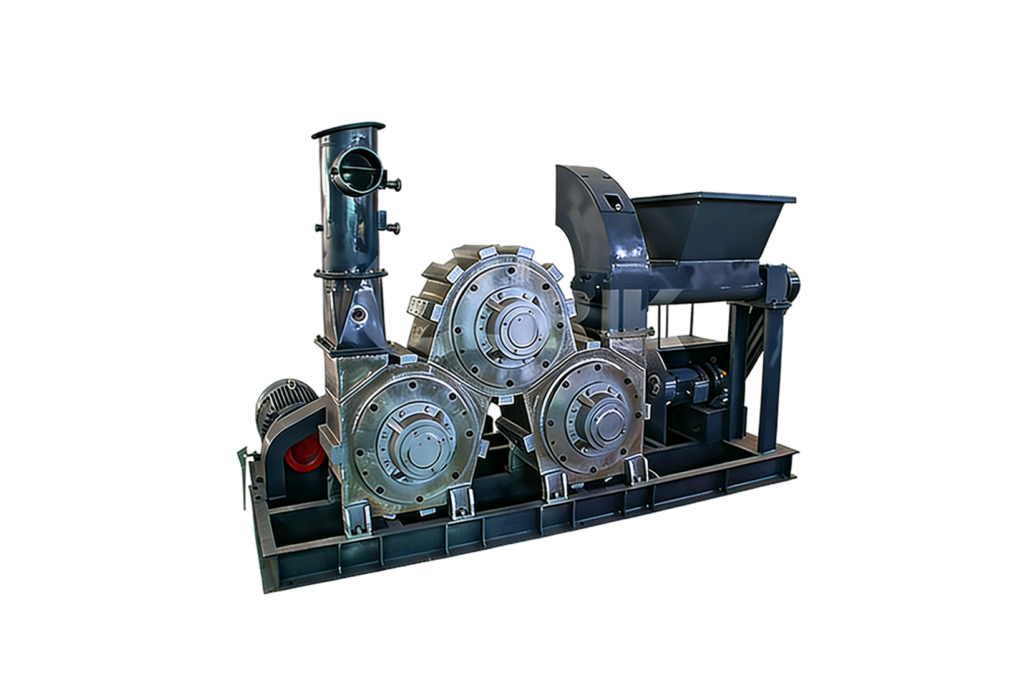
Supersonic Jet Milling System: Utilizes supersonic airflow from Laval nozzles for autogenous grinding without mechanical contact. Integrated with high-precision centrifugal classifying, it ensures narrow particle size distribution and high purity for premium powder processing.
CLG Series Powder Surface Coating Machine
The CLG Coating Machine uses a triple-cylinder structure and friction heat for efficient, continuous surface modification of mineral fillers. It integrates de-agglomeration and coating to boost polymer compatibility, featuring an eco-friendly, negative-pressure design.
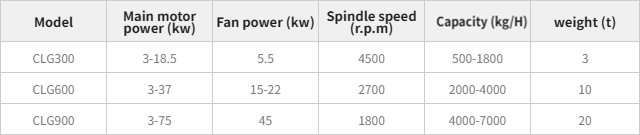
HGM Series Ultrafine Grinding Mill
Closed-Loop Grinding System: Crushed materials undergo high-pressure grinding between rollers and rings. Advanced airflow classification ensures only qualified fine powder is collected, while coarse particles are automatically reground.
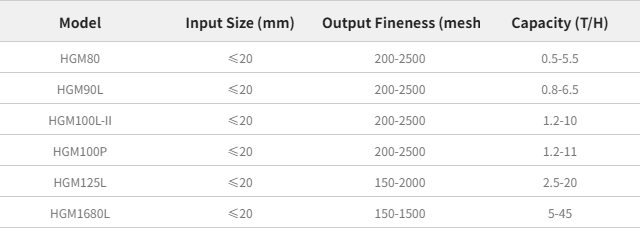
CLUM Series Ultrafine Vertical Grinding Mill
High-Efficiency Circular Grinding: Materials are crushed via hydraulic rollers and centrifugal flow. Integrated airflow classifying and automatic slag discharge ensure consistent fineness and high purity in a continuous, automated closed-loop process.
CLRM Series Raymond Mill
High-Pressure Roller Grinding: Unique shovel-feeding combined with high-pressure spring technology significantly boosts grinding force. Integrated with efficient airflow circulation and cyclone collection for precise, closed-loop pulverization.
CLCM Series Airflow Vortext Mill
The CLCM Vortex Mill offers energy-efficient, high-purity grinding (5-300μm) using high-speed shearing to ensure superior particle shape and dispersibility for heat-sensitive materials, chemicals, and recycling.
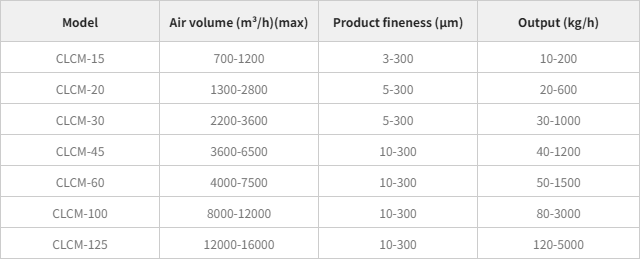
CLJM Series Jet Mill
Supersonic Jet Milling System: Utilizes supersonic airflow from Laval nozzles for autogenous grinding without mechanical contact. Integrated with high-precision centrifugal classifying, it ensures narrow particle size distribution and high purity for premium powder processing.
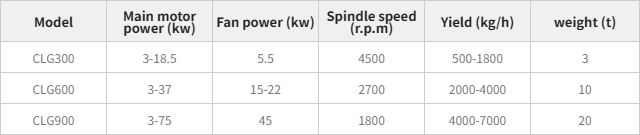
CLG Series Powder Surface Coating Machine
The CLG Coating Machine uses a triple-cylinder structure and friction heat for efficient, continuous surface modification of mineral fillers. It integrates de-agglomeration and coating to boost polymer compatibility, featuring an eco-friendly, negative-pressure design.

Significant Variations in Mineral Characteristics:
Different mineral species (such as talc and wollastonite) exhibit distinct differences in hardness and layered structure; consequently, general-purpose equipment struggles to simultaneously optimize grinding efficiency and preserve crystal integrity.

Severe Iron Contamination:
Wear and tear in traditional mills leads to excessive iron content, seriously compromising the quality of high-whiteness products (such as high-end coatings and cosmetic fillers).

Difficulty in Particle Shape Control:
Acicular and lamellar minerals are prone to fracture or agglomeration during pulverization, making it difficult to preserve their unique reinforcing or barrier functions.

Non-uniform Surface Modification:
Batch-mode modification equipment leads to fluctuations in coating coverage, thereby affecting the dispersibility and interfacial bonding strength of the powder within plastic and rubber matrices.

Low Resource Utilization Efficiency:
There is an overcapacity in rough processing, while high-purity ultrafine powders remain dependent on imports, making it difficult to enhance product added value.
Significant Variations in Mineral Characteristics:
Different mineral species (such as talc and wollastonite) exhibit distinct differences in hardness and layered structure; consequently, general-purpose equipment struggles to simultaneously optimize grinding efficiency and preserve crystal integrity.
Severe Iron Contamination:
Wear and tear in traditional mills leads to excessive iron content, seriously compromising the quality of high-whiteness products (such as high-end coatings and cosmetic fillers).
Difficulty in Particle Shape Control:
Acicular and lamellar minerals are prone to fracture or agglomeration during pulverization, making it difficult to preserve their unique reinforcing or barrier functions.
Non-uniform Surface Modification:
Batch-mode modification equipment leads to fluctuations in coating coverage, thereby affecting the dispersibility and interfacial bonding strength of the powder within plastic and rubber matrices.
Low Resource Utilization Efficiency:
There is an overcapacity in rough processing, while high-purity ultrafine powders remain dependent on imports, making it difficult to enhance product added value.
Turning complex grinding challenges into high-performance operational success
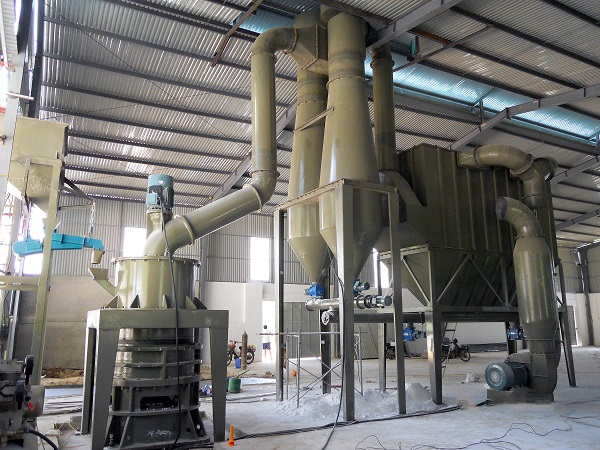
Clirik HGM Series Ultrafine Mill has been successfully integrated into a production line in Abu Dhabi, United Arab Emirates
To meet the client’s demand in Abu Dhabi, United Arab Emirates, for high-precision 10-micron (D97) calcium carbonate, our experts engineered an eco-friendly production line focused on strict particle size control and zero dust emission. By integrating advanced ball milling units, precision classifiers, and powder coating equipment, the system ensures uniform particle distribution and minimal material loss, delivering a high-quality, sustainable solution for premium industrial powder applications.
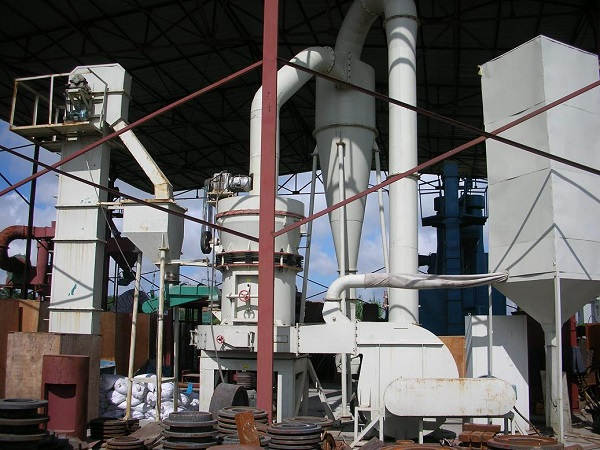
Clirik CLUM Series Vertical Mill was officially commissioned for high-end powder grinding in Ho Chi Minh City, Vietnam
By incorporating advanced vertical grinding mills and smart separators, our technical team customized a high-efficiency processing circuit in Ho Chi Minh City, Vietnam. This project was specifically designed to satisfy local requirements for 15-micron (D97) mineral fillers through rigorous fineness management and clean-air operation. The facility guarantees consistent product quality and optimized power savings, providing a top-tier, eco-conscious outcome for specialized manufacturing sectors.
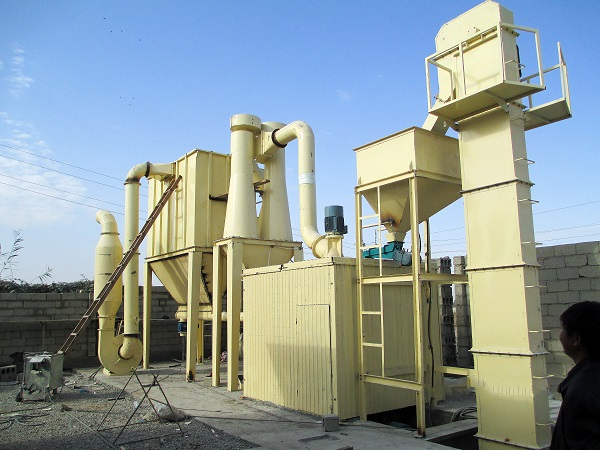
Clirik HGM Series Ultrafine Mill has been successfully integrated into a production line in Abu Dhabi, United Arab Emirates
Achieving homogeneous output and exceptional operational reliability was the core objective for a new manufacturing setup developed in Johannesburg, South Africa. Our specialists deployed industrial pulverizing machinery and high-speed grading units to fulfill the client’s need for heavy-duty 25-micron (D97) limestone grinding. Dedicated to precise granulometry and maximum environmental protection, the setup yields a superior, resource-efficient platform for diverse mineral processing industries.
Turning complex grinding challenges into high-performance operational success
Clirik HGM Series Ultrafine Mill has been successfully integrated into a production line in Abu Dhabi, United Arab Emirates
To meet the client’s demand in Abu Dhabi, United Arab Emirates, for high-precision 10-micron (D97) calcium carbonate, our experts engineered an eco-friendly production line focused on strict particle size control and zero dust emission. By integrating advanced ball milling units, precision classifiers, and powder coating equipment, the system ensures uniform particle distribution and minimal material loss, delivering a high-quality, sustainable solution for premium industrial powder applications.
Clirik CLUM Series Vertical Mill was officially commissioned for high-end powder grinding in Ho Chi Minh City, Vietnam
By incorporating advanced vertical grinding mills and smart separators, our technical team customized a high-efficiency processing circuit in Ho Chi Minh City, Vietnam. This project was specifically designed to satisfy local requirements for 15-micron (D97) mineral fillers through rigorous fineness management and clean-air operation. The facility guarantees consistent product quality and optimized power savings, providing a top-tier, eco-conscious outcome for specialized manufacturing sectors.
Clirik HGM Series Ultrafine Mill has been successfully integrated into a production line in Abu Dhabi, United Arab Emirates
Achieving homogeneous output and exceptional operational reliability was the core objective for a new manufacturing setup developed in Johannesburg, South Africa. Our specialists deployed industrial pulverizing machinery and high-speed grading units to fulfill the client’s need for heavy-duty 25-micron (D97) limestone grinding. Dedicated to precise granulometry and maximum environmental protection, the setup yields a superior, resource-efficient platform for diverse mineral processing industries.
Crystal Protection • Pure Grinding • Functional Customization
01.Retention of Crystal Structure
By employing packed-bed grinding and air-flow autogenous milling technologies, the flaky and acicular structures of minerals such as talc and mica are preserved to the maximum extent, thereby fully leveraging their functional properties—including reinforcement and barrier capabilities.
02.Zero Iron Contamination
The grinding chamber liner is constructed from ceramic or polymer materials; combined with the media-free grinding mechanism of the airflow mill, this ensures that the product’s iron content remains below 0.01%, thereby meeting the stringent requirements for whiteness and purity demanded by high-end applications.
03.Controllable particle size and morphology
Through the precise regulation of classifiers and airflow fields, it is possible to optimize the aspect ratio of flaky minerals or preserve the length-to-diameter ratio of acicular minerals, thereby providing customized solutions to meet the specific requirements of diverse application scenarios.
04.Continuous Modification
Incorporating the CLG-type continuous modifier, this system enables the in-line surface activation and coating of powders; the modifying agent is dispersed uniformly, significantly enhancing the compatibility between the powder and the organic matrix.
05.Intelligent Process Adaptation
Tailored process solutions are provided to address the specific characteristics of various mineral types (such as thermal sensitivity and layered structures); these solutions integrate with a PLC system to enable real-time parameter adjustments, thereby ensuring production stability and product consistency.
06.Efficient Resource Utilization
Through the comprehensive optimization of the entire process—ranging from coarse crushing to ultrafine pulverization—low-grade ores can be refined and processed into high-value-added functional powders, thereby empowering enterprises to expand into new application sectors such as new energy and high-end manufacturing.
High efficiency and energy saving
Environmentally friendly and intelligent
Excellent particle shape
01.Retention of Crystal Structure
By employing packed-bed grinding and air-flow autogenous milling technologies, the flaky and acicular structures of minerals such as talc and mica are preserved to the maximum extent, thereby fully leveraging their functional properties—including reinforcement and barrier capabilities.
02.Zero Iron Contamination
The grinding chamber liner is constructed from ceramic or polymer materials; combined with the media-free grinding mechanism of the airflow mill, this ensures that the product’s iron content remains below 0.01%, thereby meeting the stringent requirements for whiteness and purity demanded by high-end applications.
03.Controllable particle size and morphology
Through the precise regulation of classifiers and airflow fields, it is possible to optimize the aspect ratio of flaky minerals or preserve the length-to-diameter ratio of acicular minerals, thereby providing customized solutions to meet the specific requirements of diverse application scenarios.
04.Continuous Modification
Incorporating the CLG-type continuous modifier, this system enables the in-line surface activation and coating of powders; the modifying agent is dispersed uniformly, significantly enhancing the compatibility between the powder and the organic matrix.
05.Intelligent Process Adaptation
Tailored process solutions are provided to address the specific characteristics of various mineral types (such as thermal sensitivity and layered structures); these solutions integrate with a PLC system to enable real-time parameter adjustments, thereby ensuring production stability and product consistency.
06.Efficient Resource Utilization
Through the comprehensive optimization of the entire process—ranging from coarse crushing to ultrafine pulverization—low-grade ores can be refined and processed into high-value-added functional powders, thereby empowering enterprises to expand into new application sectors such as new energy and high-end manufacturing.
Crystal Protection • Pure Grinding • Functional Customization

20+ Years of Expertise
With 20+ years in powder grinding processing, we deeply understand every ore’s traits. From mechanical design to smart systems, our decades of expertise help you avoid industry pitfalls and provide the most stable, proven equipment solutions.
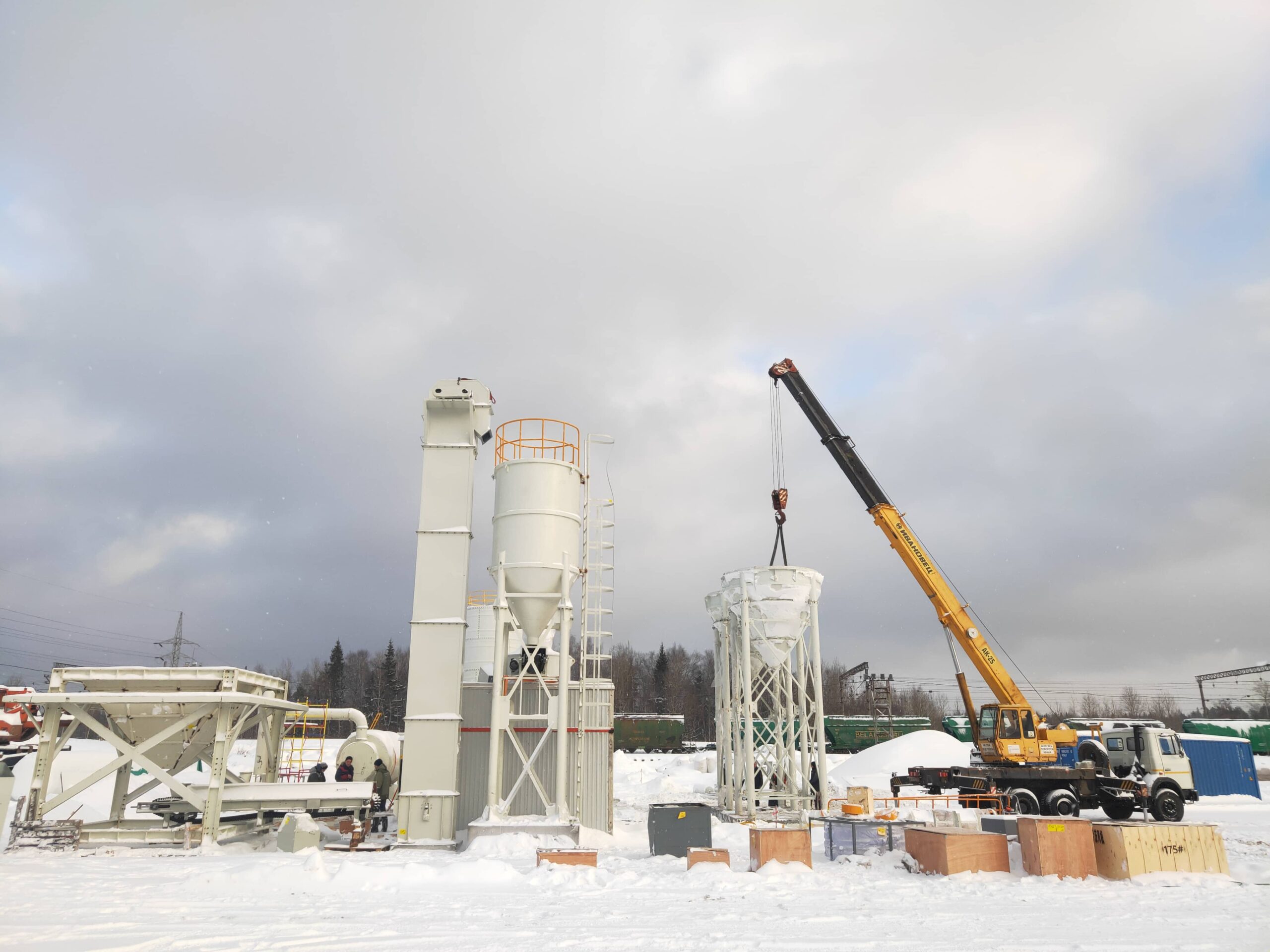
3600+ Global Site Projects
With 3600+ active sites worldwide, our mills excel from humid tropics to extreme continental climates. This vast field experience allows us to replicate success quickly, building optimized production lines that perfectly suit your specific local working conditions.
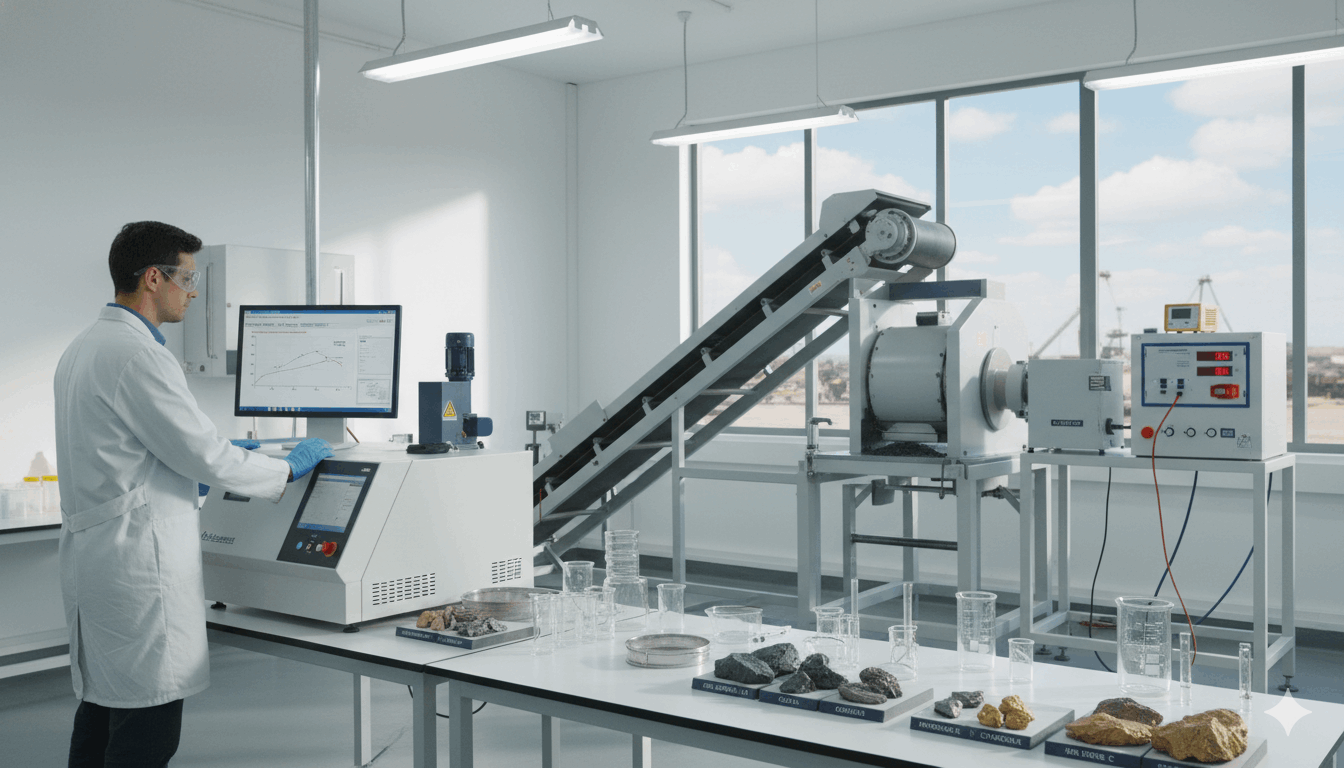
Material Testing & Trials
We offer material testing to accurately measure fineness, output, and power use for your specific ores. You can witness the trial runs firsthand, ensuring the final product quality perfectly meets your expectations before the equipment is even put into operation.
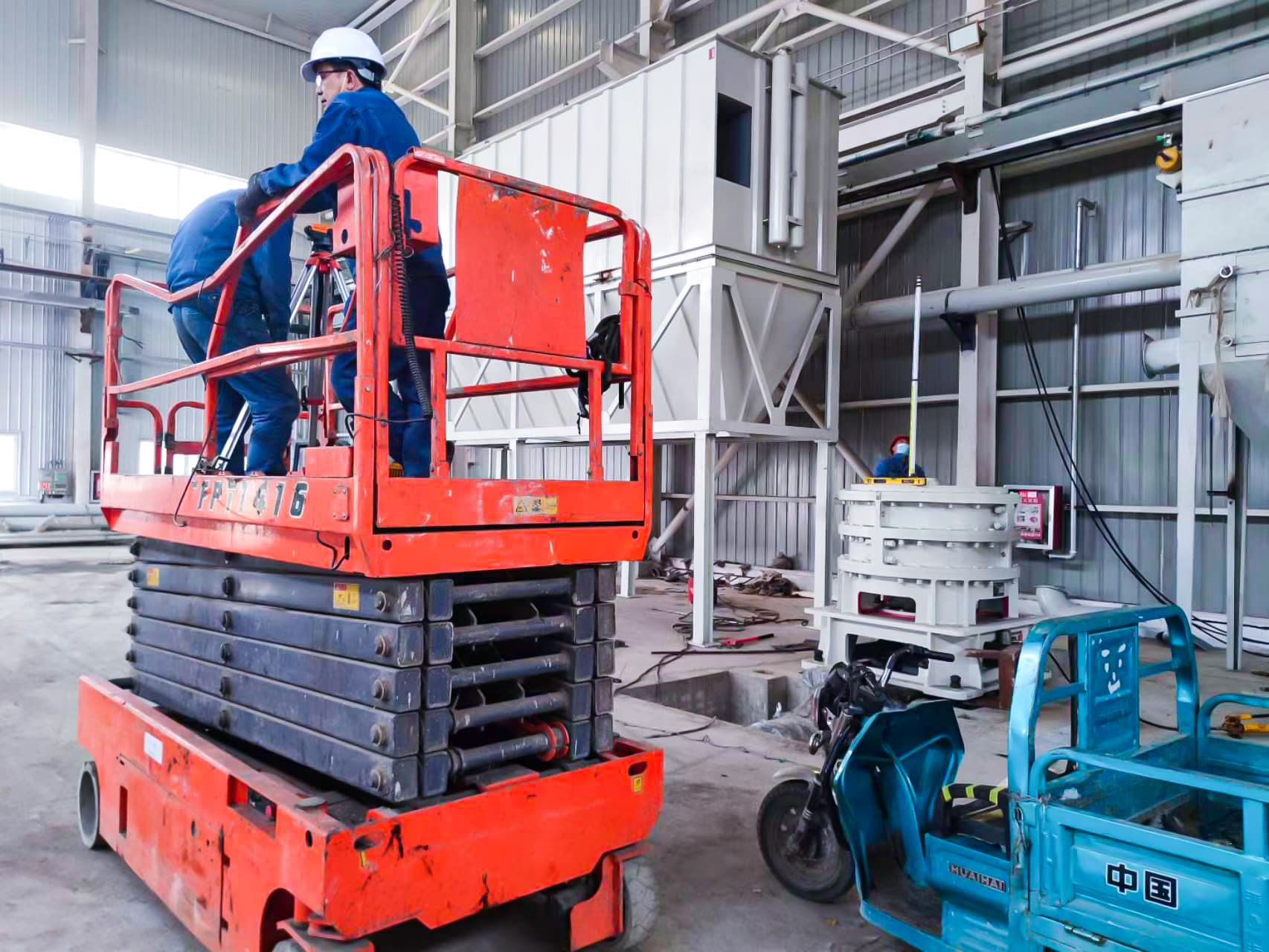
Pro Installation & Support
Our experienced team handles everything from foundation guidance to operator training. Wherever you are, our engineers provide professional online and onsite support to ensure a fast startup and efficient operation, resolving all your concerns after the sale.
Empowering Quality,
Enhancing Efficiency
20+ Years of Expertise
With 20+ years in powder grinding processing, we deeply understand every ore’s traits. From mechanical design to smart systems, our decades of expertise help you avoid industry pitfalls and provide the most stable, proven equipment solutions.
3600+ Global Site Projects
With 3600+ active sites worldwide, our mills excel from humid tropics to extreme continental climates. This vast field experience allows us to replicate success quickly, building optimized production lines that perfectly suit your specific local working conditions.
Material Testing & Trials
We offer material testing to accurately measure fineness, output, and power use for your specific ores. You can witness the trial runs firsthand, ensuring the final product quality perfectly meets your expectations before the equipment is even put into operation.
Pro Installation & Support
Our experienced team handles everything from foundation guidance to operator training. Wherever you are, our engineers provide professional online and onsite support to ensure a fast startup and efficient operation, resolving all your concerns after the sale.
CONTACT US
Every mineral has its unique value. Share your material specs and capacity
needs, and CLIRIK experts will tailor a cost-effective grinding solution to ensure
your project’s successful operation.
Address

No.19, Fuqing Rd, Pudong
New Area, Shanghai, China.
Find Us On :
Every mineral has its unique value. Share your material specs and capacity
needs, and CLIRIK experts will tailor a cost-effective grinding solution to ensure
your project’s successful operation.
Address
No.19, Fuqing Rd, Pudong
New Area, Shanghai, China.
Find Us On :




Versatile Solutions for Diverse Industries
Versatile Solutions for Diverse Industries
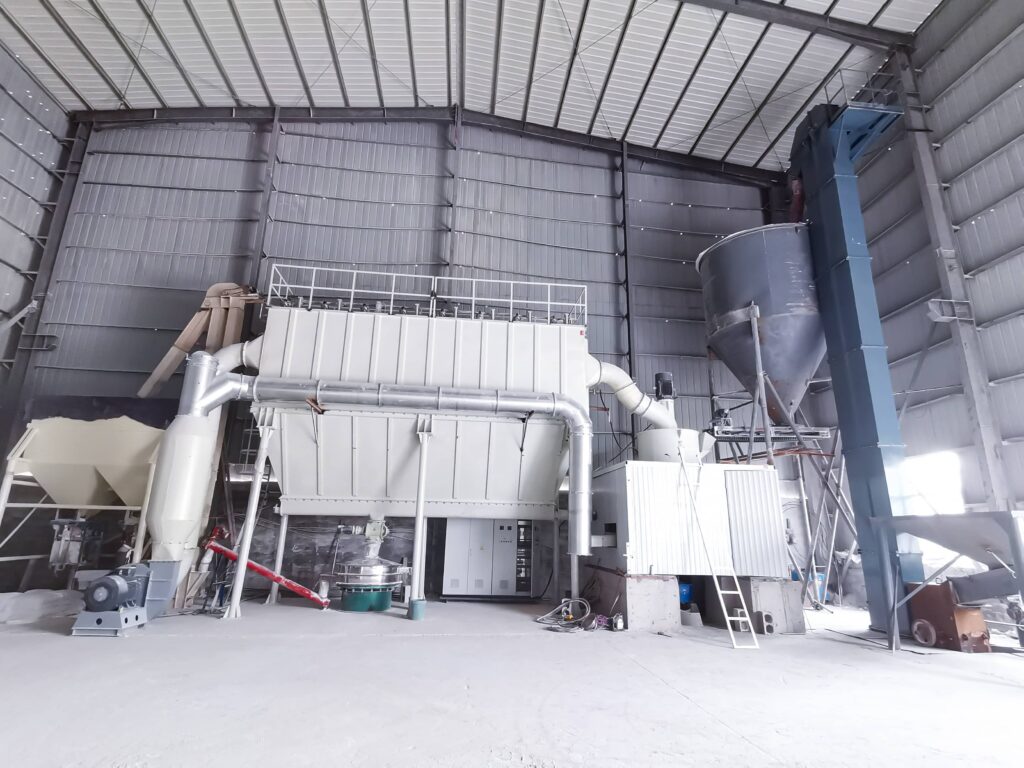
CLIRIK achieves two-way empowerment through global customer visits and on-site services, winning worldwide trust with full-process professional support.
In recent years, the global powder processing industry has witnessed a sharp rise in demand for ultra-fine powder products, driven by sectors…
Talcum powder is a widely used industrial material across cosmetics, pharmaceuticals, and plastics, making an efficient talcum powder…
Unfortunately, the information you searched was not found
CLIRIK achieves two-way empowerment through global customer visits and on-site services, winning worldwide trust with full-process professional support.
In recent years, the global powder processing industry has witnessed a sharp rise in demand for ultra-fine powder products, driven by sectors…
Talcum powder is a widely used industrial material across cosmetics, pharmaceuticals, and plastics, making an efficient talcum powder…
Unfortunately, the information you searched was not found