 Shanghai Clirik Machinery Co.,Ltd

Search
Many process engineers are now facing a deadlock: as soon as they increase the mill speed, the powder immediately agglomerates severely, and the output instantly reaches its limit. To complete the technological transformation of your calcium carbonate grinding production line by 2026, you have only two objectives: keep the D97 particle size firmly below 2 microns while capping the specific energy consumption at no more than 110 kWh/t. The current calcium carbonate mill retrofit scheme has long since abandoned the traditional, trial‑and‑error approach of manually adjusting rotational speed, instead plunging headfirst into the cutting edge of acoustic‑based predictive feeding and zero‑bypass dynamic classification. We will use the “triangle model of specific energy consumption” to analyze how to break this mechanical limit, help you cut off 18% of the invalid power consumption, and steadily get the ultra-fine powder products with high steepness distribution.
The triangular model of specific energy consumption (SEC-Triangle): reconstructing the underlying logic of a calcium carbonate mill
Cut off the source before the powder agglomerates.
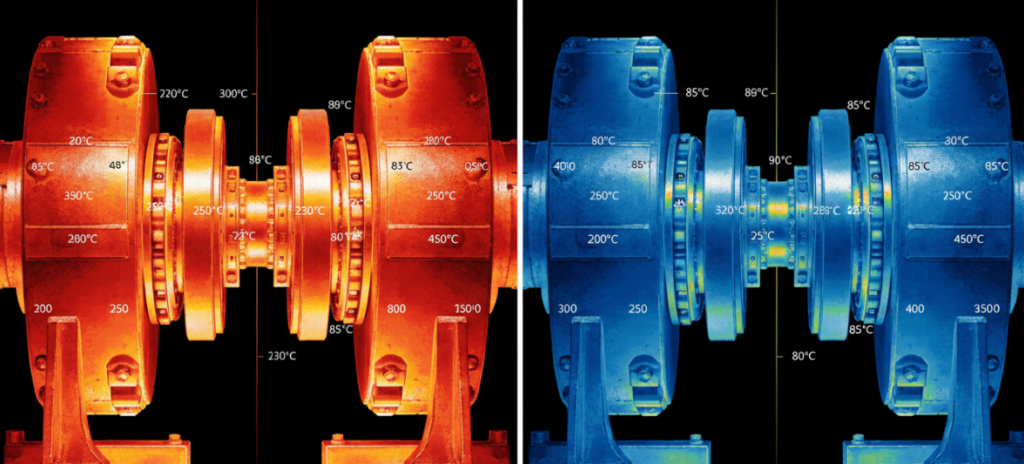
When the internal temperature of the mill exceeds 105°C, the accumulation of static electricity will instantly cause serious agglomeration of calcium carbonate powder. When the grinding rollers press and shear the material, up to 90% of the kinetic energy actually becomes waste heat and is not converted into crushing energy at all. Cooling the scavenging system and optimizing the cooling mechanisms of the mill can directly prevent the premature volatilization failure of the grinding aid. During the first-line debugging, we found that as long as the heat of the grinding cavity is reduced, the phenomenon of powder adhering to the rollers (roller coating) will disappear immediately, and the crushing force can directly act on the heavy calcium (GCC) raw ore.
Completely cut off the bypass short circuit flow
A high-precision grading wheel directly determines the particle size steepness of the GCC product. The classification process with coarse particle leakage will send the fine powder that has reached the standard back to the grinding zone to form a huge buffer layer, which absorbs all the grinding pressure of the rollers. The bypass short-circuit flow can be completely cut off by installing a dynamic guide ring at the classifier interface and accurately suppressing the air flow speed. As long as the grading vertex remains sharp and the main motor does not move, the throughput of the whole machine can be increased by 10% to 15% immediately.
Baseline setting for specific energy consumption: let every degree of electricity participate in crushing.
In order to reduce the specific energy consumption to below 110 kWh/t in the sub -2 micron powder segment, the matching ratio between the grinding pressure and the material bed thickness must be optimized. When running an ultrafine roller mill with an uneven material bed, the rollers will only vibrate and wear against the grinding ring or table blindly, and the electricity bill will soar, which will easily lead to iron pollution. Adjusting the roller pressure and clearance according to the actual feed particle size ensures that each 1 kW of power consumed by the motor, like a scalpel, accurately cuts off the crystal structure of calcium carbonate.
Ultrafine Calcium Carbonate Grinding: Sharing Experiences
“The over-grinding trap” and the illusion of whiteness fraud
If you find that the coarse powder exceeds the standard, pull up the speed? This practice will directly destroy the steepness of the particle size distribution and let the power consumption take off in situ. Many operators, when the D97 does not meet the standard, habitually force the calcium carbonate mill to overspeed. This produces a large amount of extremely fine sub-micron powder, which tightly wraps around the grinding rollers like glue and directly wastes the grinding efficiency. The finished product does look white, but this is simply the illusion of “pseudo-whiteness” created by excessive fines, and the true and effective output that meets your target specifications has actually collapsed.
Fatal dislocation of grinding aids and mill thermal field distribution
Spraying conventional polyglycol grinding aids in the wrong temperature range will ruin the chemical dispersion effect. The liquid grinding aid needs to be in a specific temperature window to spread evenly on the surface of the just broken calcium carbonate. Forced injection during the start-up phase of the cold machine or when the grinding zone has been severely overheated will only cause the grinding rollers and table to become sticky and block the blades of the grading wheel. The dosing curve of the metering pump and the real-time temperature of the cavity are bound and calibrated, and the grinding aid can really play the role of anti-agglomeration.
Next Generation Calcium Carbonate Mill Upgrade: Where is the Technology Transformation in 2026?
Discarding mechanical blind tuning and cutting into acoustic predictive feeding automation
Predictive acoustic monitoring technology can adjust the mill feed rate at the millisecond level and nail the grinding zone at the critical point of maximum crushing efficiency. In the fourth quarter of 2024, we tested the system at a 20 ton/hour GCC plant. The control system captures the roller vibration and grinding sound through high-frequency acoustic sensors installed on the mill housing, and then dynamically adjusts the frequency converter (VFD) of the feed system. This hard-core architecture upgrade directly kills the risk of material choking of the mill and keeps the material residence time at an extreme value. Today, this cutting-edge automation architecture is no longer just a concept. It has been fully commercialized and integrated as a standard feature in Clirik’s CLUM Ultrafine Vertical Roller Mills and HGM Ultrafine Grinding Mills. For plants aiming to complete their technological transformation by 2026, this delivers a proven, zero-risk pathway to upgrade.
| Performance Metric | Traditional Manual Feed Control | Acoustic Predictive Control | Improvement / Variance |
| SEC (Specific Energy Consumption) | 45.2 kWh/t | 38.6 kWh/t | – 14.6% (Energy Savings) |
| D97 Pass Rate | 88.5% | 96.8% | + 8.3% (Quality Lift) |
| Downtime Rate | 5.4% | 1.2% | – 4.2% (Reliability Boost) |
FAQ
Q1: What determines the specific energy consumption of the calcium carbonate mill?
The feed rate, the material bed stability, and the operating efficiency of the dynamic grading wheel are 3 indicators that directly lock your SEC. Overload feeding or improper roller pressure settings during ultra-fine grinding will only make the motor consume excess electricity, which will not help the fineness improvement.
Q2: How to thoroughly solve the problem of agglomeration of calcium carbonate powder during grinding?
The internal temperature of the mill ise strictly controlled within 105°C, and the injection amount of liquid grinding aid is precisely metered. Maintaining a steady flow of scavenging air ensures that the fines are quickly drawn out of the grinding chamber before static electricity binds them together.
Q3: What is the essential difference between dry grinding and wet calcium carbonate grinding?
Dry grinding is highly efficient and is usually carried out by advanced HGM ultrafine ring roller mills or CLUM ultrafine vertical roller mills equipped with high-speed classifiers, with the fineness limit easily reaching D97 = 2μm. Wet milling uses water as a medium and micro ceramic beads to process submicron (D90 < 2μm) slurries, mainly for high-end paper coating use.
Q4: Why is the particle size distribution (PSD) of my calcium carbonate mill very flat and broad?
If the PSD is too wide, either the classifier separation effect is poor, or the material is held in the grinding chamber for too long. The extremely fine powder is over-ground into useless waste ash, and the coarse particles penetrate the grading wheel in disorder, directly contaminating the final product.
Q5: Which mill is the most efficient for processing heavy calcium carbonate (GCC)?
For large-scale ultra-fine GCC processing, the CLUM Ultrafine Vertical Roller Mill and the HGM Ultrafine Ring Roller Mill are the absolute main forces. Unlike traditional energy-intensive ball mills, these advanced ultrafine grinding mills integrate crushing, grinding, and dynamic classification into one highly efficient system. They offer significantly lower specific energy consumption, space-saving designs, and can steadily produce high-quality powder with a D97 of 2 microns. For modern technological upgrades, choosing HGM or CLUM series mills is the most cost-effective way to secure high-steepness particle size distribution and high yield.