 Клирик






Поиск
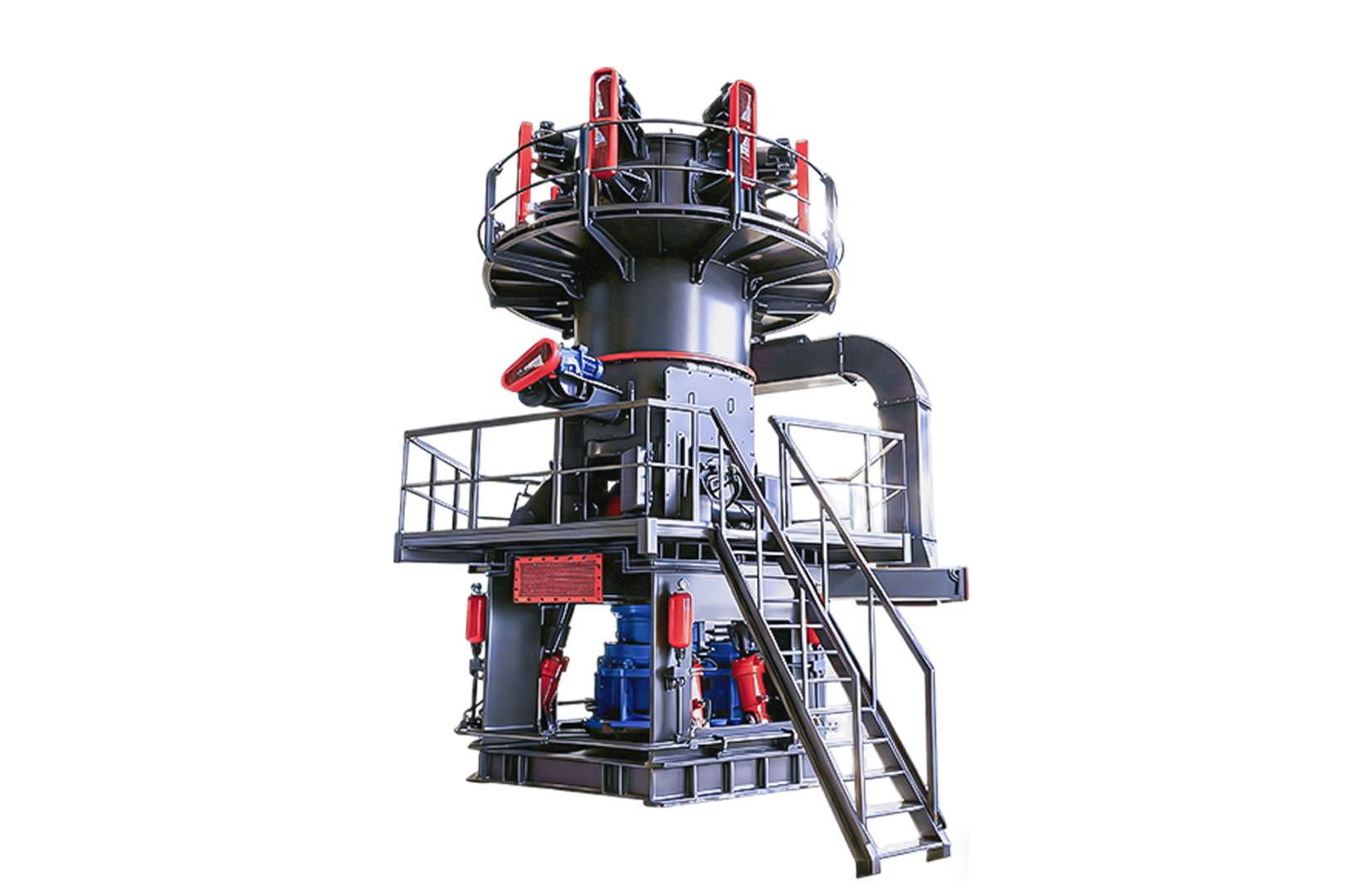
The global vertical roller mill market is projected to reach $3.8 billion by 2026, driven by a strict global transition toward low-carbon heavy industry and a 22% spike in demand for ultra-fine grinding turnkey vertical roller mill solutions. High-efficiency vertical roller mills (VRMs) now cut specific power consumption by up to 35% compared to legacy ball mill systems, fundamentally dictating the operational profitability of cement, slag, and mining plants. You are about to see exactly why conventional grinding plant upgrades are failing to meet new carbon tax thresholds, and how top-tier industrial operators are restructuring their 2026 CAPEX to integrate AI-monitored VRM systems and bypass catastrophic engineering pitfalls.
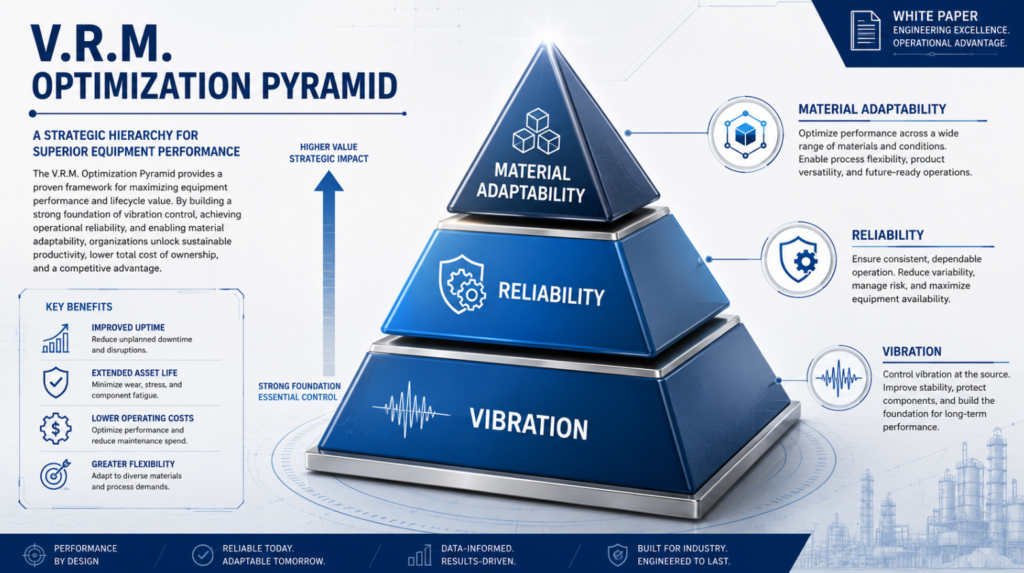
Evaluating vertical roller mill solutions requires moving beyond basic throughput metrics. High-performing plants evaluate investments using the V.R.M. Optimization Pyramid, a sequential framework ensuring long-term profitability.
Layer 1: Vibration Control & Dynamics (The Foundation)
Mechanical stability determines the entire lifespan of the mill. Plant managers must demand exact hydraulic accumulator tuning and dynamic civil foundation engineering to absorb low-frequency grinding shocks.
Layer 2: Reliability Engineering & Wear Life (The Core)
Continuous operation relies on advanced metallurgy. Solutions utilizing hard-facing technology on rollers and grinding tables with high-chromium alloys extend wear life from 4,000 hours to over 8,000 hours before re-welding is required.
Layer 3: Material Adaptability & Smart Tech (The Apex)
Profit margins expand when a mill can handle variable feed conditions. Modern VRMs incorporate dynamic separators and AI-driven feed rate adjustments to process materials with up to 20% moisture content without plugging.
Upgrading to a modern VRM system is primarily an OPEX reduction strategy rather than a simple capacity increase. The technical landscape has shifted from pure mechanical engineering to intelligent mechatronics.
Artificial intelligence is replacing scheduled maintenance with condition-based interventions. Acoustic emission sensors installed directly on the roller bearings and gearbox now detect high-frequency micro-fractures weeks before actual vibration occurs. A 2024 test deployment at a 5,000 tpd clinker plant demonstrated that this specific vertical roller mill solution prevented three major unplanned shutdowns, saving $450,000 in lost production.
Meeting stringent cement strength requirements demands absolute control over particle size. Next-generation dynamic separators utilize optimized rotor cage designs and variable frequency drives (VFD) to achieve a sharp cut point, reducing bypass material by 15%. This specific upgrade directly lowers the specific power consumption (kWh/t) while boosting early-strength cement grades.
The vertical roller mill market is segmenting rapidly based on regional environmental mandates and the rising value of industrial byproducts.
European CBAM Regulations Force Rapid Replacements
The implementation of the Carbon Border Adjustment Mechanism (CBAM) makes energy-inefficient grinding financially unviable. European operators are replacing existing ball mills with VRMs explicitly to lower their carbon footprint per ton of cement. The ROI calculation now factors in carbon tax savings, shortening the payback period of a new VRM by an average of 2.4 years.
Slag Grinding Emerges as the Highest-Growth Sector
Granulated blast furnace slag (GBFS) requires extreme grinding pressure. The market demand for dedicated slag vertical roller mills is expanding at a 7.5% CAGR. Investors are funding turnkey EPC projects in Southeast Asia and India specifically to process stockpiled slag, turning metallurgical waste into high-value supplementary cementitious materials (SCM).
| Application Type | 2023 Market Share | 2026 Projected Growth Rate | Primary OPEX Driver |
|---|---|---|---|
| Raw Mill | 45–55% | 3–5% | Electricity consumption, material drying load |
| Cement Mill | 35–45% | 4–6% | Grinding media wear, power usage, maintenance downtime |
| Slag Mill | 10–15% | 7–9% (aligned with ~7.5% CAGR trend) | High-pressure grinding wear parts, roller/liner replacement, energy intensity |
Corporate investors and technical directors frequently miscalculate the integration complexity of heavy grinding systems. Avoiding these high-cost errors separates successful EPC projects from financial disasters.
The Foundation Resonance Trap
Vibration resonance during the civil engineering phase destroys more VRMs than actual mechanical failure. Procurement teams often separate equipment purchasing from structural engineering. If the dynamic load frequencies of the mill align with the natural frequency of the concrete foundation, the resulting resonance will crack the gearbox casing within 36 months. Rigorous finite element analysis (FEA) of the foundation must be a mandatory clause in your EPC contract.
Over-speccing the Mill Motor Without Fluid Flow Analysis
Buying a larger motor does not guarantee higher throughput. Many operators upgrade the grinding table capacity but fail to optimize the external fan and gas flow system. If the internal nozzle ring velocity is too low, ground material falls back onto the table, causing heavy vibration and massive pressure drops. The entire pneumatic conveying circuit must be engineered as a single fluid dynamics ecosystem.
Partnering with the right EPC (Engineering, Procurement, and Construction) contractor dictates the baseline profitability of your grinding plant. Strategic planners must demand performance guarantees tied directly to energy consumption metrics. Look for partners who offer comprehensive vertical roller mill solutions that include 3D plant scanning, automated lubrication system integration, and post-commissioning operational training. A successful turnkey project hands over a plant that functions at 95% availability from day one.
Q1: What is the specific power consumption difference between a vertical roller mill and a ball mill?
A vertical roller mill typically consumes 30% to 40% less electrical energy for the same grinding task. For cement grinding, a VRM usually operates at 25-30 kWh/t, whereas a traditional ball mill system requires 40-45 kWh/t, translating to massive OPEX savings.
Q2: How does a vertical roller mill handle high-moisture raw materials?
VRMs integrate drying and grinding into a single unit. By utilizing hot exhaust gases from the rotary kiln directed through the mill’s nozzle ring, they can efficiently dry and grind raw materials with a moisture content of up to 20%, eliminating the need for separate thermal drying equipment.
Q3: What are the primary drivers of the vertical roller mill market growth up to 2026?
The market is driven by strict decarbonization laws, the rising cost of industrial electricity, and the booming demand for ultra-fine slag and fly ash grinding. Companies are forced to optimize energy efficiency to comply with carbon emission taxation.
Q4: What causes severe vibration in vertical roller mill operations?
Severe vibration stems from an unstable material bed on the grinding table. This is triggered by fluctuating feed rates, incorrect hydraulic pressure, excessive wear on grinding rollers, or improper gas flow velocity causing material to collapse back onto the table.
Q5: Why is hydraulic pressure critical in vertical roller mill solutions?
Hydraulic cylinders apply the immense pressure required to crush heavy materials. The hydraulic accumulators act as shock absorbers; if they are improperly pressurized with nitrogen, the mill cannot absorb the impact of large clinker lumps, leading to immediate mechanical damage to the gearbox.
Q6: Can existing ball mill plants be upgraded to vertical roller mill systems?
Yes. EPC contractors often execute brownfield upgrades. While the physical footprint of a VRM is smaller, the structural foundation must be completely rebuilt to handle the dynamic vertical loads, and the exhaust gas circuit must be heavily modified.