 Клирик






Поиск
Many front-line process engineers are having a headache with the same problem: how to stably crush the material to sub-micron level without sacrificing the purity of the product. In fact, the underlying logic is not so complicated. The ultimate solution of ultra fine milling is to perfectly match the physical properties of the material with the correct crushing dynamics.
For example, when dealing with heat-sensitive materials, or projects such as raw materials and lithium battery materials that require extremely high pollution-free requirements, fluidized bed air flow mills are definitely the first choice. It relies on high-speed compressed air to do self-grinding, which can effectively avoid material deterioration and equipment wear. However, if your goal is to do extreme nanoscale crushing for hard particles, then the stirring sand mill that is honestly cut to the wet process is the most energy-saving and cost-effective solution. To solve the particle size distribution uneven and material agglomeration, the system must be equipped with an advanced air classifier. At the end of the day, micronization is not a violent crushing. It must control the temperature, select the right grinding medium, and ensure stable production capacity from the research and development laboratory to mass production and amplification.
There is an iron law in the field of superfine crushing: no equipment is omnipotent. Every time I see people worry about not reaching a stable submicron particle size, I usually check to see if the physical properties of the material and the force applied by the equipment do not match at all. Many times we habitually increase the horsepower of the machine, but this not only does not guarantee the purity or fineness, it often leads to excessive crushing and reduces efficiency in vain. The real “ultimate solution” must be targeted-that is, the crusher is made to accurately fit the fracture mode of the material at the micro level.
In those industries that are very hard on product purity and temperature control, especially raw materials and lithium-ion materials, traditional mechanical pulverizers are basically unaffordable. The heat generated by mechanical shock is too high, and the metal on the inner wall of the machine will be ground down. As a result, the material is both contaminated and thermally degraded.
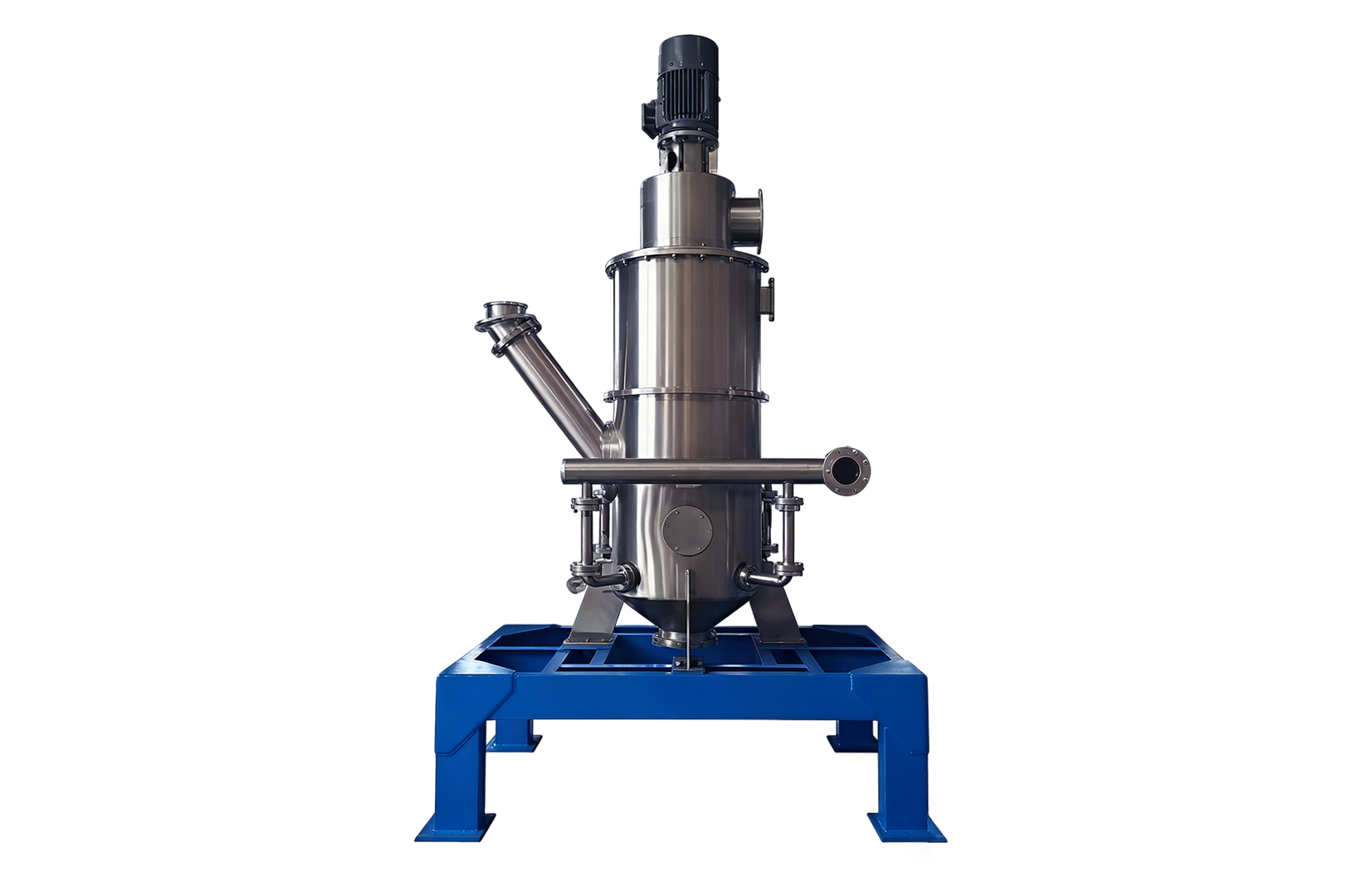
At this time, the fluidized bed air flow mill can solve these pain points through “self grinding”. It does not use a mechanical rotor, but the high-speed compressed air through a special nozzle into the crushing chamber. After the particles are accelerated, they directly collide with each other at high speed inside.
About pollution-free: because the particles hit the particles, not the particles hit the machine, the equipment wear can be said to be reduced to a minimum, the purity of the product is preserved.
Anti-thermal degradation: The rapid expansion of compressed air in the crushing chamber will bring a cooling effect. This allows the entire operating environment to be kept at a constant low temperature, and it is very safe to handle heat-sensitive materials.
It is really easy to use low-micron air flow mill, but when it comes to hard particles, it is necessary to achieve extreme nanoscale, and the thinking has to change. At this time, if you still use compressed air to blow, the efficiency will be extremely low, and the cost will be sky high.
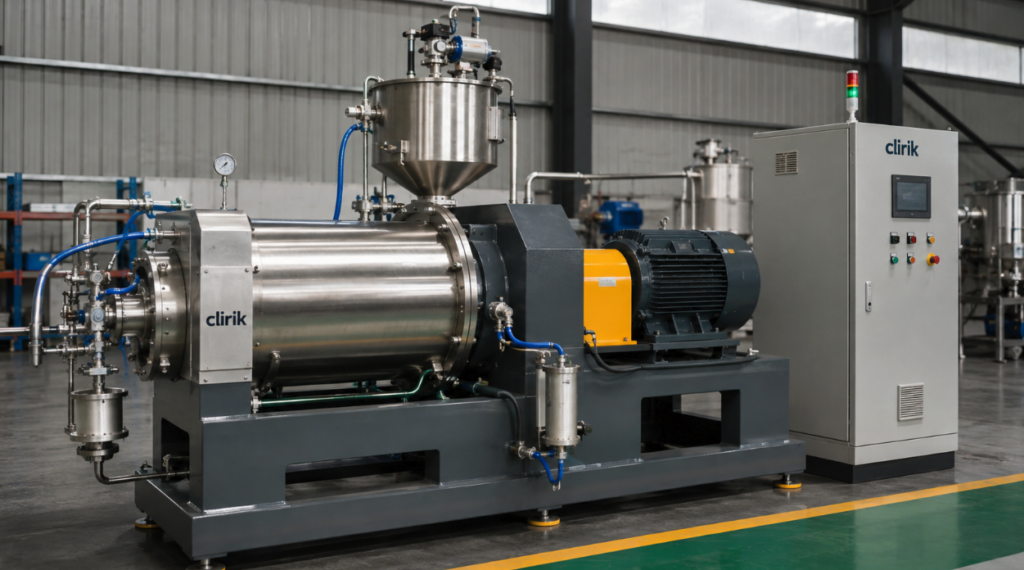
According to my experience, in this case directly on the wet process of the stirred sand mill, the energy efficiency is much higher. It does this by suspending solid particles in a liquid slurry and pumping them into a chamber filled with tiny grinding media. The stirring shaft rotates at high speed to transmit the high strength shear force and impact force of the beads to the hard particles. The liquid in wet crushing is not only dust-proof, but also a good coolant. More importantly, it can help break the surface tension of superhard particles and accurately press the D50 to the nanometer level with the least energy consumption.
When communicating with customers on site, I often say that getting the D50 is actually only half the win. Maintaining a compact and uniform particle size distribution is the key to determining the performance of the final product. When doing superfine grinding, the smaller the particles, the greater the surface energy. As soon as the surface energy is high, the fine particles are easy to stick together, which is what we often call material agglomeration.
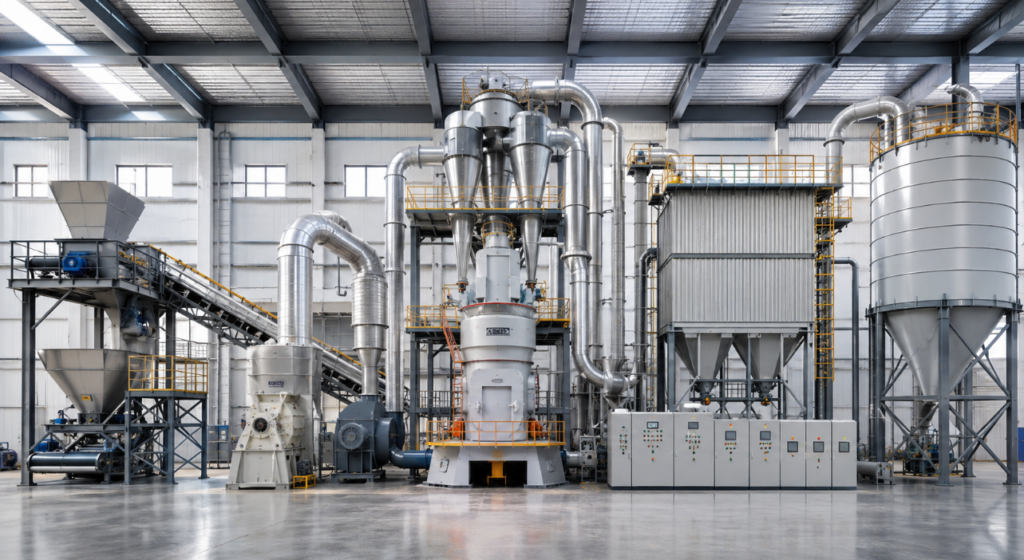
To pull back the uneven PSD and break up the reunion by the way, a high-precision air classifier must be connected in series in the crushing system. The classifier acts as a dynamic precision sieve, using centrifugal force to fly only particles that reach the target submicron size out of the system. Those coarse particles or agglomerated blocks will be directly blocked by the grading wheel and thrown back into the crushing area for grinding. This closed-loop classification can ensure that the PSD curve is very steep and narrow, and there will never be large particles that exceed the standard in the final batch.
In the final analysis, micronization is a systematic project that values the overall balance, and it is not just as simple as exerting brute force on the material. Whether you’re doing a small trial in an R & D lab or planning a high-capacity industrial production line, process engineers must keep an eye on 3 key variables to ensure continuous capacity:
Temperature control: keep an eye on the heat load at all times, and the liquid-cooled jacket should be applied, or the expansion of compressed air should be used to protect those sensitive formulations.
Pick the grinding medium: when doing wet grinding, the size, density and material of the grinding beads must be clearly calculated. The beads are too large to smash the nanoscale effect; the beads are too small and the kinetic energy is not enough to knock the hard particles.
Amplification reliability: The parameters explored on small equipment during the research and development phase-such as line speed, material residence time, and gas flow rate-must be able to seamlessly translate mathematically to large machines for mass production. If this is not done, there is no guarantee of product consistency and continuous output in industrial production.