 Clirik





Search
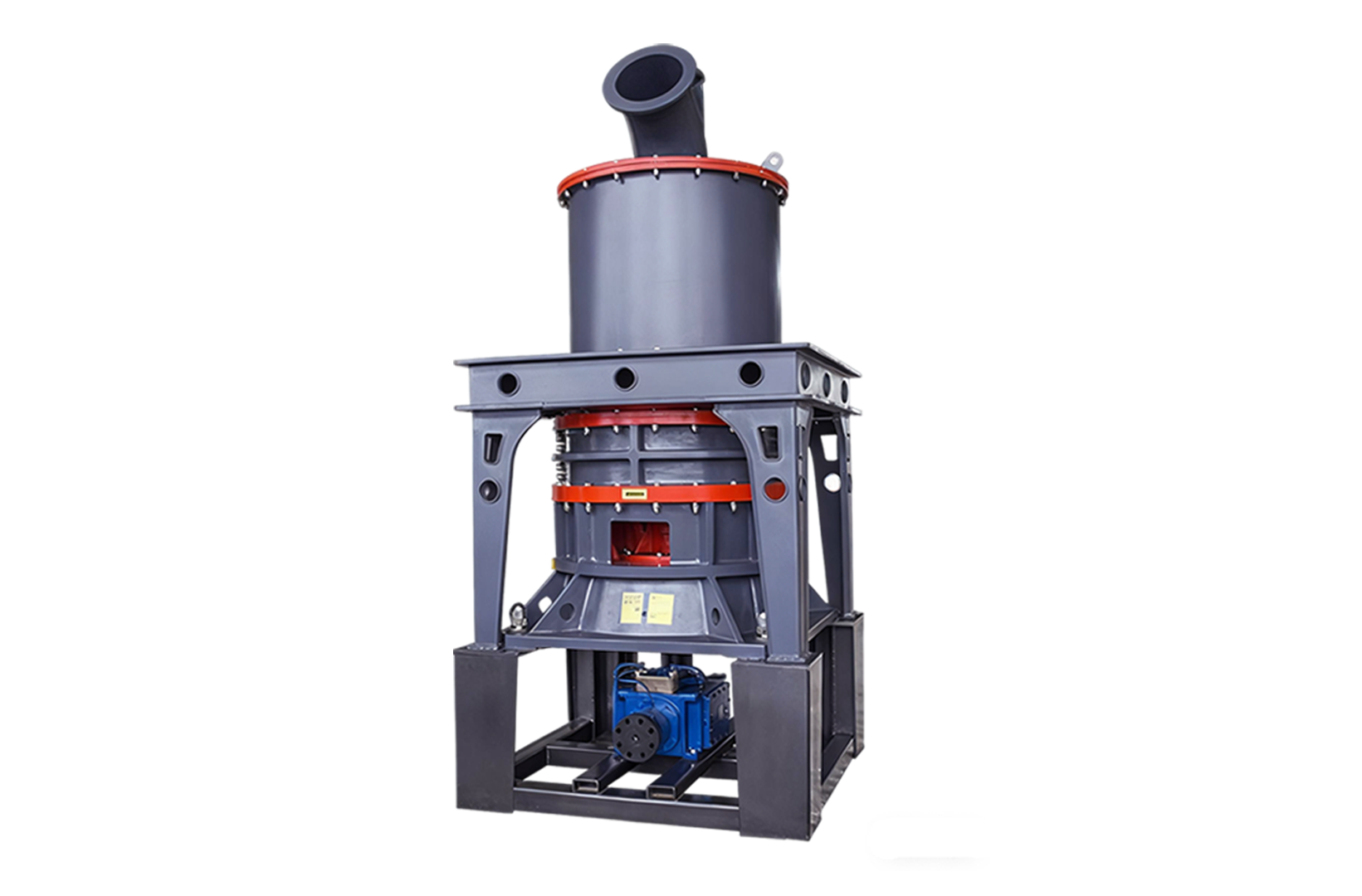
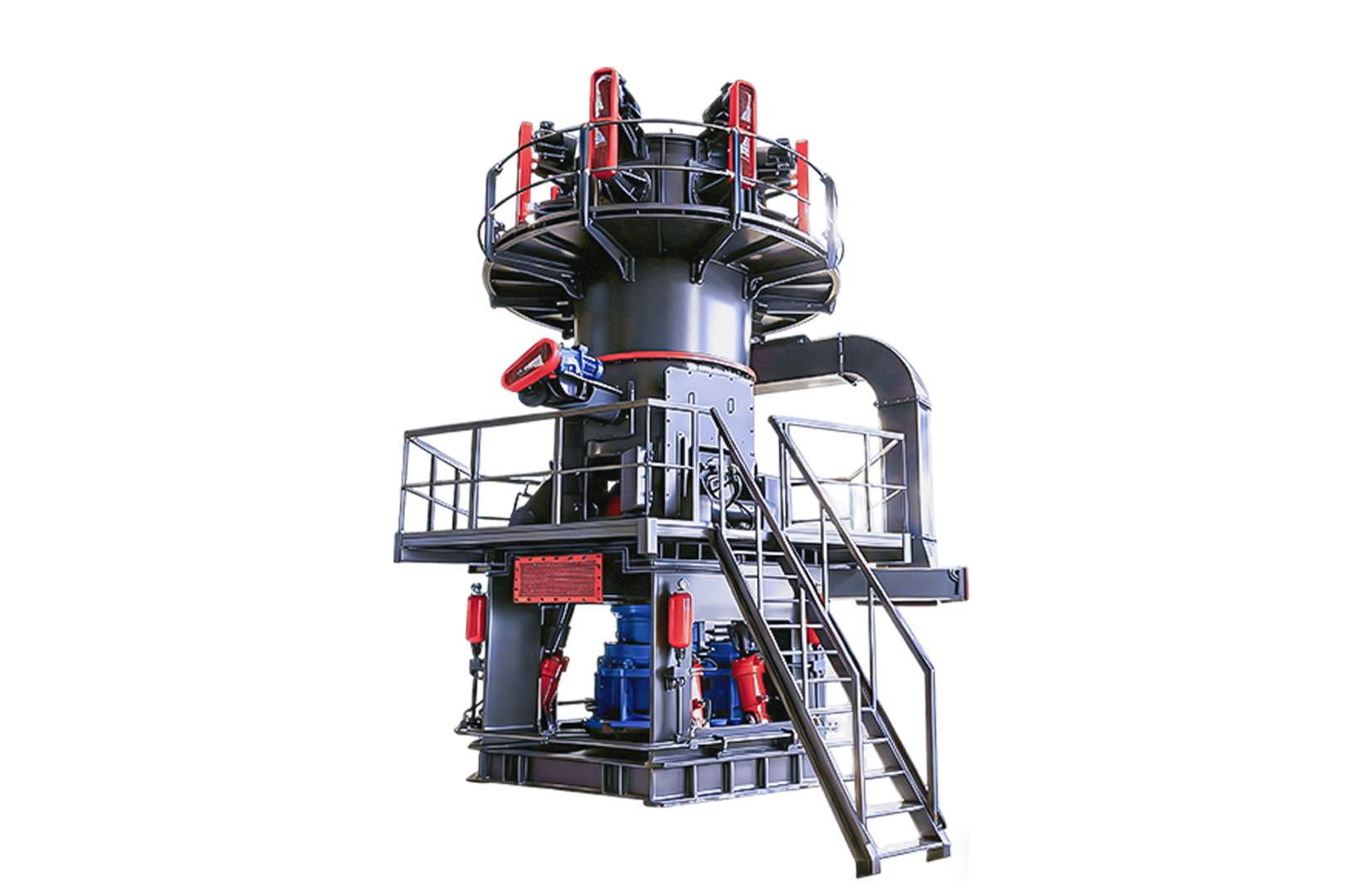
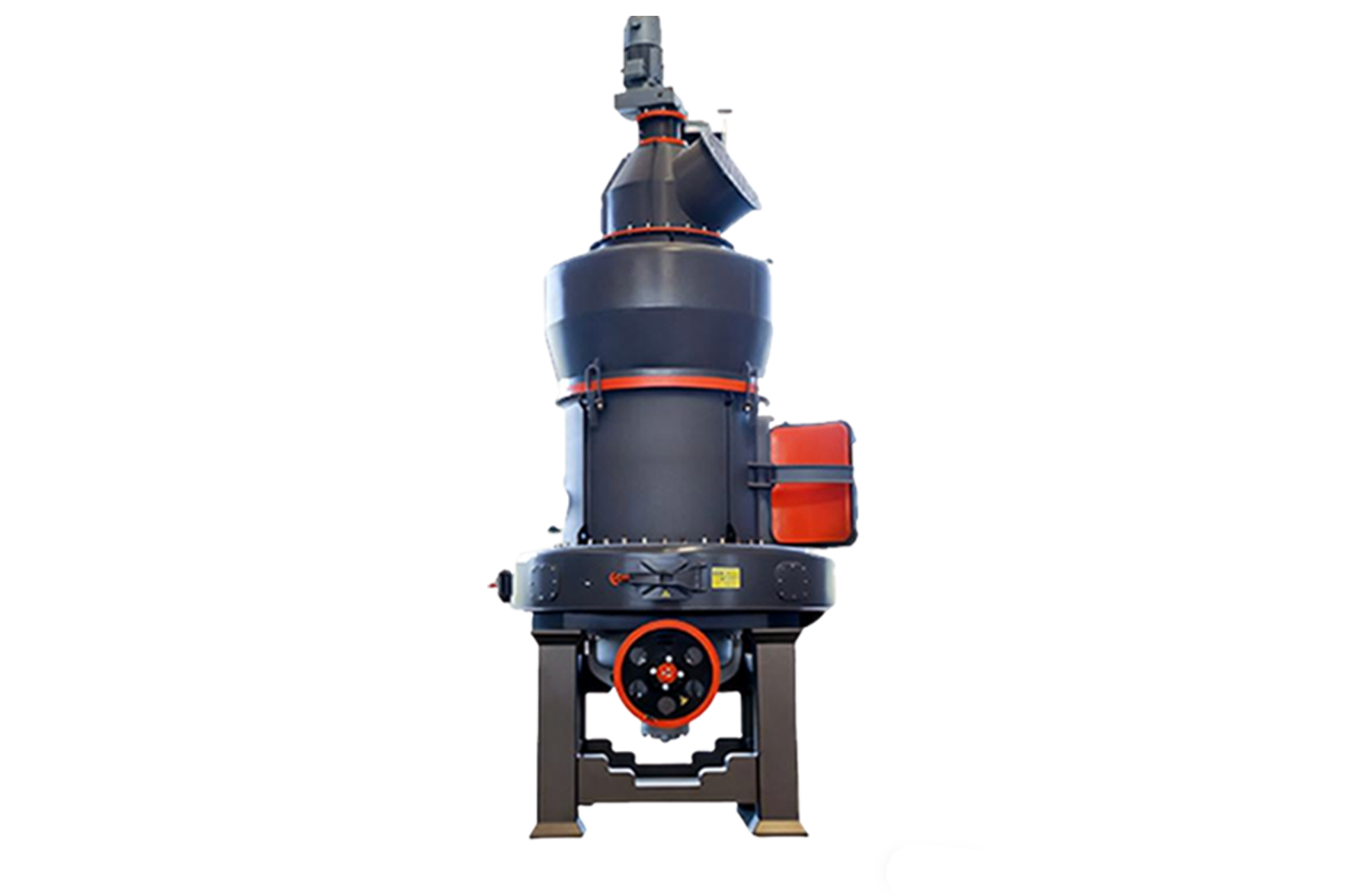
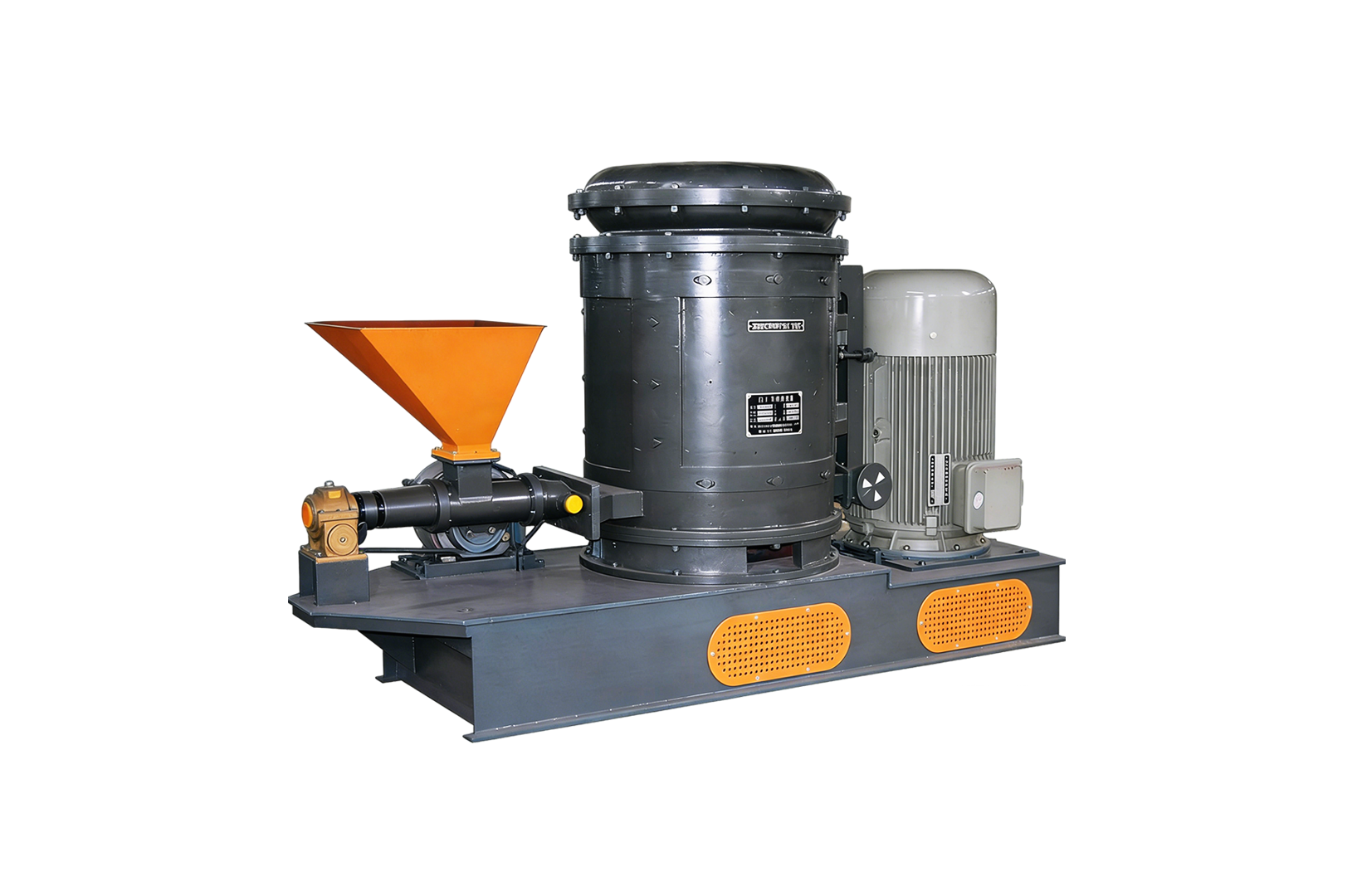
Grinding limestone into powder depends on a set of hard core “two-step” approach: first, the original ore must be dried and crushed to less than 20mm, and then sent to special equipment such as Raymond mill or vertical roller mill until the number of mesh you want is ground. To put it bluntly, if limestone is to be ground beautifully, there is only one core secret recipe: match the final discharge thickness (usually 200 to 325 mesh) you are thinking about with the grinding pressure and air flow classification in the machine. Many pure white people who have just entered the industry just stare at which one is the cheapest when buying equipment, but the physical temper of the original stone is not clear at all. Next, let’s pick 1 and pick up what fairy grinding process those big head industrial factories are playing with, see how people can reduce the electricity bill by 30%, and say goodbye to “equipment blocking” completely.
Whether any milling line eats meat or drinks wind basically depends on this M.S.P. rule. Many novices are confused when drawing craft drawings. The root cause is that there is no underlying logic in their hearts. As long as you hold on to the three cards of moisture (Moisture), particle size (Size) and pressure (Pressure), even a buyer who doesn’t know anything or an assistant engineer who has just graduated can pretend to be an old gun when looking at the equipment plan.
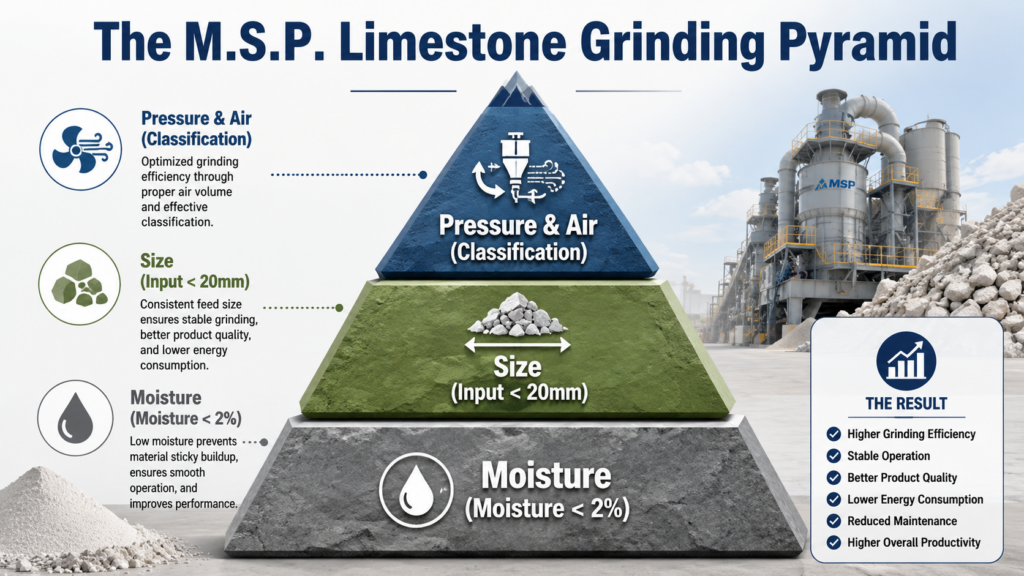
Moisture is definitely the “number one killer” that drags down the efficiency of the mill “. If limestone enters the grinding room with 1 belly water, it will immediately become sticky mud paste, and all the blades of the classifier will be pasted to death in minutes, and the output will be cut off by 40% directly. Therefore, the workshop master must keep an eye on the raw ore, and the water content of the feed must be kept below 2%. If your factory building is built in a humid area with continuous rain, either install a drying system in advance or simply “wind-swept mill”-this thing can directly pour hot air into the grinding area and dry the material at the edge of the gravel head, one step in place.
How much material is fed in directly determines the ceiling of this mill’s production capacity. If you are a head iron, dare to put 50mm stone pimples hard into the fine powder mill, not only the grinding roller wastes quickly, but also the overload alarm of the main motor can give you a broken sound. The iron rule in the industry is that the upper jaw should be broken first to make a rough break, or it can be broken by counterattack, and the stone should be stuck below the passing line of 15 to 20mm. Segmented to do crushing, the pressure of the main mill dropped sharply, and it was not a matter of carrying the wear-resistant parts inside for several months.
The quality of the powder depends on how the wind is adjusted. Grinding stones into powder is at most half finished. How to pick up fine powder and coarse slag depends on accurate airflow. The induced draft fan and the dynamic classifier are in place to ensure that only the powder that meets the standard obediently (such as the 325 mesh that cannot be struck by desulfurization thunder) is discharged smoothly. As for the coarse dregs that haven’t been ground enough? It’s all dropped back to the grinding area to be remade, not wasted at all.
If you pull your crotch in this job of gravel, the following processes will all have bad luck. The raw stone just blown down from the mine is always a giant over 500mm. The operator must first feed these hard bones to the heavy jaw breaker to gnaw 1 back to make coarse breaks, and then pass them to the cone or counterattack for 2 breaking. After that, directly on the vibrating screen through the 1 sieve. Anyone caught more than 20mm of fish will be returned to the furnace and crushed. This kind of closed-circuit crushing cycle can ensure that the downstream mills can eat the materials that are evenly rolled and rattled.
What equipment to choose is directly linked to your future burning speed. Before buying a machine, weigh up where you want to sell your finished product.
| Mill Type | Best For (Fineness) | Energy Efficiency | Initial Cost |
| Raymond Mill | 80-325 Mesh | Medium | Low |
| Vertical Roller Mill (VRM) | 200-1250 Mesh | High | High |
| Ball Mill | 200-400 Mesh | Low | Medium |
If you want to make basic building materials, you need standard 200 mesh powder, and buy Raymung Mill with the best cost performance. If you make chemical grade calcium carbonate, you need both a large amount of production capacity and ultrafine powder, then the vertical roller mill (VRM) is definitely the king. As for the old ball mill, it is famous, but it consumes too much electricity and occupies too much land. In the modern limestone milling circle, it has long been slowly eliminated.
The product quality is stable and unstable, and the grading machine has the final say. When the grinding roller is frantically crushing limestone on the grinding ring, the fan in the belly of the machine will blow up and roll the dust into the classifier. How fast the grading machine turns, it’s like a selfless doorman. The faster you turn, the larger particles are mercilessly beaten back to the bottom of the mill; slower, the slightly coarser particles slip into the cyclone collector with the wind. Engineers in this line of work are usually staring at the real-time particle size distribution (PSD) data, making up for what is missing and fine-tuning the rotation speed at any time.
If you dare to ignore this indicator, the motor will burn smoke morning and night. The limestone itself is indeed not very hard, but it cannot hold up to the impurities such as silica trapped in it. When this thing is too much, its hardness directly surges. If the materials in your mine contain high amounts of silicon, but you foolishly bought an ordinary motor as standard for pure calcium carbonate, then overheating and shutting down will definitely drive you crazy. Therefore, before signing the sales contract, Maludi sent a 50-kilogram sample to the laboratory and got the BWI tested.
Putting aside practical uses and pursuing “the finer the better”, that is, lighting cigarettes with banknotes. The electricity cost to dry limestone to 400 mesh is not sure how much higher than grinding it to 200 mesh. Some customers use powder to improve soil, and even though they can pass on 100-purpose rough products, they still have to pester the manufacturer to get “the finest powder”. First find out what specifications your financial father wants, then nail the grinder to that gear, and don’t overpay the power supply bureau for even a penny of idle electricity.
Once the blades of the classifier are worn away, the powder that comes out is definitely of different sizes and a riot of demons. Limestone dust is used as sandpaper to beat metal blades for years. Over time, the blades become thinner and the gaps leak air, and the excessive coarse residue is mixed into the finished product warehouse. If you supply to picky high-end customers such as plastics and coatings, this truckload of unqualified powder will directly make your big order waste. Take my advice: Do a laser centering check of the classifier components every month.
In the large-scale mass production industry, replacing it with a conventional roller mill can cut the electricity bill to an outrageous level. In previous years, those large desulfurization (FGD) power plants basically bought ball mills with their eyes closed. But now the world is crying out for carbon reduction, and the wind direction of the industry has long changed.
In 2024, we performed an on-site optimization at a large desulfurization power plant in Ohio. The team of engineers pulled out the old ball mill, replaced it with a wind-sweep vertical mill, and tracked the data for a long time.
“This result directly tore up the old Huangli calendar that had been there for decades. With the use of vertical grinding, a black technology that grinds while drying, the power consumption of one ton of powder has dropped from 18 degrees to 12.5 degrees, ensuring that 90% of the powder can pass through the 325-mesh sieve. Moreover, the factory floor was cut in half, and the noise level was below 85 decibels. ” —— Markus T., Chief Grinding Systems Engineer Such an evaluation.
Data is on the table: investing money in modern grinding technology, relying solely on the electricity bills you cut off, you can recoup your full investment in 18 to 24 months.
A: It depends on how fine you want the powder. Making ordinary 200 to 325 mesh powder, Raymond mill is most worthy of your wallet. If you are working on big projects and are determined to achieve high energy efficiency and ultra-fine powder, vertical roller mill (VRM) is the real big brother.
Answer: The factory generally likes to use air sweeping and grinding. The dry hot air in the hot air furnace is directly put into the grinding chamber, and the material is dried while crushing stone. If it’s not too much trouble, you can also put out the raw ore by using a separate rotary dryer at the front.
A: For the vast majority of fine powder mills, 15 to 20 mm is the gold size. If the stone stuffed in is larger than this, the grinding roller will be absolutely unable to eat it, and the amount of powder produced per hour will have to fall accordingly.
A: Yes. People who inhale dust are not good for their respiratory tract; and the dust is too thick, which not only makes it difficult to see the road clearly, but also accelerates the wear and tear of equipment. However, the modern mill system now works under negative pressure, which can lock the dust in the pipes and give them no chance to escape into the workshop.
A: To increase the surface area and make the chemical reaction more intense. Fine limestone powder is an indispensable core raw material for cement production, saving acidic farmland, and power plant exhaust desulfurization (FGD).
A: “Measurement” is how many holes are cut into a square inch of screen. 325 mesh limestone powder, meaning these small particles are fine enough to drill through a sieve with 325 holes per inch. Converted into units you’re familiar with, the particle size is about 44 microns, about as fine as flour.