 Clirik





Search
Choose airflow grading grinding; don’t just stare at the name of the equipment. At the beginning of the project, we have to understand a core problem: is your process to “crush” the material to a certain fineness or to “reject” coarse particles above a certain size?
The former eats the crushing strength of the equipment, while the latter pays more attention to the design of the grading wheel, air volume control, and the configuration of the closed-circuit return system. These two general directions are 1 determined, and the product indicators and system configurations to be confirmed later are completely different.
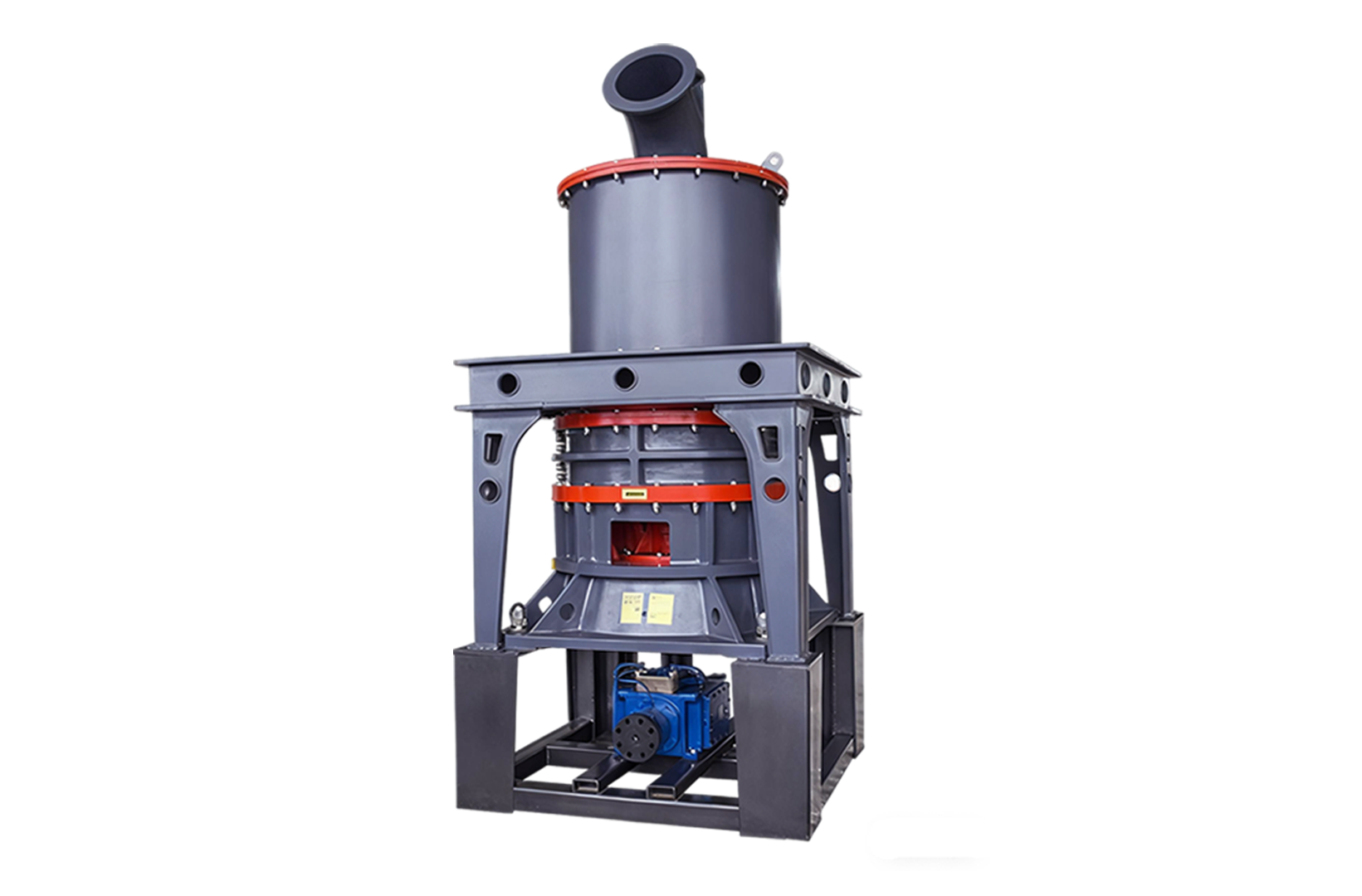
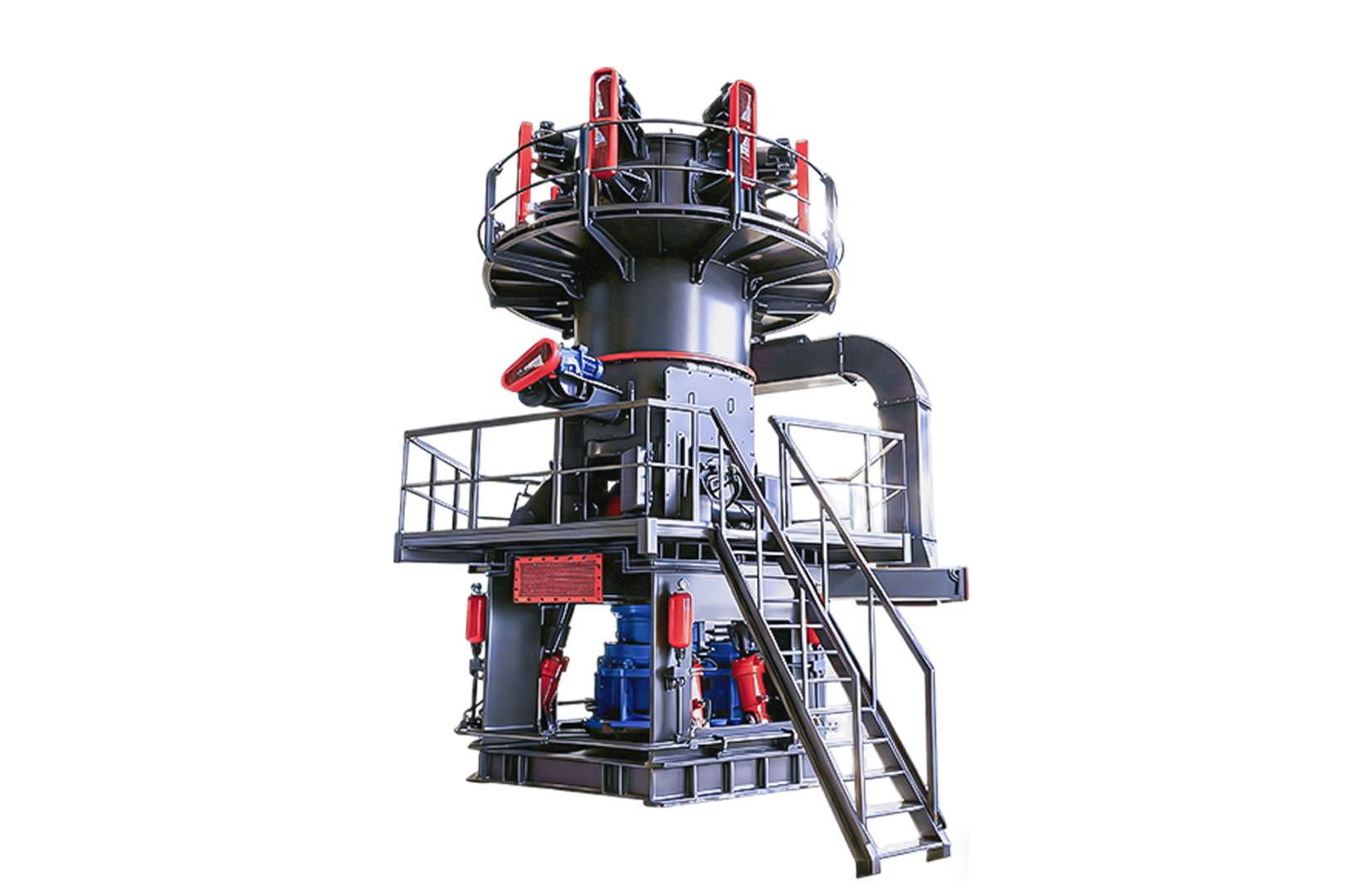
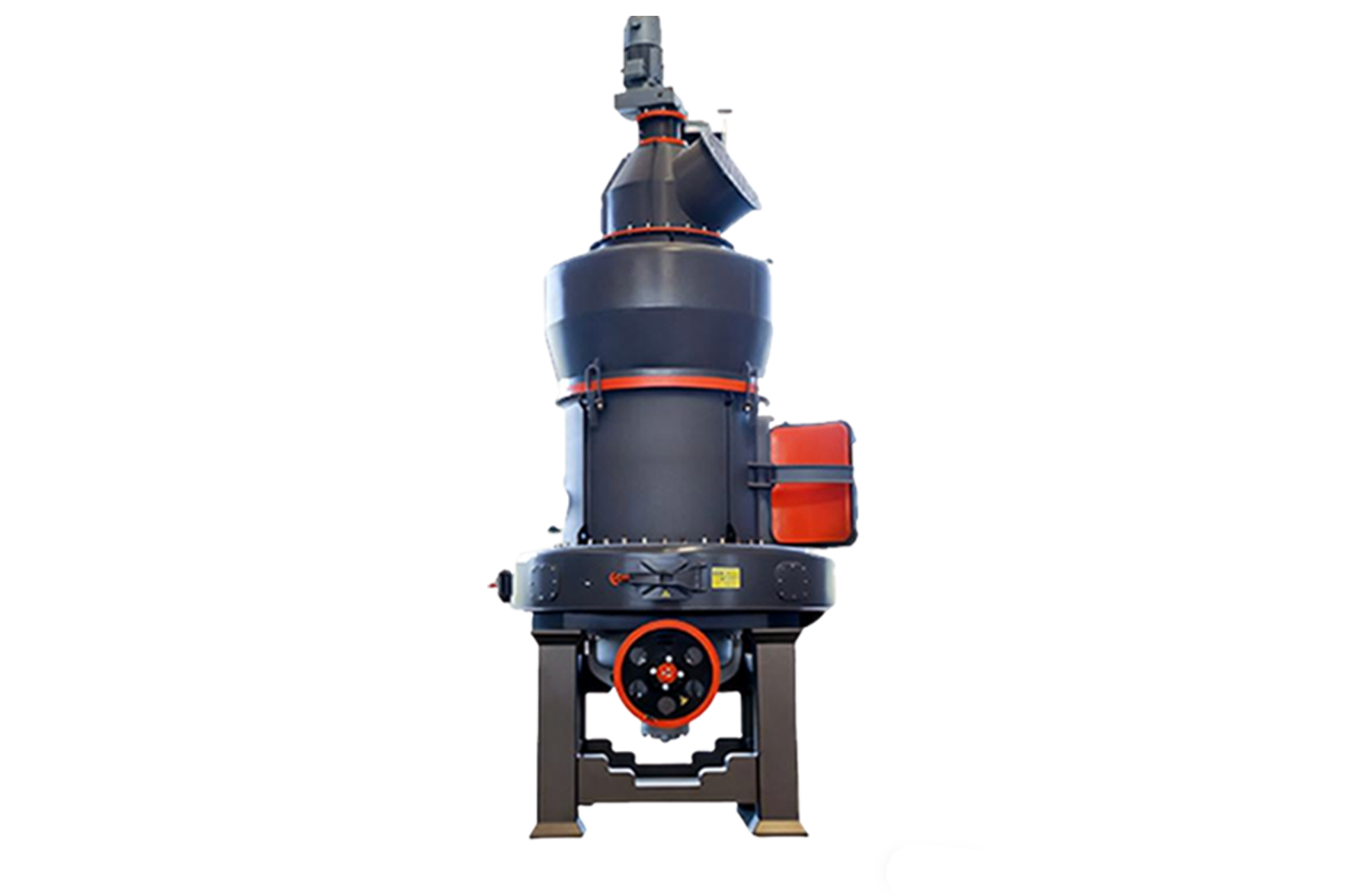
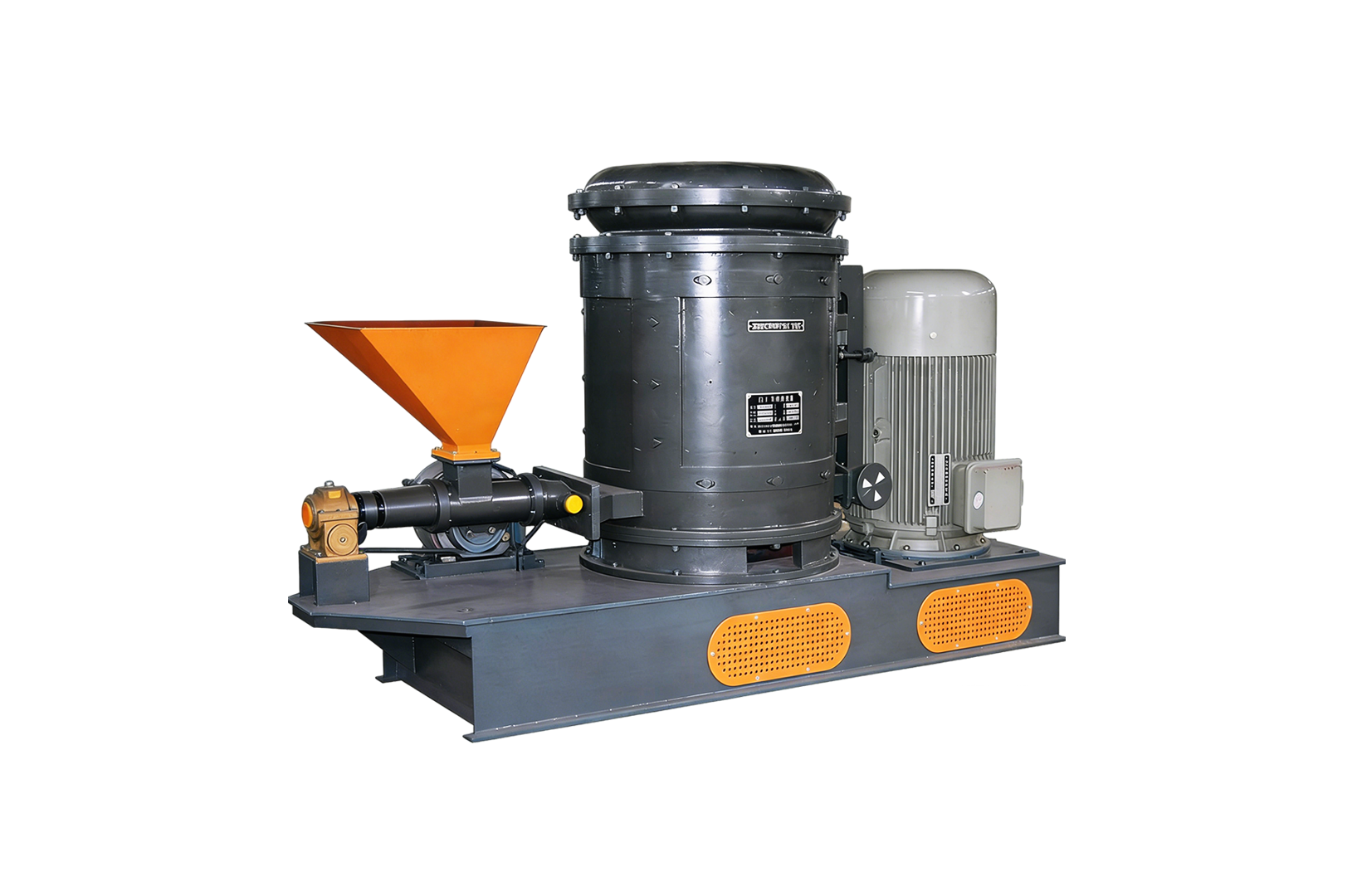
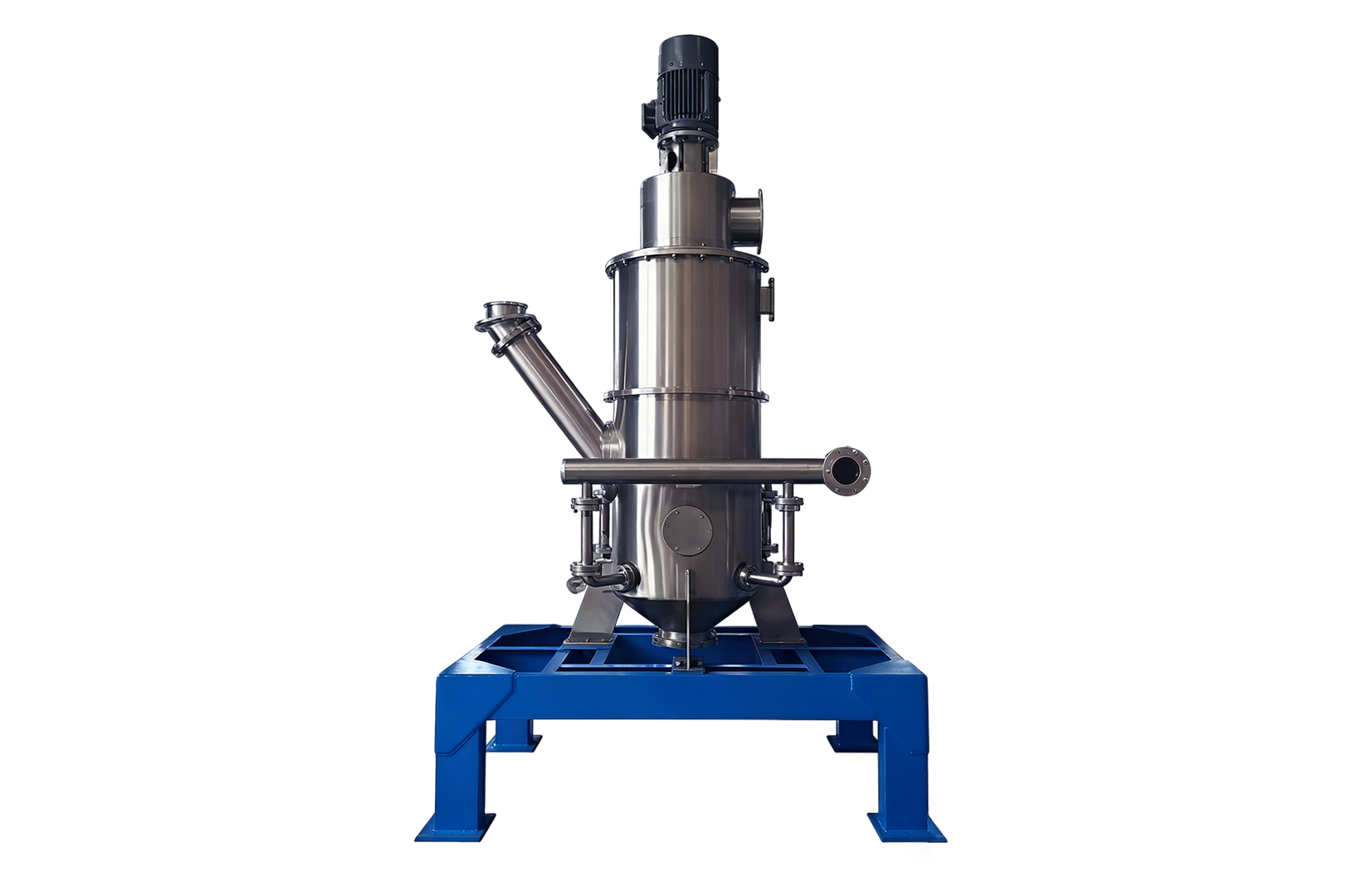
Take the Collyric product line as an example; their CLCM vortex classification mill, which is often referred to as the “airflow classification mill,” belongs to the “mill” category in crushing equipment. Of course, they have not only this but also a large number of sub-products such as ultrafine pulverizers, vertical ultrafine mills, Rayton mills, jet mills, and powder surface modification machines.
If it is a CLJM-L, it is a fluidized bed gas flow mill; CLJM-Y is a flat (spiral) gas flow mill. There are many different names, but these names can only help you distinguish what kind of equipment it is. With one model alone, you can’t calculate the production capacity and granularity of this machine, let alone judge whether it is suitable for your materials.
When asking for the manufacturer, the parameters must be sufficient. Material composition, hardness, abrasiveness, moisture content, viscosity, heat sensitivity, whether it is flammable and explosive, and the initial particle size of the feed—these cannot be less. Because these indicators directly determine the crushing and grading process and how to build, but also relate to how the equipment is used, the wear, the cooling, the cleaning, and the safety explosion-proof design. In addition, whether it is continuous production or intermittent operation is also a matter of decision at the beginning of the 1.
As for the requirements for the finished product, don’t just throw out the 1 sentence “make fine powder.” What is the capacity? What are the requirements of D50 and D97? What is the maximum particle size limit? Do you allow large particles to run past? How wide is the particle size distribution? How high can the material withstand the temperature rise? What is the bottom line of purity requirements and contamination? These indicators are clearly listed in black and white. You know, the finer you want to make the same material from the same equipment, the lower the output, and the energy consumption, return load, and equipment wear will also go up. Therefore, granularity and capacity have never been two indicators that can be seen in open orders.
If the core of your project is crushing, what you should focus on most is whether the materials can enter the crushing area smoothly and stably and whether the target particle size can be verified by experiments. However, if your focus is to block the upper limit of particle size and intercept coarse powder, then you have to focus on the grading wheel, air volume, and coarse powder return path, which is the most intuitive assessment point. Of course, these two needs often exist at the same time, but we cannot use the same set of standards when evaluating.
This is why we not only look at the feed situation but also at the target particle size distribution and coarse particle control requirements. In fact, giving an “average particle size” alone does not have much reference value and does not reflect your real needs for classification. Similarly, with a single equipment name, it is impossible to prove that the cyclic load, temperature rise, and impurity control of this system can meet your current project.
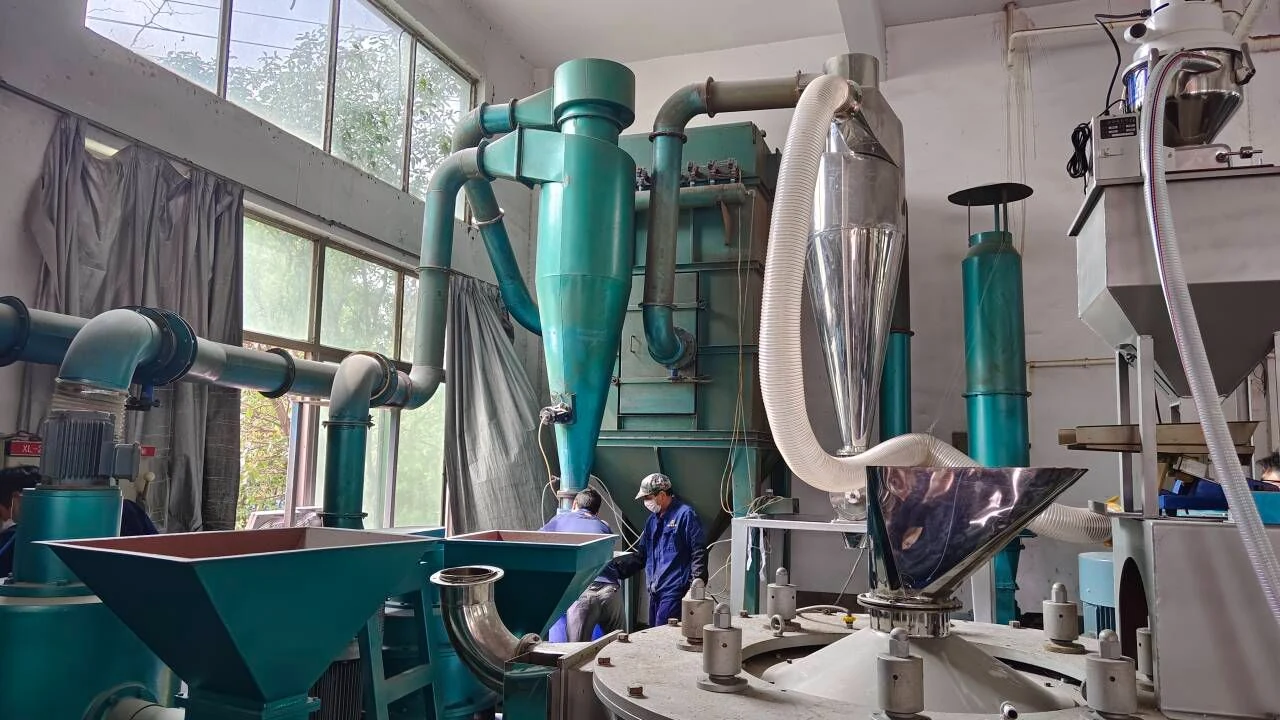
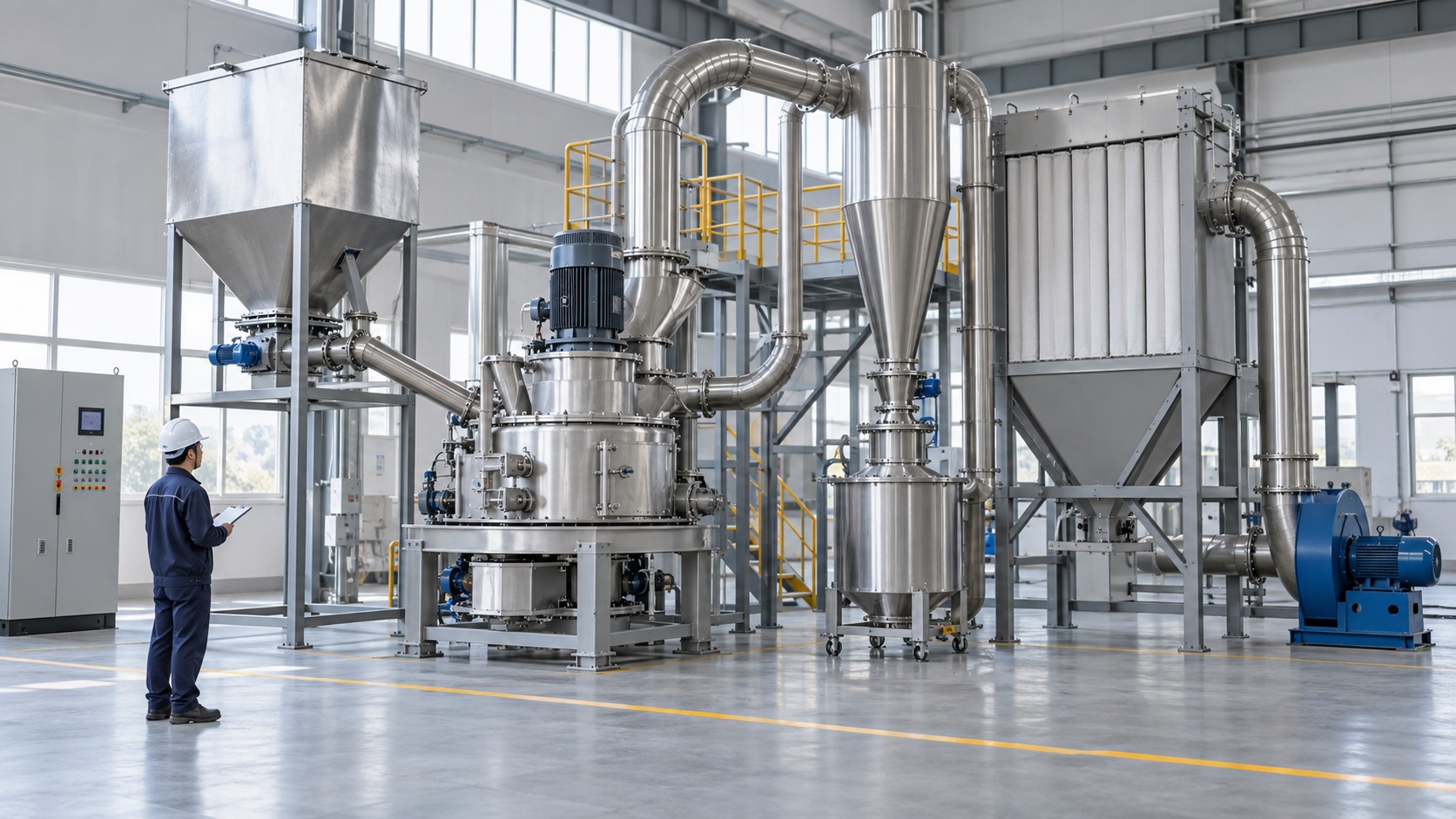
Now a lot of air classification mills are “one machine,” with the mechanical crushing and dynamic classification in the same machine. The advantage is that the process is particularly compact, the cutting particle size can be adjusted, and it can also be used for closed-circuit circulation. The “external grading system” is more suitable for the transformation of old factories that already have shredders and only want to add a separate grading function, or several shredders want to share a grading system. However, if it is external, the supporting pipes, fans, dust collection, and control systems will definitely be much more complicated.
Remember, a complete solution is definitely not only a crushing and grading host; it also includes feeding equipment, fans, filters or cyclone separators, conveying pipes, finished product collection systems, and electric control cabinets. Therefore, when reviewing the manufacturer’s process flow chart, assembly diagram, pneumatic diagram, and scope of supply, we must regard these as a whole “system” and never confuse the “host configuration” with the “whole line configuration.”
When you have very narrow requirements for the particle size distribution of the product, or you need to adjust the cutting particle size on line frequently, the structural design of the grading wheel, whether it is driven independently, whether the rotation speed can be accurately controlled, whether the air volume adjustment is flexible, and how to go about the return path of coarse particles, these details become the key to determine the success or failure of the process.