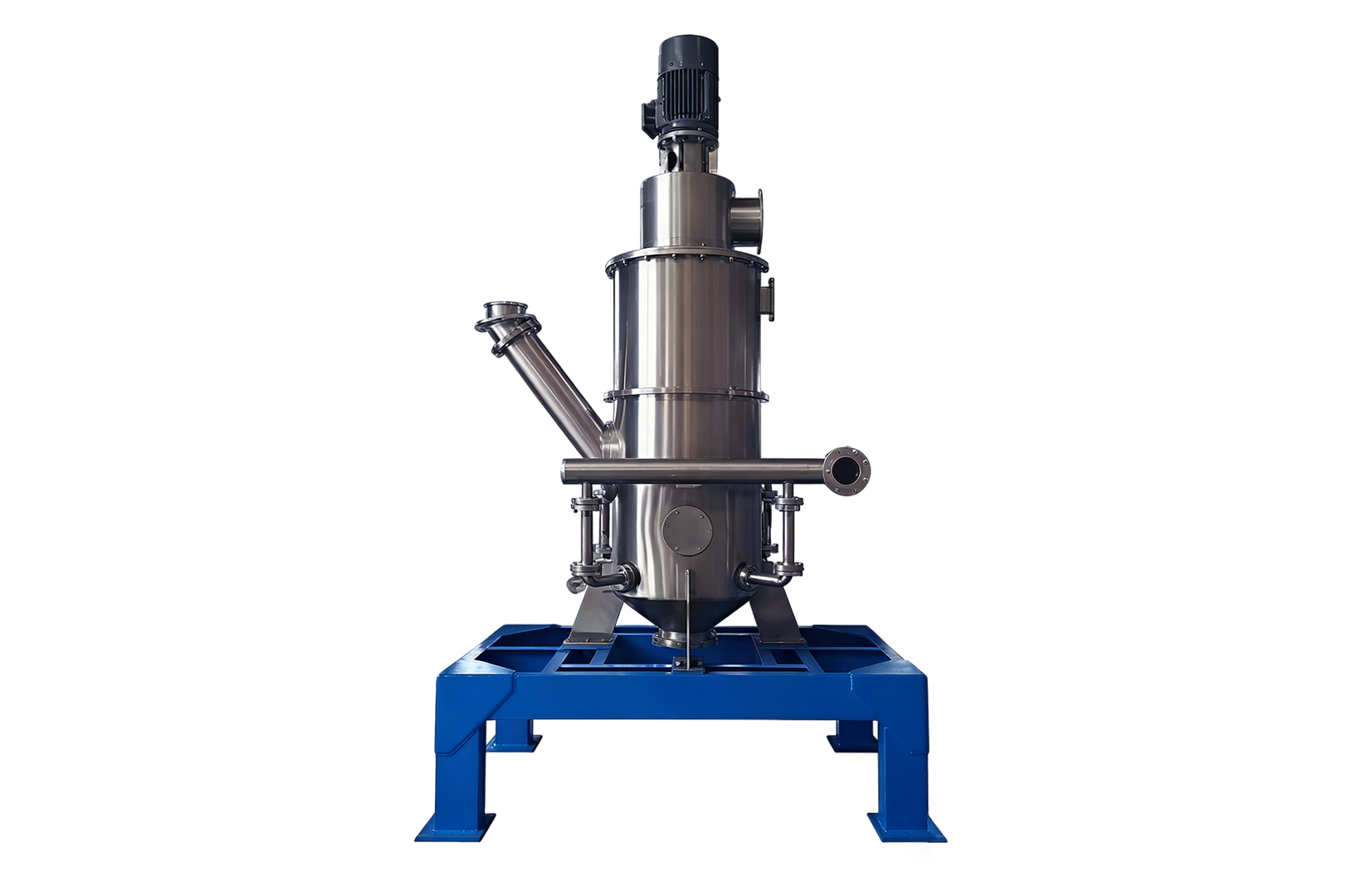
 Clirik





Search
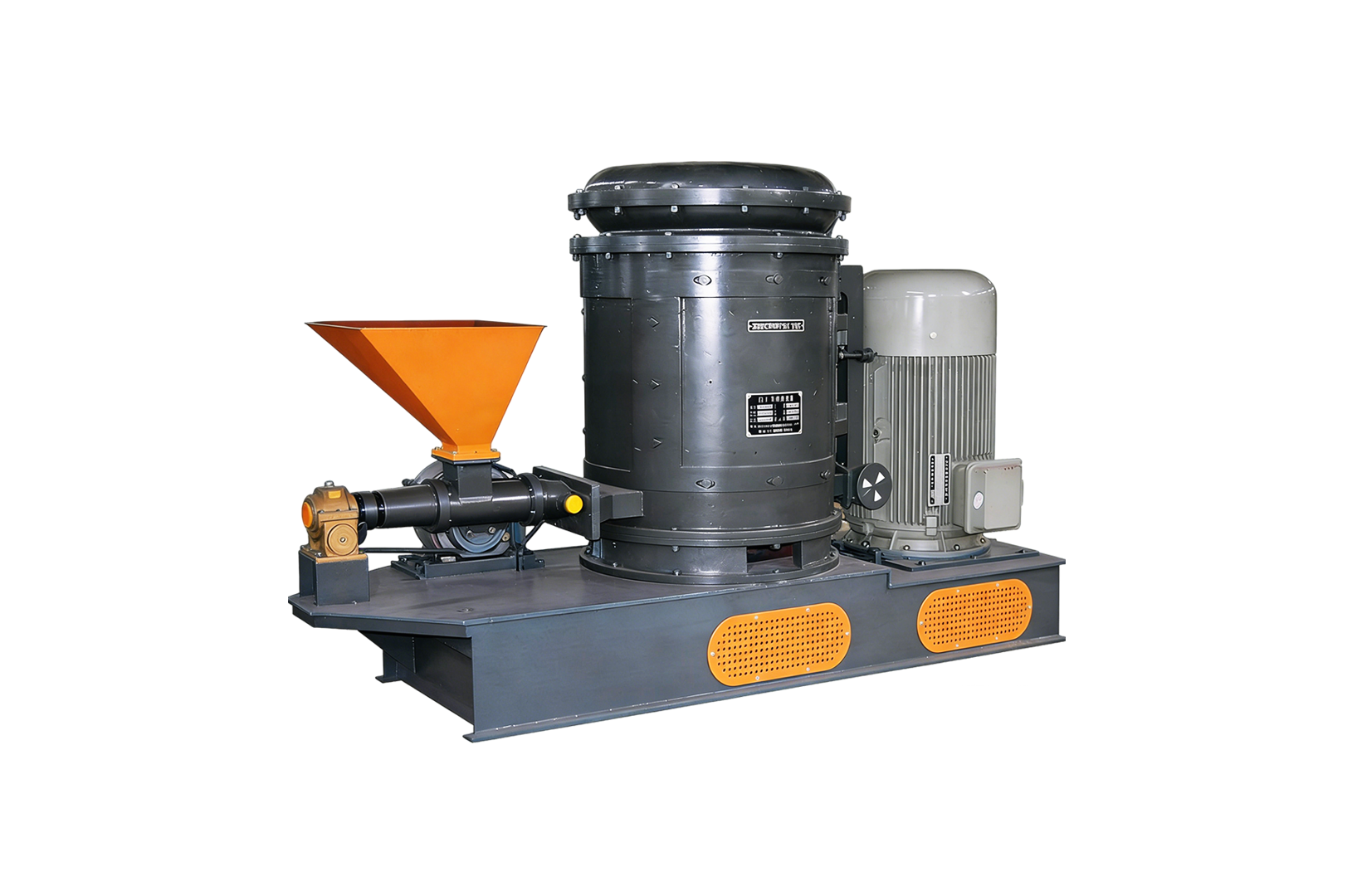
If you want to keep the powder particle size below 10 microns, air classification mill (ACM) is an essential weapon. It not only relies on the internal high-speed mechanical rotor to smash the materials violently, but also comes with a dynamic grading wheel to accurately control the discharge thickness. Many workshop directors feel that it is common for 10% to 15% of the materials to be lost due to “over-crushing” in the crushing process. But in fact, as long as you adjust the energy consumption ratio and the “grading wheel/rotor speed ratio” clearly, this part of the lost output can be completely rescued, and the problem of heat-sensitive materials being heated and deteriorated due to 1 grinding can also be solved. Let’s take a 1 to pick up the hard core parameters that determine the production capacity.
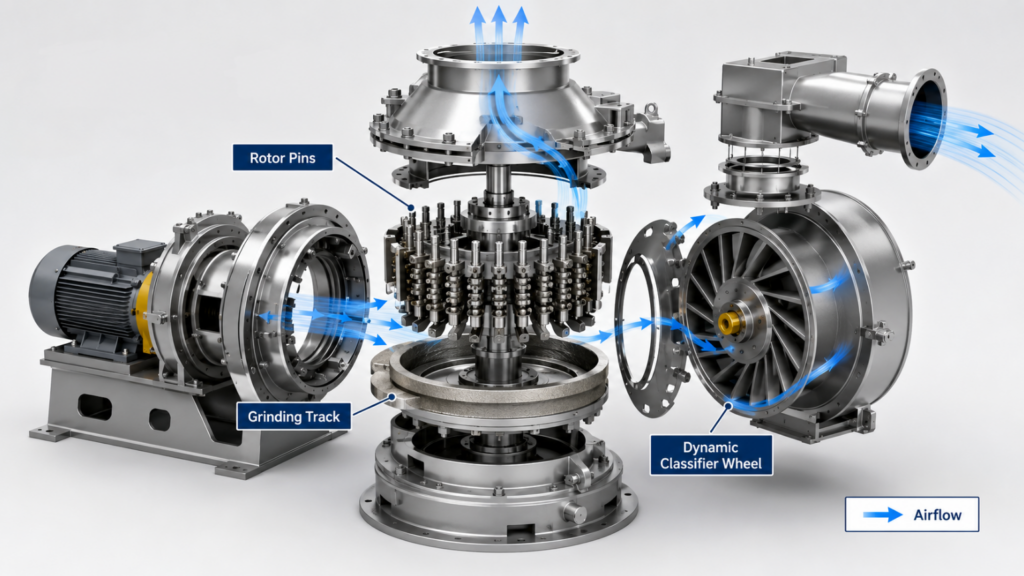
To play with the air classification mill, one must understand both machinery and aerodynamics. If you just stare at the rotor speed and adjust it blindly, the batches that come out must be thick and thin. Factory directors who can really achieve 99% of the first-time pass rate are using this “F.I.N.E.” tuning method to calibrate the equipment.
Workshop technicians often take the pulse when they encounter a drop in production capacity. Find the crux of the problem, in order to avoid those fatal downtime maintenance.
Many operators tried their best to increase the speed of the grading wheel in order to make the powder finer, but forgot to increase the air intake of cooling air synchronously. The extremely high centrifugal force forms a “pneumatic wall” in the cavity, causing the material to circulate indefinitely in the crushing zone. The kinetic energy is all turned into heat energy, the sugar-containing material melts directly, and the polymeric material is all stuck to the crushing gear ring. The way to break the situation is very simple: when increasing the speed of the grading wheel, the cooling air volume of the system must be increased proportionally.
When the output is 1, everyone’s first reaction is often “sure that the rotor has been polished off”. However, if you take a closer look at the pressure gauge, you will find that the truth is often that the downstream filter bag is pasted to death. The dust collector is blocked 1, the back pressure rises, the wind speed in the grinding chamber will follow, and finally the overload alarm of the main motor will be triggered in advance. Therefore, before arranging for people to disassemble the machine and change parts, be sure to check the differential pressure gauge of the dust collector.
In different industries, the way to adjust the machine varies from day to day. Our team of engineers conducted comparative stress tests on extreme materials at both ends of the spectrum.
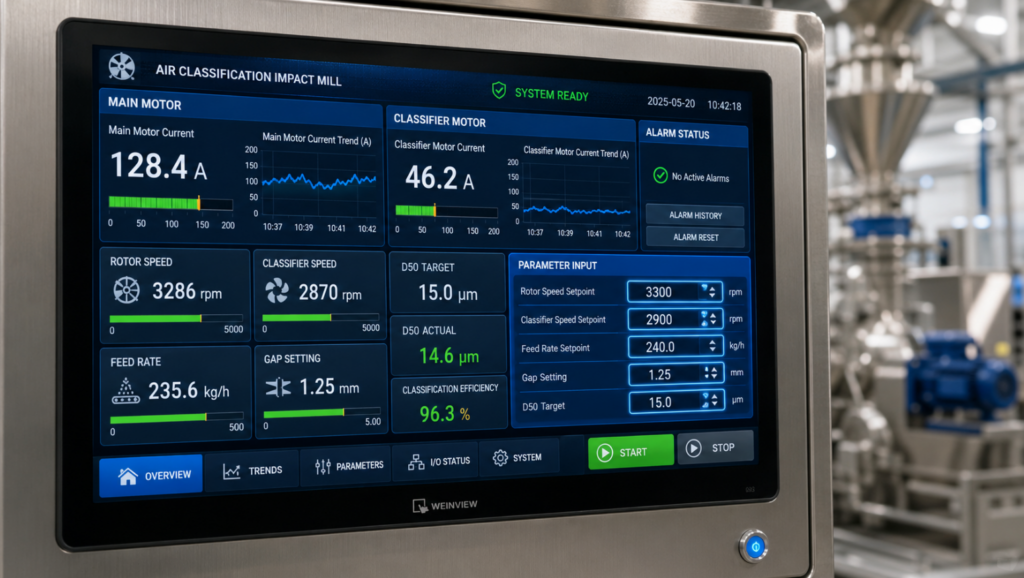
When handling LFP battery materials, the maximum particle size must be strangled, otherwise the battery cell will be short-circuited in minutes. We equipped the machine with a frequency converter (VFD), directly connected to a set of online laser particle size analyzer. As long as the D50 data is biased, the system itself will fine-tune the speed of the grading wheel.
| Material | Target D50 | Target D90 | Rotor Tip Speed | Classifier RPM | Specific Energy Consumption | Temperature Rise |
|---|---|---|---|---|---|---|
| LFP Battery Powder | Process-defined; monitored online | Strictly controlled maximum | Automatically adjusted by VFD | Automatically fine-tuned | Not specified | Not specified |
| Ascorbic Acid / Vitamin C | Not specified | Not specified | 75 m/s maximum | Not specified | Not specified | ≤12°C |
Ascorbic acid (vitamin C) is another story, this thing is extremely sensitive to temperature. We added a water-cooled jacket to the mill and introduced cold air at 5°C. The linear speed of the rotor is limited by us to 75 m/s. The result is that the temperature rise of the machine does not exceed 12°C during the entire continuous crushing cycle, which perfectly preserves the chemical activity of the drug.
To make the machine full of blood output, you have to set the benchmark parameters according to the temper of the material.
The main rotor is the “fist” that smashes the material “. If it is a brittle material such as talcum powder or silica, the rotor can be replaced by a column with a tungsten carbide alloy head, and the service life can be 400 longer than that of ordinary hardened steel. The gap between the top of the column and the corrugated grinding liner determines the crushing efficiency. According to the size of the feed, this gap must generally be controlled between 3 and 5mm.
The dynamic grading wheel is a “goalkeeper”. If you want to reduce the median diameter (D50) from 15 microns to 5 microns, you must cut the feed by almost 25% while increasing the speed of the grading wheel. If the grading wheel turns very fast, and you keep filling it in, the motor current will give an alarm in off the charts every minute.
Q: How to adjust the particle size of the air classification mill?
Answer: Adjusting the thickness mainly depends on two hands: changing the speed of the internal grading wheel and adjusting the air volume. The faster the classification wheel, the greater the centrifugal force, the finer the powder. On the other hand, increasing the air volume will forcibly drag the coarser particles through the grading wheel, and the discharge will become thicker.
Q: How big is the maximum feed?
A: It depends on the specific physical size of the mill, but the general rule is that it is best to break it to less than 10mm (3/8 inch) before feeding. If the material you feed in is larger than the gap between the rotor column and the ring gear, it will directly cause serious damage to the mechanical structure.
Q: Why does my mill burn the material (overheat)?
Answer: 3 is no more than one reason: too much feed and too little wind, the downstream filter bag is blocked, or the grading rotation is too fast. The solution is to reduce the feeding amount, clean the dust bag to restore the normal exhaust system, or give cold air to the intake pipe.
Q: Can grading mill beat wet and sticky materials?
A: Absolutely not. This thing is born to be dried and crushed (the moisture content is usually less than 5%). If you hit the material with water or grease, you will paste the gap of the grading wheel in minutes, and the gear ring will be full, followed by the machine’s crazy shock and complete downtime.
Q: What is the difference between nail disc mill (Pin mill) and air grading mill?
Answer: The nail disc grinding is purely based on physical impact. The thickness of the largest particle cannot be controlled inside, and a sieve has to be set outside. However, the cavity of the air classification mill is equipped with a dynamic classification wheel, which can accurately and continuously control the maximum particle size, and can also return the coarse powder to heavy beating inside to form a closed loop.
Q: How to clean the grading mill used in the pharmaceutical factory?
Answer: Pharmaceutical models are generally designed with quick-opening clamshell shells or equipped with CIP (cleaning-in-place) nozzles. Thorough cleaning requires full opening of the main chamber door, removal of the rotor and grading wheel, and cleaning with a specific solvent. Moreover, the roughness (Ra) of the inner wall of the machine must be polished to less than 0.4 microns to prevent hanging residue.
Q: What is the violent vibration of the mill shell?
A: The vibration indicates that there is a serious dynamic imbalance in the machine. The most common reasons are uneven wear of the rotor column (light on one side and heavy on the other), sticking of block material on the blades of the grading wheel, or waste of the main shaft bearing. Don’t hesitate to stop immediately and balance the rotating components again.
Q: Does air classification wear and consume electricity?
Answer: The specific energy consumption depends entirely on the hardness of the material and your target fineness. If soft limestone is dried to D50 10 microns, it may consume 15 degrees of electricity (kWh) for 1 tons. However, if you hit hard engineering plastics, the power consumption per ton may soar to more than 80 degrees at 20 microns. The main motor is equipped with a frequency converter (VFD), which can optimize the energy consumption to the best in continuous production.