 Clirik





Search
The core capability of a modern raymond mill pulverizer lies entirely in adaptive fluid dynamics and algorithmic particle separation rather than sheer mechanical force. Plant managers bleed capital by treating these systems as brute-force crushing hardware instead of highly sensitive aerodynamic ecosystems. The subsequent breakdown details the specific flow-control and edge-computing technologies separating highly efficient mineral processing sites from operations constantly battling internal turbulence and pneumatic draft collapse.
The RPM (Reliability, Precision, Maintenance) Technology Pyramid establishes a strict hierarchy for evaluating the underlying technical architecture driving any continuous raymond grinding mill. Chief engineers evaluate system proposals from the bottom up, rejecting architectures that rely on passive mechanical tolerances rather than active technical controls.
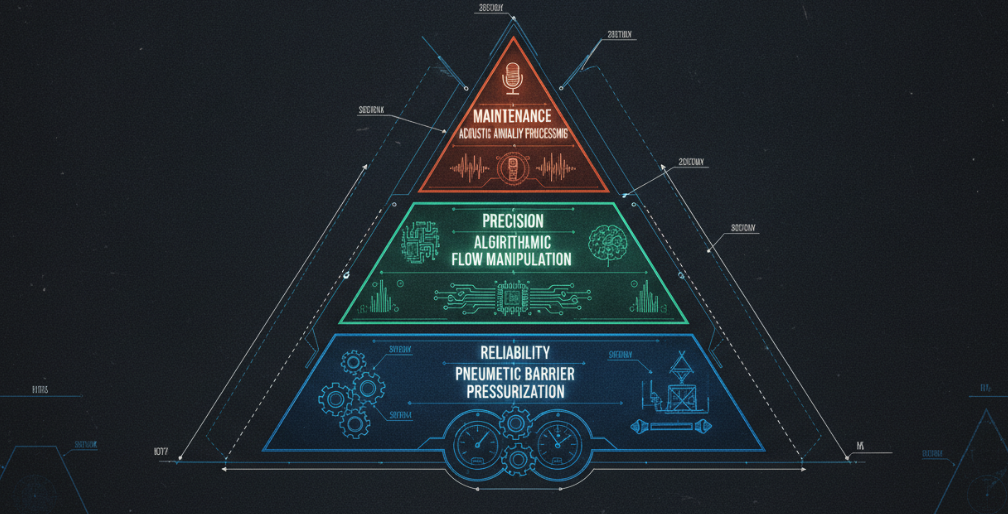
Base-level Reliability requires pneumatic micro-pressurization technology to actively block abrasive intrusion into the rotational core. Mid-level Precision depends on dynamic algorithmic adjustments to aerodynamic draft fields, shaping particle trajectories in real-time. Peak Maintenance demands continuous acoustic anomaly processing, predicting microscopic structural deflection through frequency analysis long before any physical shaking manifests on the mill raymond infrastructure.
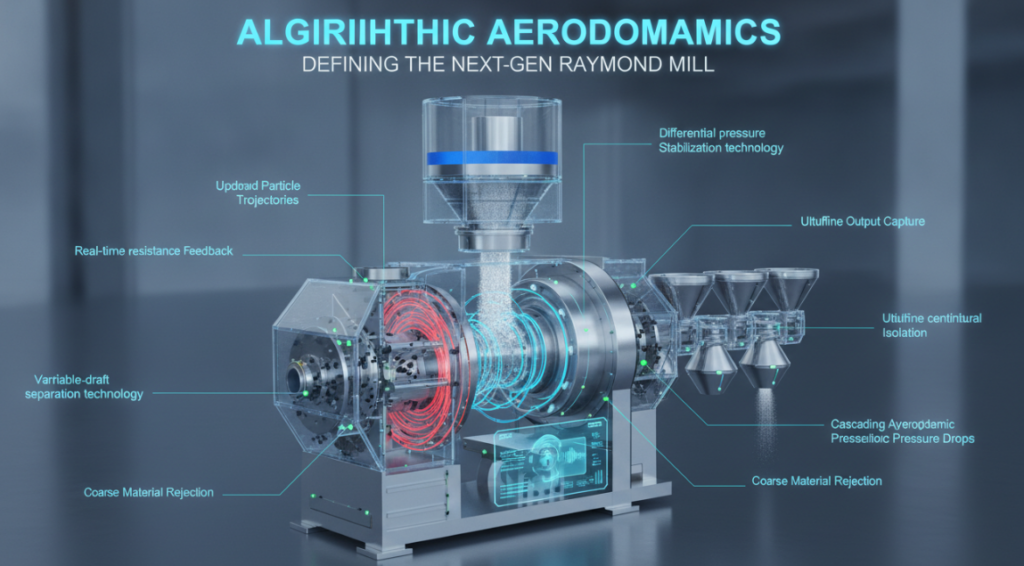
Algorithmic flow manipulation replaces static mechanical classification, granting operators absolute control over updraft particle trajectories. Traditional separators fail to accommodate sudden material hardness variations in the raw feed, allowing unrefined fragments to breach the aerodynamic lift zone. The latest variable-draft separation technology reads localized resistance feedback continuously, altering the internal pneumatic swirl to reject coarse material instantly.
Differential pressure stabilization technology successfully captures ultrafine output by isolating pneumatic turbulence away from the primary draft loop. Obsolete configurations force high-density, dust-laden air directly toward terminal filtration, generating severe pneumatic drag across the entire system. Integrating cascading aerodynamic pressure drops within the raymond mill machine strips out heavier fractions via localized centrifugal isolation, preserving system-wide suction velocity and eliminating the risk of draft stalling.
Disregarding the internal aerodynamic geometry of the primary circulation loop introduces parasitic drag and erratic particle classification. Procurement teams frequently fixate on the metallurgy of the crushing components when evaluating raymond roller mills, completely ignoring the fluid dynamics of the closed-loop updraft. A flawed internal scroll design within the draft generator creates overlapping pressure waves; this internal turbulence collapses the vertical lift, forcing perfectly sized particles to sink back into the grinding zone for detrimental over-processing.
Relying on passive mechanical contact to seal high-friction zones guarantees eventual contamination under vacuum conditions. The intense internal pressure fluctuations inherent to operating raymond mills easily bypass standard lip seals. Upgrading to active pneumatic sealing technology injects a continuous, micro-pressurized stream of clean air outward, establishing an invisible, impenetrable aerodynamic wall against ultrafine abrasive dust.
Fully synchronized edge-computing integration transforms a passive mechanical layout into an active, self-regulating aerodynamic system. The central logic controller continuously calibrates the main updraft velocity against the raw feed’s momentary grinding resistance. This continuous data feedback loop actively prevents internal material accumulation and entirely eradicates the electrical overload events historically caused by momentary flow blockages.
| Core Function | Legacy Mechanical Systems | Next-Gen Technology Architecture |
| Contamination Prevention | Physical Contact Seals | Active Pneumatic Pressurization |
| Particle Classification | Static Mechanical Deflection | Algorithmic Flow Manipulation |
| Draft Control | Fixed Baseline Suction | Differential Pressure Stabilization |
| Fault Detection | Post-Failure Repair | Acoustic Anomaly Processing |
Adaptive fluid dynamics constantly manipulate the internal air velocity to match the specific mass of the target particles. By eliminating localized turbulence, the updraft smoothly carries out the finished product without lifting unground material, securing a strictly uniform output distribution.
Excessive moisture alters the aerodynamic drag coefficient of the raw material. Damp powder aggressively agglomerates along the inner separation pathways, altering the internal geometry of the classifier and effectively blinding the precise pneumatic draft required for accurate sorting.
Acoustic monitoring isolates high-frequency sonic anomalies generated by microscopic friction. Instead of waiting for physical vibration to damage the chassis, edge-computing sensors detect these ultra-high-frequency acoustic shifts, triggering preventive diagnostic protocols immediately.
Algorithmic separation excels with abrasive materials because it minimizes physical contact. By relying on aerodynamic deflection rather than mechanical collision to sort coarse particles, the technology inherently reduces the frictional wear rate across the internal classification blades.
Draft collapse occurs when sudden spikes in material feed overwhelm the primary pneumatic suction. If the aerodynamic lift fails to clear the pulverized material faster than it is generated, the localized pressure drops abruptly, stalling the entire circulation loop.
Differential stabilization acts as a pneumatic buffer. By managing the pressure drops across multiple isolated zones, the technology prevents sudden vacuum surges or drops in the primary loop, maintaining a perfectly stable updraft regardless of external filtration resistance.