 Clirik





Search
In order to reach the full capacity of Raymon mill separator (analyzer), the key points 3: the frequency conversion speed is hit to the end, the system seal is zero clearance, and high chromium alloy blades are decisively replaced. Many mineral powder factories lose 15% to 20% of their output every day in vain. The fundamental reason lies in misjudging “system air leakage” as “grinding ring aging”. Don’t blindly purchase those rayon mill accessories that are not right. Next, we directly open the bottom logic of the powder selector and teach you to check the invisible card neck problems, so that the output of the old equipment can directly break through the factory limit.
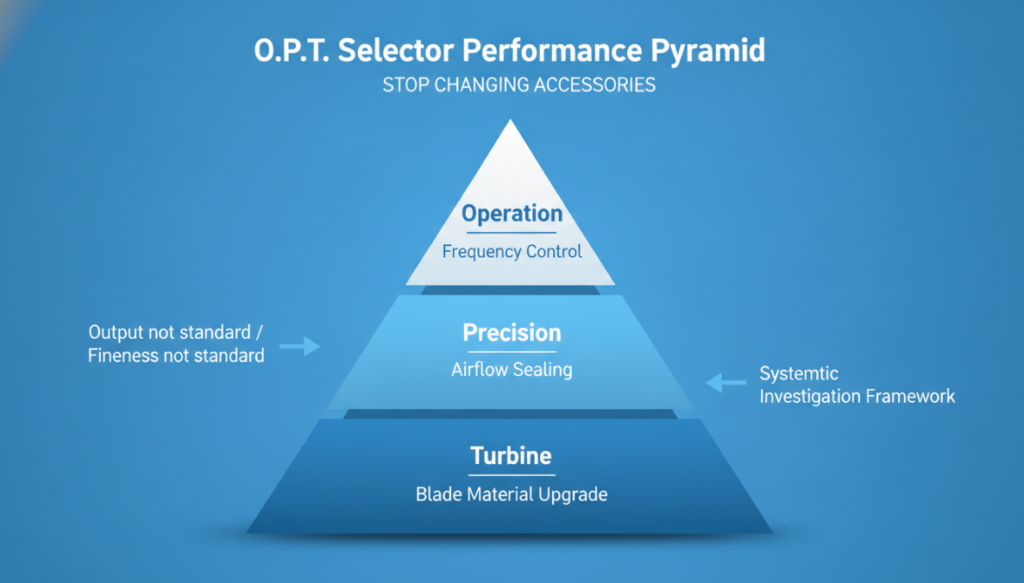
When the output is not up to standard and the fineness is not up to standard, the first reaction of many people is to change parts indiscriminately. The O.P.T. pyramid model (Operation operation control, Precision sealing accuracy, Turbine blade material) is a systematic investigation framework that we have found out.
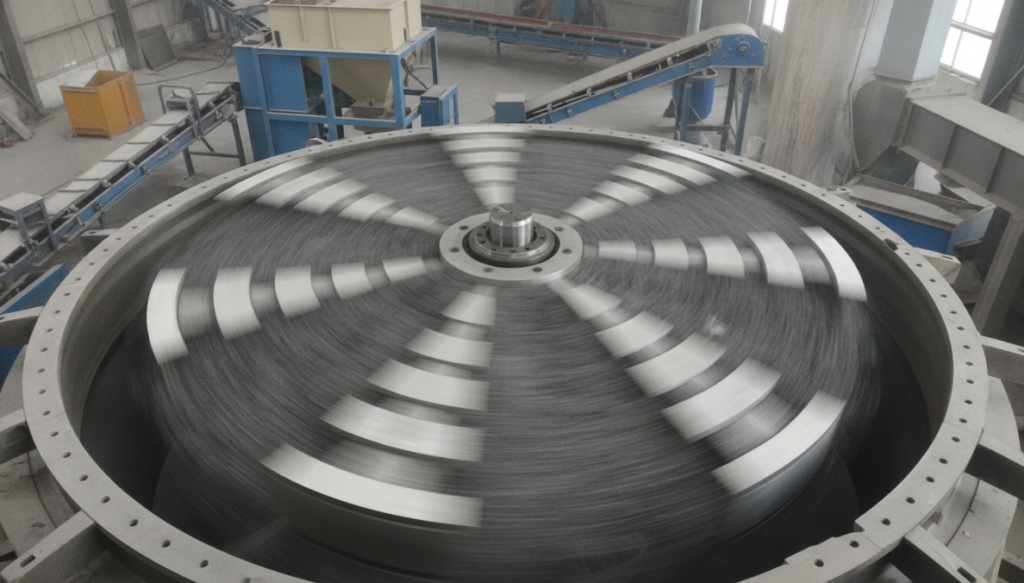
The rotation speed directly determines the thickness of the powder. If you are still using the old belt-driven static powder selector, it is normal for the fineness to go up and down and the amount of material returned. Quickly add a frequency converter (VFD) to the dynamic separator. Want to make ultra-fine powder, speed up, hard to beat back the coarse material; To do a little coarser, run the output, speed down, powder speed visible to the naked eye faster.
The base of the powder separator leaks air, which directly destroys the entire windy logic. The inside of Raymonde mill is operated under negative pressure. If the shell of the powder separator and the flange of the main engine are not tightly sealed, the cold air from outside will 1 get in and the cyclone inside will be in chaos immediately. This leads to coarse particles directly over the blade mixed into the finished product (commonly known as “run rough”). Every time the machine is shut down for maintenance, the flange gasket must be closely watched.
Abrasive materials (such as quartz and slag), ordinary carbon steel blades will deform and curl after being supported for 3 months. Upgrade the blades to high chromium alloy, or paste wear-resistant ceramics, life can be abruptly stretched more than 3 times. As long as the blade is not deformed, the airflow vortex will be stable, and the finished product size will be firmly stuck on the standard line.
Changing the wrong parts is not only a waste of procurement funds, but also a delay in production. Many equipment managers are still stepping on these common sense traps:
Found that the powder has become coarse, immediately order to buy a few tons of grinding ring? Big mistake. The fineness suddenly dropped, nine times out of ten, the blade of the powder selector was flat, or the air duct was short-circuited. Before moving those heavy grinding accessories, climb up to check the selector rotor.
If the lock valve is stuck, the whole machine will be “suffocated”. The separator punches the coarse material into the return pipe and falls into the grinding chamber again by the flap valve. If the valve wear is not tightly closed, the system negative pressure directly collapse, the output per hour will be strangled.
Blades that are not well balanced are simply bearing killers. Just buy some cheap auxiliary factory blades and install them. At a high speed of several hundred revolutions, a little weight deviation will cause severe vibration. This vibration is transmitted down the main shaft, and it is only a matter of time before the transmission system is scrapped. Remember, after changing the blades, the rotor assembly must be rebalanced.
I just want to talk about the real transformation case in October 2025. There is a factory that makes 200 mesh limestone powder, which uses 5R Raymonde mill. When it encounters a capacity bottleneck, it is stuck at 4.5 tons per hour, with a failure rate of 8%.
In the past, we only moved two places: we stripped the original static separator and replaced it with a dynamic powder separator with frequency conversion control. Then the base flange seal was completely redone.
| Key Metric / Parameter | Before Retrofit (Original Status) | After Retrofit (Upgraded) | Improvement / Impact |
| Production Capacity | 4.5 t/h | 5.5 t/h | Increased by 22% |
| Energy Consumption | Baseline (100%) | Decreased by 12% | Significant cost savings |
| Maintenance Cycle | 30 Days | 90 Days | Extended by 3x (200%) |
| Equipment Failure Rate | 8% | Minimal / Resolved | Enhanced stability |
| Separator System | Static Separator | Dynamic Separator (VFD Control) | Precise fineness control |
| Base Flange Seal | Original Seal | Completely Redone | Eliminated air/pressure leaks |
The effect was immediate. After precise speed control, the 200 target compliance rate is extremely stable, completely eliminating the “excessive crushing” problem. After sealing and negative pressure recovery, the output rose to 5.5 tons per hour in situ. Without changing the main motor and grinding roller, the output just rose 22%.
If you want the grinding production line to rotate continuously, you should have all the wearing parts of the crusher and the spare parts of the suspension roller mill in the warehouse. Don’t wait for the machine to lie down and then go to the world to find goods:
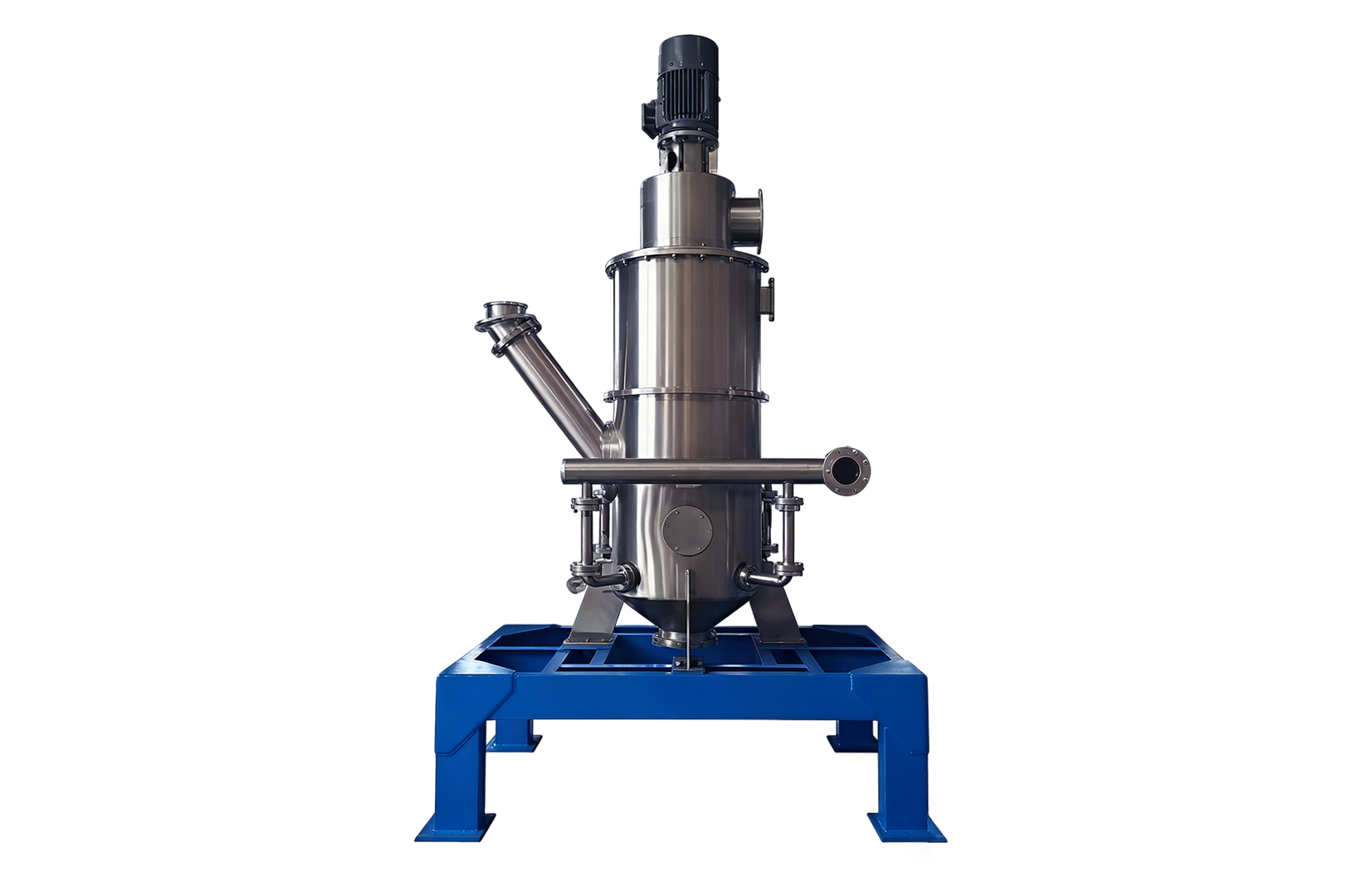
It is equivalent to a “mechanical sieve” that grows on the top of the mill “. Through the high-speed rotation of the rotor to generate centrifugal force, the coarse particles are returned to the grinding chamber to continue grinding, and the qualified fine powder enters the cyclone collector along the wind flow to become finished products.
It all depends on what you hit. Talc and limestone are soft materials that can be used for more than half a year. However, if hard stubble such as quartz or steel slag is used, ordinary carbon steel blades will be discarded in two to 3 months unless you spend money on high chromium alloy.
The 3 reasons cannot be solved: the rotating speed of the powder separator has dropped, the blade is too worn to be able to hit the material, or the negative pressure imbalance caused by air leakage in the flange of the powder separator base.
By adjusting the speed of the powder separator. The faster the rotation speed, the greater the centrifugal force, the more materials are blocked back, and the finer the powder is. If the rotation speed is adjusted slowly, large particles can run past, and the powder will become coarse.
Absolutely, and this is the most cost-effective upgrade. With a conversion flange and a frequency conversion control cabinet, the old machine can still produce high-precision powder.